


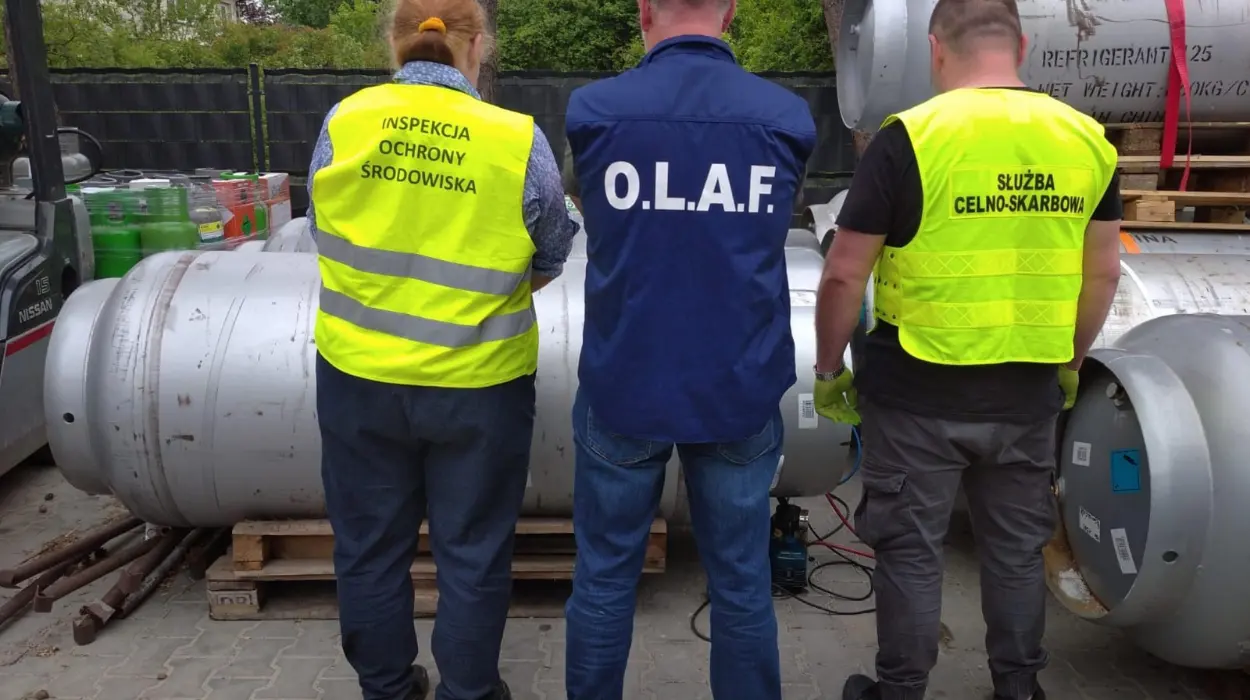
Brussels – The European Anti-Fraud Office conducted Joint Customs Operation KHIONE aimed at disrupting the illegal trade in refrigerant gases smuggled into the EU.
As reported by the European Anti-Fraud Office (OLAF), the operation, which ran from May to October 2024, resulted in the successful interception of the equivalent of more than 400,000 tons of CO2 and prevented a total market loss of over 4.5 million euros.
How effective was Joint Customs Operation KHIONE in tackling fraud?
According to OLAF, it coordinated Joint Customs Operation KHIONE, named after the Greek goddess of snow, along with customs officers from 16 Member States, as well as Türkiye and Ukraine. The operation spanned several months and brought together customs authorities from Poland, Latvia, Germany, Slovakia, Hungary, Greece, Estonia, Lithuania, Spain, Italy, Belgium, Netherlands, France, Bulgaria, Croatia, Romania, Türkiye, and Ukraine.
It focused on identifying and monitoring shipments of refrigerant gas suspected to be smuggled into the EU. The operation also involved inspections of warehouses and distribution centres where illegal refrigerant gases were commonly stored for resale on the black market.
Ville Itälä, Director-General of OLAF, commented, “Joint Customs Operations are a key part of OLAF’s mission to protect both EU financial interests and the environment. Illegal trade in refrigerant gases not only undermines the EU’s green goals but also puts public safety at risk. Through this operation, OLAF and national customs services have shown that we can effectively disrupt this dangerous trade.”
What role did refrigerant gases play in contributing to climate change?
Globally, refrigerant gases are powerful greenhouse gases that significantly contribute to climate change. Under the EU’s F-Gas (fluorinated greenhouse gases) Regulation, strict quotas are placed on the import and use of hydrofluorocarbons (HFCs) to gradually phase out their usage in favor of more environmentally friendly alternatives. The operation underscores the importance of cooperation between European institutions and national authorities in tackling environmental fraud, a challenge that often involves complex cross-border criminal networks.
Comments
4 responses to “EU Anti-Fraud Office Cracks Down on Illegal Refrigerant Gas Trade”
-
Ah, the EU Anti-Fraud Office has decided to pop the champagne over its latest triumph: tackling the “unbelievably thrilling” world of illegal refrigerant gas trade. Who knew that chasing after dodgy gases could be so riveting? Perhaps next, they’ll tackle the scandalous underground trade of croissants that are just a tad too flaky.
-
Ah, the EU Anti-Fraud Office is finally getting off their sun-loungers to tackle the nefarious world of illegal refrigerant gas trade—because who knew that dodgy gas suppliers were the real villains in our midst? It seems they’ve taken a break from their usual pastime of debating the merits of artisanal cheese and are now trading in covert operations, proving that the only thing colder than this illicit gas is their sense of humor. Bravo! Let’s raise a glass of overpriced wine to the brave souls fighting to keep our fridges squeaky clean and above board!
-
Ah, the EU Anti-Fraud Office has decided to play the role of the culinary police, taking a stand against the dodgy refrigerant gas trade. Because, you know, nothing quite screams “freedom” like a bureaucratic crackdown on something that sounds suspiciously like a subplot in a bad noir film. One can only hope they bring in croissants for the long meetings ahead—after all, even the most serious of operations could use a little pastry perk-up, innit?
-
Well, it’s about time the EU Anti-Fraud Office decided to chase down the shady world of illegal refrigerant gas trading—because who doesn’t love a good game of cat and mouse with criminals over something as riveting as air conditioning? One can only imagine the excitement at their next board meeting: “Let’s tackle the real issues, like how to keep our ice cream cold without involving the black market!” Ah, bureaucratic heroism at its finest, or as the French might say, “Bravo, mes amis!”

Last News
Why Have the United States Added the Muslim Brotherhood to the Terrorist List?
Deutschland droht die Ölkrise
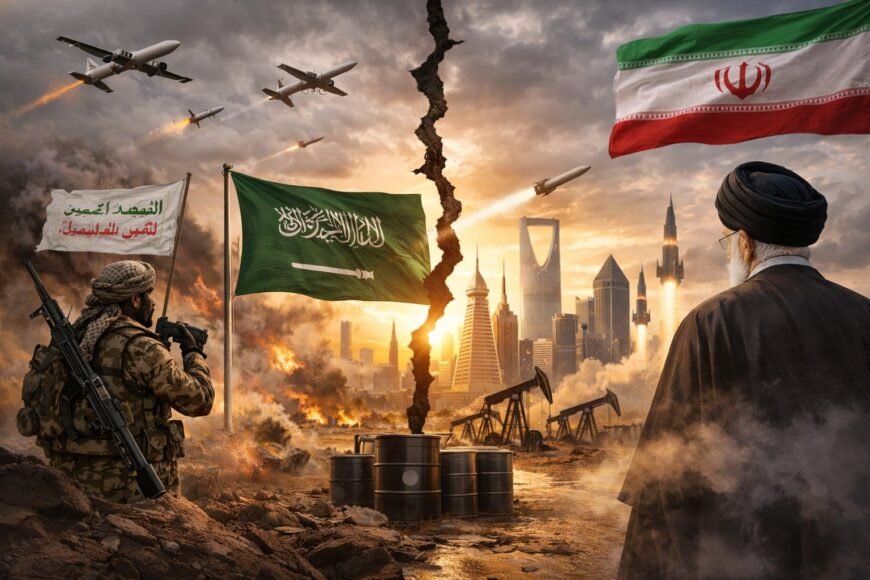
As an Ill Wind Blows Across the Gulf, the Houthis Finally Help the Saudis
The BBC noted that Saudi Arabia and Oman, both hosting US and Western forces, have seen less aggression than other Gulf Arab states. An Atlantic Council
Spanish Deputy Leader Criticizes Merz for His Deference to Trump
Afterward, the chancellor explained he didn’t defend Spain openly to avoid escalating the
Petro Advocates for Smarter Drug Strategy at UNODC Vienna
At the UN drug commission in Vienna on 9 March 2026, Colombian President Gustavo Petro delivered a speech that sharply criticised prohibition and highlighted the social causes of coca cultivation in Colombia. However, the main takeaway from his address, and from Europe’s own policy discussion, is not that total legalization is the answer. It is that drug policy must evolve beyond false dichotomi
Hungary Proposes Legalizing Seizure of Ukrainian Cash Convoy
Hungarian authorities say they are examining whether the convoy — stopped while transiting the country last week — posed national security risks. They are also investigating the origin and intended use of the money.
Hunga
Meg Nocero Honored as IAOTP’s Top Happiness Officer of the Year
NEW YORK, NY, UNITED STATES, March 5, 2026 /EINPresswire.com/ — The International Association of Top Professionals (IAOTP) has named Meg Nocero as the Top Happiness Officer of the Year for 2026, recognizing her exceptional leadership and commitment to her field. Nocero, an award-winning author, happiness expert, and host of the “M
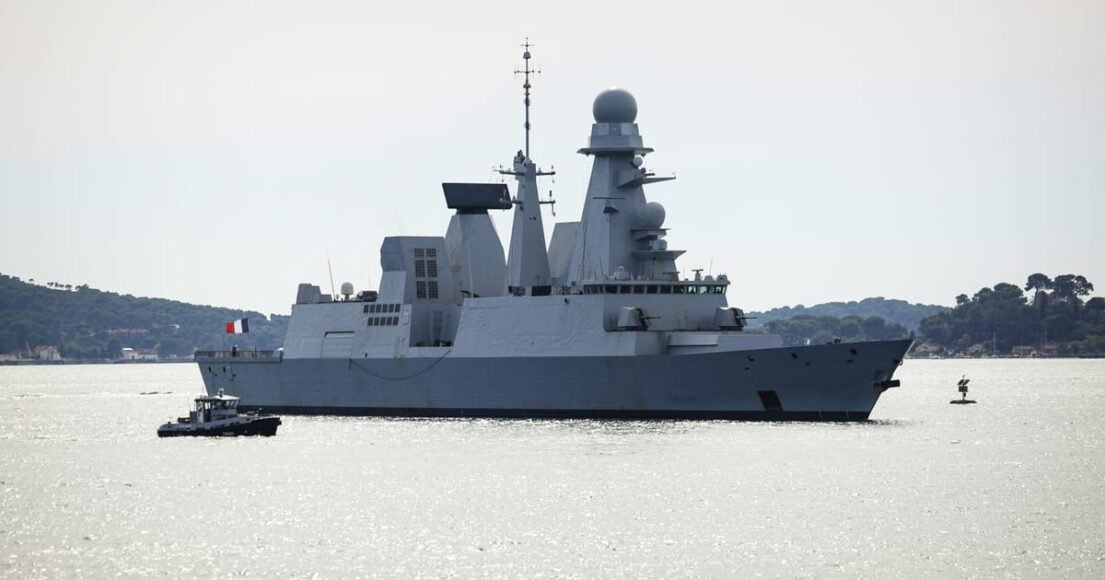
Macron Urges Escort for Container Ships and Tankers in Strait of Hormuz Immediately
Macron’s visit to Cyprus on Monday followed drone attacks on the island after U.S.-Israeli strikes on Iran that led to regional conflicts.
“When Cyprus is attacked, it is Europe that is attacked,” M
Vienna Hosts Global Drug Policy Debate at UN CND 69
Vienna has become a diplomatic hub as the 69th session of the United Nations Commission on Narcotic Drugs begins at UNODC headquarters, gathering governments, researchers, and civil-society organizations for a week of discussions on prevention, synthetic drugs, treatment, and future global drug policy directions.
VIENNA — The 69th session of the Commission on Narcotic Drugs has placed Vienna at
Leave a Reply