


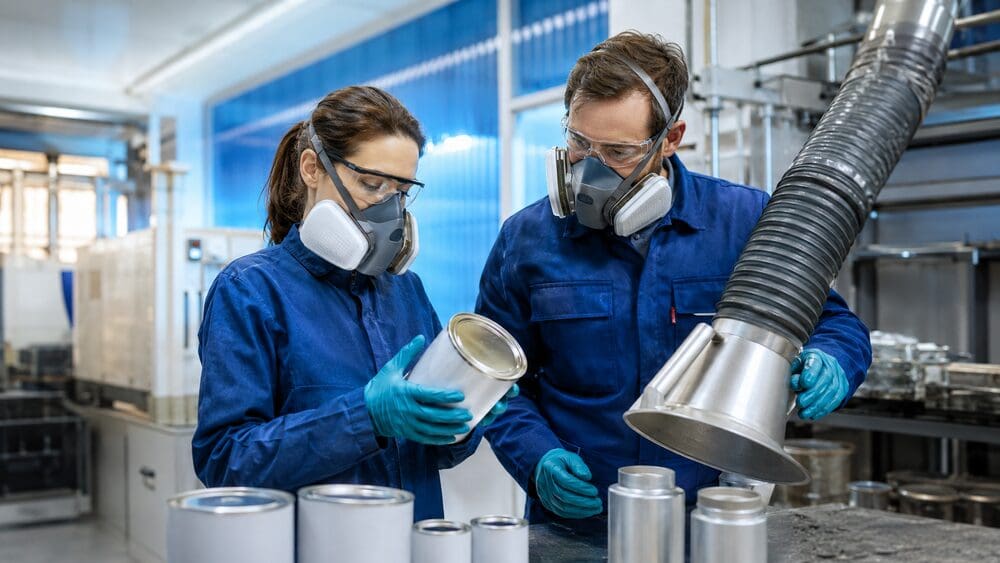
The European Union has reached a provisional agreement to enhance protection for workers exposed to hazardous substances at work, such as chemicals and fumes associated with cancer, respiratory issues, and reproductive damage. The deal awaits formal approval but represents a significant update to EU workplace safety regulations, as industrial policy, health protection, and decent work become increasingly intertwined.
Announced by the Council of the EU, the agreement pertains to the sixth revision of the carcinogens, mutagens, and reprotoxic substances directive, a key element of the bloc’s occupational health and safety framework. The update is anticipated to prevent approximately 1,700 lung cancer cases and 19,000 other illnesses over the next 40 years.
The provisional agreement sets occupational exposure limits for cobalt and its inorganic compounds, polycyclic aromatic hydrocarbons, and 1,4-dioxane, while including isoprene and welding fumes in the directive’s list of substances requiring protection.
For many workers in sectors such as welding, battery production, steel, aluminum, textiles, chemicals, rubber manufacturing, and emergency services, hazardous exposure is a daily reality. The agreement also introduces provisions for regular breaks for workers using personal protective equipment (PPE) and clarifies the integration of PPE within existing safety rules. The Council emphasizes that exposure limits do not eliminate all health and safety risks.
The European Parliament’s employment committee previously supported stronger measures on protective equipment, firefighter exposure, and the gender aspect of occupational health, highlighting diverse vulnerabilities based on substance type, tasks, and available protective equipment. In April, MEPs emphasized that no one should become ill from work.
The final agreement requires endorsement by both the Council and Parliament before adoption, following legal-linguistic checks. Its effectiveness will depend on national enforcement, workplace inspections, employer compliance, and support for smaller firms.
Implementing exposure limits in Brussels is one aspect; achieving safer workplaces involves risk assessments, ventilation, substitution of hazardous substances, training, medical surveillance, and consequences for non-compliance.
Chemical safety aligns with broader labor rights, as outlined in the European Times’ guide on workers without written contracts, underscoring that jobs should not compromise health for income.
The timing of this deal is significant as Europe aims to expand clean-tech, battery, manufacturing, and industrial capacity while maintaining high social standards. The agreement underscores that competitiveness should be assessed not only by output and supply chains but also by worker health, risk visibility, and the welfare of individuals in the industry.








Leave a Reply