


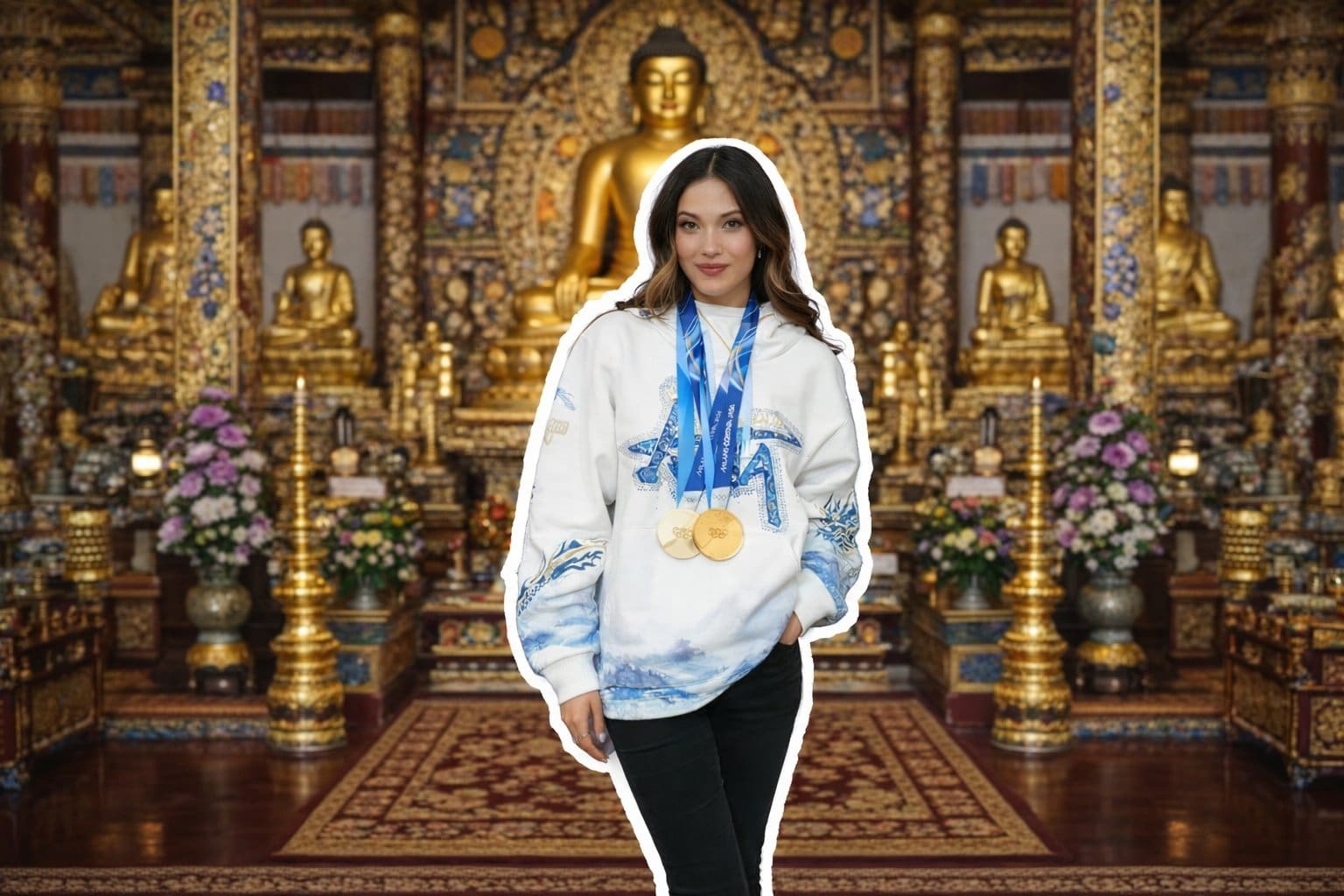
In the fast-paced realm of elite sports, athletes are often expected to exude confidence and have ready answers for every query. That’s why a simple comment by freestyle skiing sensation Eileen Gu has resonated beyond the halfpipe. As highlighted by World Religion News, in response to a follower’s question about self-doubt, Gu answered by mentioning a spiritual shift: moving away from ego and reputation.
During a May 2022 social media Q&A, Gu disclosed, “I recently embraced Buddhism,” emphasizing her efforts to “let go of the self” and detach from “outside opinion and reputation,” as reported by Malaysia’s Sin Chew Daily. Publicly, Gu has portrayed Buddhism not merely as a tag but as a discipline to ease the grip of external judgment.
The balance between performance and perception has been a constant in Gu’s career. Amid the Beijing 2022 Olympics, she became globally recognized while sparking debates about identity and loyalty. In a 2022 interview with NBC16, she encapsulated public eagerness to categorize her, stating that people struggle with someone “when they’re not fitting in a box.”
Facing the Winter Olympics again in early 2026, Reuters noted Gu’s progression to the women’s halfpipe final at the Milano Cortina Games after overcoming a qualification fall, highlighting her ability to “reinforce” self-belief under pressure.
Gu’s win in the halfpipe, securing her status as the most decorated Olympic freestyle skier, was followed by the news of her grandmother’s death. At a poignant press conference, Gu spoke of her grandmother’s impact, describing her as a dynamic influence.
While no single belief system can fully explain how one copes with such moments, Gu’s earlier Buddhist reflections on ego and reputation provide insight into why her comment struck a chord: it suggests living amidst contradictions—achievement and loss, praise and pain—without being dominated by them.
Gu’s statement resonated not because it was a “conversion story” or a strategic content angle. She has not publicly detailed a specific Buddhist tradition, affiliation, or routine in mainstream media. This discretion is significant. In many Buddhist cultures, private practice is valued over public declaration, and in a celebrity landscape that commodifies identity, refraining from commercializing faith signifies a form of integrity.
Gu’s public statements reflect a thoughtful approach that values preparation and considered analysis over broad claims. A January 2026 TIME profile described her as reflective on the psychological demands of fame and the emotional aftermath of Olympic triumphs—where “letting go” is not just a phrase, but a vital skill.
From the factual public record, Gu has stated she embraced Buddhism, associating it with detachment from ego and public opinion. Beyond this, cautious reporting shouldn’t extrapolate one comment into a full spiritual narrative. The broader story isn’t about defining what Gu “is,” but about what her words offered: a reminder that the loudest criticisms aren’t always the truest—and that occasionally, the most profound act in public life is relinquishing the desire for approval.







Leave a Reply