Divine Wisdom in the Old Testament: Concepts and Imagery (Part 2)

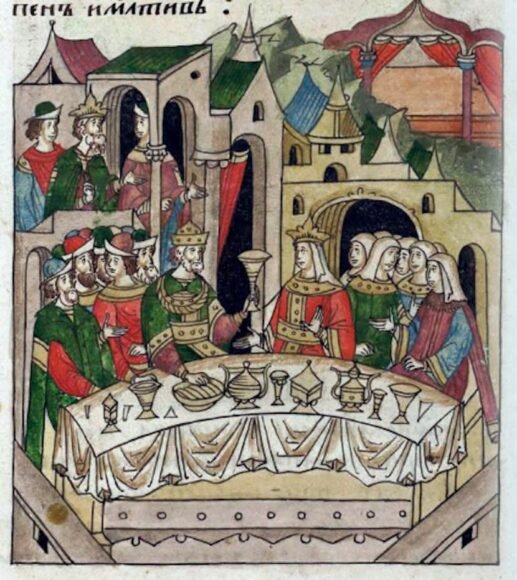
The next development of the doctrine of Wisdom is found in the book of Jesus son of Sirach, written around 180 BC. Its Greek translation was made during the 38th year of King Euergetes’ rule, likely Ptolemy VII Euergetes (170-116 BC). Unlike Ecclesiastes, Job, and Baruch 3-4, this book doesn’t pose sharp questions. The author, a Jerusalem bourgeois, aimed to account for the theological heritage of the hakamim, offering an interpretation influenced by his scribe expertise and knowledge of the Scriptures. The book elucidates the hakamim’s experience, placing it among the significant works of Israeli hakamim.

Sirach addresses retribution, aware of the contradictions pondered in Job and Ecclesiastes, attributing them partly to the shared responsibility for sin (3:11; 41:8; 23:34-35). He believes that one cannot judge happiness before death (11:26) and cautions against hasty judgments on God’s works, as apparent evil may later reveal itself as good Providence. Despite explanations, Sirach admits that the secret remains, urging humble acceptance like Job.

Beyond retribution, Sirach reflects on history, using past and contemporary events to discern divine governance laws, embedding history into the doctrine of Wisdom. Notably, Sirach is the first to question evil’s metaphysical nature, linking death’s existence with sin (25:27; 40:8-10; 41:3-4).

Regarding Wisdom itself, Sirach insists on its inaccessibility through human means alone, noting God has distributed it among all but bestowed it specifically on those who love Him (1:9-10). Echoing Proverbs, he views Wisdom as a divine gift and ties it to the fear of Yahweh and the Torah, finding expression in Mosaic commandment fulfillment (24:25 ff.). He aligns with Deuteronomy 4:6-8 on Israel’s wisdom-glory due to law fulfillment. Sirach celebrates temple sacrifices, taxes, purifications, and worship, emphasizing Wisdom as Israel’s special privilege.

Sirach also highlights the fruits of following Wisdom: happiness, health, long life, peaceful death, strength, and God’s blessing. Notably, he equates the gift of Wisdom with knowledge, suggesting an advanced step in teaching Wisdom, hinting at integrating secular culture with ecclesiastical insights.

Sirach’s image of Divine Wisdom is found in chapters 1 and 24, presenting Wisdom as God’s creation, originating from Him but created prior to all (1:4). The language suggests a figurative portrayal of Wisdom’s origin, emphasizing its role in the world over pure ontology. Sirach describes Wisdom as incomparable, unknowable, and possibly participatory in creation, but lacking direct indications. Wisdom, after encircling nations, found rest in Jerusalem, depicted as flourishing like temple service incense, intimately linked to Israel, God’s elect.

Like Proverbs, Sirach personifies Wisdom, but he does not suggest it as a separate divine entity. Wisdom represents God’s providential actions, instructing humans through the chosen Israel.

The teaching of Wisdom reaches its Old Testament culmination in the book of Wisdom of Solomon, dated to the 1st century BC. Despite its non-canonical status, the book is cherished among Christians for its teachings, including the doctrine of immortality for the righteous, a resolution to retribution issues. Unlike before, the premature death of the righteous, explained by Providence, leads them to live with God.

The book of Wisdom deepens the theme of Providence, depicting Wisdom’s actions in Israel’s history, particularly the patriarchal era and Exodus, illustrating divine justice, mercy, and wisdom, while showcasing a surprising universalism. This universalism acknowledges pagans receiving Wisdom’s gifts and incorporates Hellenistic scientific disciplines, marking a significant expansion in understanding. The author differentiates revelation from human knowledge, emphasizing Wisdom’s role in guiding minds to truth.

The book defines Wisdom as the source of all good things, granting immortality, and a divine gift independent of human merit. Wisdom’s participation in creation is acknowledged, with God continuously caring for His works. Wisdom is the agent of Providence, guiding patriarchs and prophets, making them friends of God.

The text describes Wisdom with detailed attributes, presenting it as a spirit, an artist of all, reflecting God’s glory, sharing His throne, participating in creation. Despite the detailed hypostatic depiction, Wisdom remains a personification of divine action, not a separate divine being, correlating with traditional divine actions’ personifications.

Wisdom in the Old Testament connects closely to Providence, evolving from secular to theological. Post-Exilic sages contemplated divine governance laws, creating the theme of Divine Wisdom. The content expanded from retribution to encompass divine plans for creation and history. Sirach tied Wisdom to law observance and Israel’s sacred history, paralleling the She


Comments

2 responses to “Divine Wisdom in the Old Testament: Concepts and Imagery (Part 2)”

  1. Isn’t it just delightful how a Jerusalem bourgeois from 180 BC managed to pen down the complexities of divine wisdom while we modern blokes are still struggling with our morning coffee? 😂 Who knew ancient texts could double as a self-help manual for those of us still figuring out life’s little dilemmas, eh?

  2. Senior Smurf Avatar
    Senior Smurf

    Isn’t it charming how an ancient Jerusalem bourgeois managed to make divine wisdom sound as thrilling as watching paint dry? 📜🙄 At least the taxes and sacrifices provide a bit of excitement, eh?

  3. StormCake Avatar

    Divine Wisdom in the Old Testament? Sounds positively riveting, like watching paint dry in a Berlin café. But hey, if pondering ancient texts is your idea of a good time, who am I to judge? 😏📚

Leave a Reply

Your email address will not be published. Required fields are marked *

Last News

Divine Wisdom in the Old Testament: Concepts and Imagery (Part 2)

Divine Wisdom in the Old Testament: Concepts and Imagery (Part 2)

The next development of the doctrine of Wisdom is found in the book of Jesus son of Sirach, written around 180 BC. Its Greek translation was made during the 38th year of King Euergetes’ rule, likely Ptolemy VII Euergetes (170-116 BC). Unlike Ecclesiastes, Job, and Baruch 3-4, this book doesn’t pose sharp questions. The author, a Jerusalem bourgeois, aimed to account for the theologica

Read More

Dublin Challenges Europe’s Budget Boundaries

Dublin Challenges Europe’s Budget Boundaries

Today, at the informal General Affairs Council in Dublin, the focus is on the EU’s upcoming 7-year budget. Although discussions remain at an impasse concerning the budget size, the emergence of red lines from various capitals suggests progress in the negotiations. Host Zoya Sheftalovich and Ian Wishart explore why this development is unexpectedly positive.
Meanwhile, the critical regional election

Read More

Oosterweel Works Close Deurne On-Ramp on Antwerp Ring for Weekend

Oosterweel Works Close Deurne On-Ramp on Antwerp Ring for Weekend

Antwerp (Eurotoday Newspaper) – Motorists heading from Deurne onto the Antwerp Ring (R1) towards Ghent and Brussels will face a full closure this weekend as part of the ongoing Oosterweel connection programme. 
The Deurne entrance will be fully blocked from Friday night September 4th, starting at 23:00, through Sunday morning September 6th, until 11:00, as announced by the traffic information an

Read More

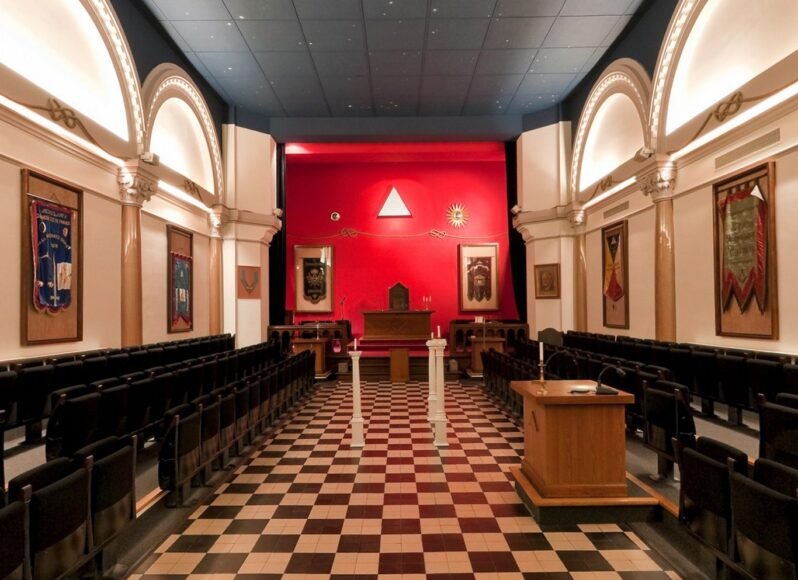
Ceremonial: Addressing Brethren in Freemasonry

Ceremonial: Addressing Brethren in Freemasonry

The typical way Masons address one another is as “Brother.”
In different rituals, specific titles are used at each initiation degree during official meetings. In the 1st and 2nd degrees, Masons are called Brethren; in the 3rd, Worshipful Masters; in the 4th, Secret Masters; in the 5th, Worshipful Secret Masters; in the 6th, Guardians of Solomon; in the 7th, Priests and Judges; in the 8th, Gloriou

Read More

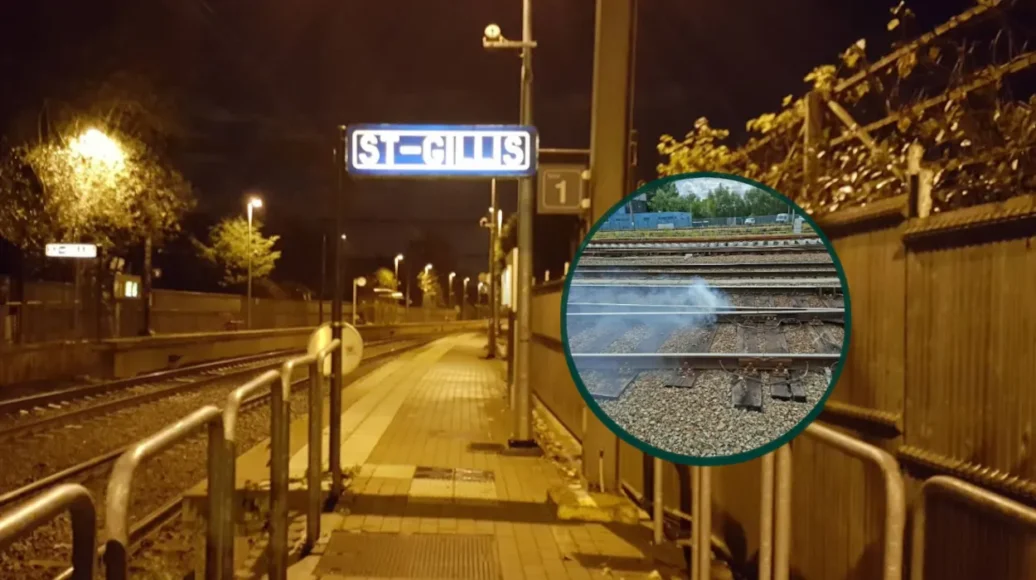
Train Services Disrupted by Minor Track Fire in Sint-Gillis-Dendermonde

Train Services Disrupted by Minor Track Fire in Sint-Gillis-Dendermonde

Dendermonde (Eurotoday Newspaper) – Train traffic was temporarily halted on Wednesday afternoon after a small fire broke out on the railway tracks at Boonwijkstraat in Sint-Gillis-Dendermonde, a locality within the Dendermonde municipality in East Flanders, Belgium. 
While the event was initially described as a trackside fire in initial reports and not one in a train, it did lead to the appropri

Read More

China Threat Strengthens Support for EU Industrial Policy

China Threat Strengthens Support for EU Industrial Policy

Industry officials have warned that the next wave could be even more destructive. Currently affected sectors include those considered crucial to Europe’s economic and technological future, such as electric vehicles, batteries, steel, chemicals, and wind turbines.
The IAA aims to mitigate this pressure, restricting Chinese investments in strategic sectors like EVs, raw materials, or solar pan

Read More

Poison Claims Life of Last Wild Bearded Vulture in Bulgaria

Poison Claims Life of Last Wild Bearded Vulture in Bulgaria

Conservationists are voicing their concerns following the mass poisoning of vultures in Central Balkan National Park. They demand strict enforcement of wildlife protection laws, harsher penalties for crimes against protected species, and immediate action against the use of poisoned baits.
The protest was spurred by a mid-August poisoning event in the Balkan Mountains that resulted in the deaths

Read More

Beringen Enhances AED Network with Three New Sites and Nine Upgrades

Beringen Enhances AED Network with Three New Sites and Nine Upgrades

Beringen (Eurotoday Newspaper) – The city of Beringen has announced a significant expansion of its automated external defibrillator (AED) network, installing devices at three new locations while replacing nine older units to ensure reliable emergency cardiac care across the municipality. 
What Does the New AED Expansion Include?
The new phase in the development of the Beringen Automated External

Read More

Poland’s Tusk claims Moscow likely responsible for drone factory arson

Poland’s Tusk claims Moscow likely responsible for drone factory arson

The incident occurs amid a surge in suspected Russian attacks targeting facilities linked to military production supporting Ukraine.

Read More

Madrid F1 Track Confronts Noise Challenge

Madrid F1 Track Confronts Noise Challenge

The Spanish capital’s new urban Grand Prix promises jobs and global attention, but nearby residents want stronger protection from disruption.
Madrid’s first Formula One Grand Prix at the new Madring circuit is approaching under a cloud of neighborhood concern after residents recorded high noise levels during recent Formula Three sessions. City officials have promised acoustic barriers

Read More