


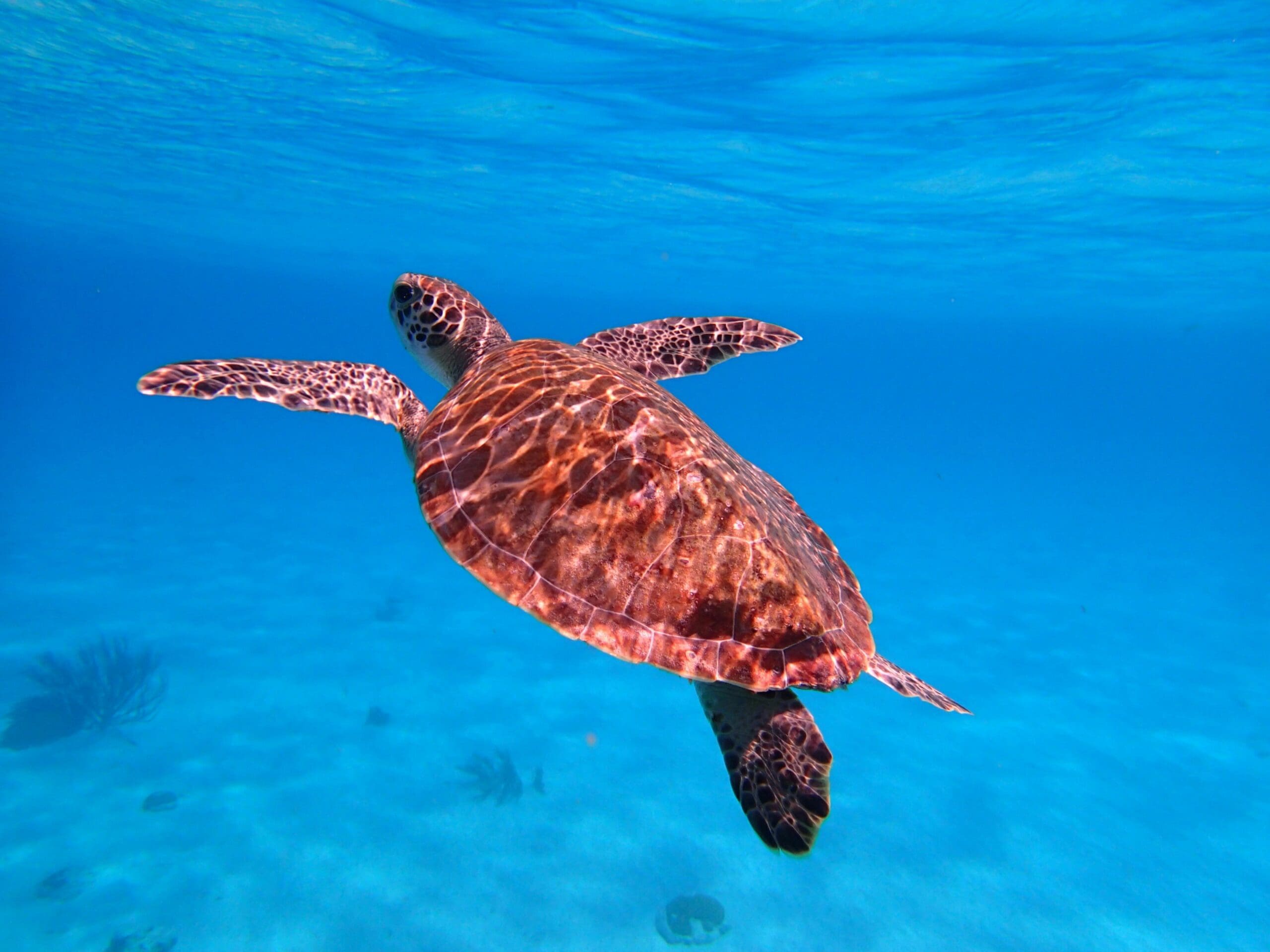
The sea turtle stands as one of Earth’s most enduring life forms, having emerged hundreds of millions of years ago. It exemplifies the animal kingdom’s ability to adapt to the planet’s ever-evolving conditions, driven by natural disasters or human influence. Despite their impressive lifespan surpassing that of humans, it is likely that humans will be the cause of their extinction.
Sea turtles inhabit oceans worldwide, with the largest species residing along the Mediterranean coast near Cyprus, according to the Cyprus Center for Environmental Research and Education. The green turtle (Chelonia mydas) can weigh up to 160 kilograms and exceed a meter in length, breeding exclusively in Cyprus and Turkey, with a smaller presence in Israel.
Cyprus also hosts the loggerhead turtle (Caretta Caretta), a smaller species found in the seas around Cyprus and Greece. Both species face the threat of extinction due to shared habitats. The Mediterranean loggerhead population ranges between 5,000 and 6,000 females, while the green turtle population is even more critical, numbered at around 500-600, ranking them among the Mediterranean’s most endangered, alongside the Mediterranean monk seal (Monachus monachus).
Key threats to Cyprus’s turtles include unchecked tourism, disturbance from hotels and restaurants, seawater pollution, and illegal fishing practices. The Cypriot newspaper “Philelefteros” reports that annually, approximately a hundred turtles perish on Cyprus’s shores, a figure that rises in summer when turtles rest on the water’s surface to conserve energy for breeding.
Turtles are internationally protected, with specific Cypriot legislation safeguarding turtles, their eggs, and habitats. To bolster these protections, authorities are implementing stricter measures, including harsh fines and possible imprisonment for those disrupting the turtles. The new rules ban the harassment and feeding of protected species such as turtles, dolphins, European eels, and Mediterranean monk seals on the island.
Destruction or relocation of turtle nests, eggs, and unauthorized entry into underwater caves housing Mediterranean seals are prohibited, with violators facing fines up to 20,000 euros and imprisonment for up to twelve months. These measures aim to minimize human presence on beaches where female turtles lay eggs and where hatchlings return to the sea, their age-old habitat.
Sea turtles have notably long life cycles, living over a century, yet only one in a thousand hatchlings reaches maturity, as per the Mediterranean Association for the Rescue of Sea Turtles (MEDASSET). Human activities remain a significant factor in their potential extinction.
Illustrative photo: pexels-zack-gilbert-2159535417-36132584











Leave a Reply