


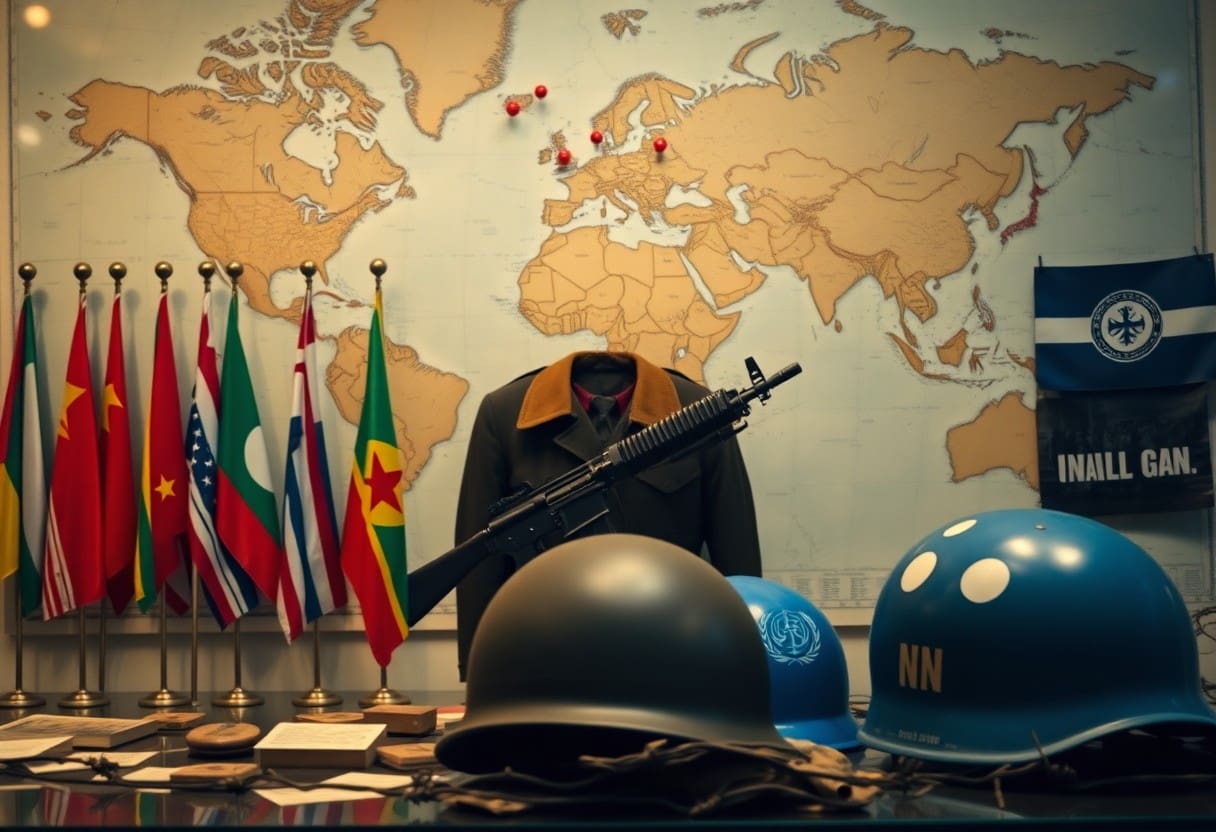
Over the last two centuries, global conflicts have reshaped borders, ideologies, and power structures. Wars like the two World Wars and the Cold War were among the most dangerous confrontations in human history, yet they also led to unprecedented international cooperation and technological progress. These events altered the course of nations and established the foundations of today’s geopolitical order.
The Great War and the Shattering of Old Empires
World War I tore through Europe, dismantling empires that had dominated for centuries. The Austro-Hungarian, Ottoman, Russian, and German empires collapsed, leaving behind fractured states and unstable new borders. Nationalist movements surged, reshaping the political map with lasting consequences.
Industrialized warfare caused unprecedented destruction, with millions dead and societies transformed. The war marked the end of 19th-century certainties, replacing monarchies with fragile republics and fueling ideological extremism. This upheaval laid the foundation for future global tensions.
The Blood-Soaked Fields of Flanders
Endless trenches scarred Flanders, where soldiers endured relentless artillery and poison gas. Life in these ditches was defined by cold, disease, and sudden death. Horrific conditions eroded morale and exposed the futility of frontal assaults.
Battles like Passchendaele and Ypres became symbols of senseless slaughter. Troops advanced only to be mowed down by machine guns. These engagements yielded minimal gains at unspeakable human cost, leaving deep psychological scars on a generation.
The Versailles Mandate and Its Consequences
Victorious powers imposed the Treaty of Versailles to secure peace. Germany faced reparations, territorial losses, and military restrictions. The humiliating terms bred resentment among Germans, undermining democratic stability.
Mandates redistributed former Ottoman lands under League of Nations authority, ignoring local aspirations and planting seeds for future conflicts. Arbitrary borders and colonial continuities fueled long-term unrest across the Middle East.
Under Versailles, self-determination was selectively applied, often serving imperial interests. Germany’s exclusion from decision-making bred a narrative of betrayal, exploited later by extremists. The mandate system entrenched foreign control, delaying sovereignty for nations like Syria and Iraq. These decisions sowed ideological and territorial disputes that ignited future wars.
The Second World War and the Global Conflagration
From 1939 to 1945, conflict engulfed the globe, reshaping borders, ideologies, and destinies. Totalitarian regimes clashed with democratic powers across continents. Over 70 million perished, making it history’s deadliest conflict. Cities were reduced to rubble, and societies confronted human cruelty’s depths.
Victory came at a staggering cost, but it laid the foundation for a new international order. The defeat of Nazi Germany and Imperial Japan halted expansion and genocide. Survivors emerged with stories that would shape global memory. The war’s end demanded accountability and reimagined global cooperation.
The Fight for Human Civilization
Democracy stood on the brink as fascists sought dominance in Europe and Asia. Resistance movements, soldiers, and civilians fought not just for territory but for basic human rights. The defeat of authoritarian regimes preserved self-governance and individual freedom. This moral dimension elevated the war beyond a military contest.
Libraries burned, art was looted, and intellectuals were targeted, marking an assault on culture. Yet, courage persisted in underground schools, coded broadcasts, and defiance. The war became a test of whether civilization could endure attempts to erase truth and dignity.
The Shadow of the Mushroom Cloud
Bombs fell on Hiroshima and Nagasaki in 1945. The instantaneous destruction by nuclear fission changed warfare. Tens of thousands died, with many more succumbing to radiation. The world entered an age where a single weapon could threaten extinction.
Scientific achievement brought unprecedented power, with profound ethical consequences. The US emerged as the sole nuclear power, altering dynamics. Arms races followed, turning rivalry into a balance of terror.
Radiation lingered long after the smoke cleared. Survivors, known as hibakusha, faced stigma and illness. The bombings sparked global debates on nuclear morality, leading to arms control and anti-nuclear movements. These events marked the start of peace held by mutual annihilation’s threat.
The Long Twilight of the Bipolar Standoff
Decades of ideological rivalry shaped alliances, economies, and doctrines. The Cold War never became direct superpower combat, yet its shadow stretched across continents, fueling proxy wars and upheavals. Nations aligned as either capitalist or communist, often costing internal sovereignty.
Peace was sustained more by fear than cooperation. The threat of nuclear annihilation loomed, making restraint necessary. This era redefined diplomacy, defense, and security.
The Descent of the Iron Curtain
Europe fractured along unyielding lines. Churchill’s 1946 warning of an “iron curtain” became reality. Eastern nations fell under Soviet influence, reshaped by Moscow.
Isolation deepened, suppressing travel, information, and cultural exchange. Barbed



Leave a Reply