


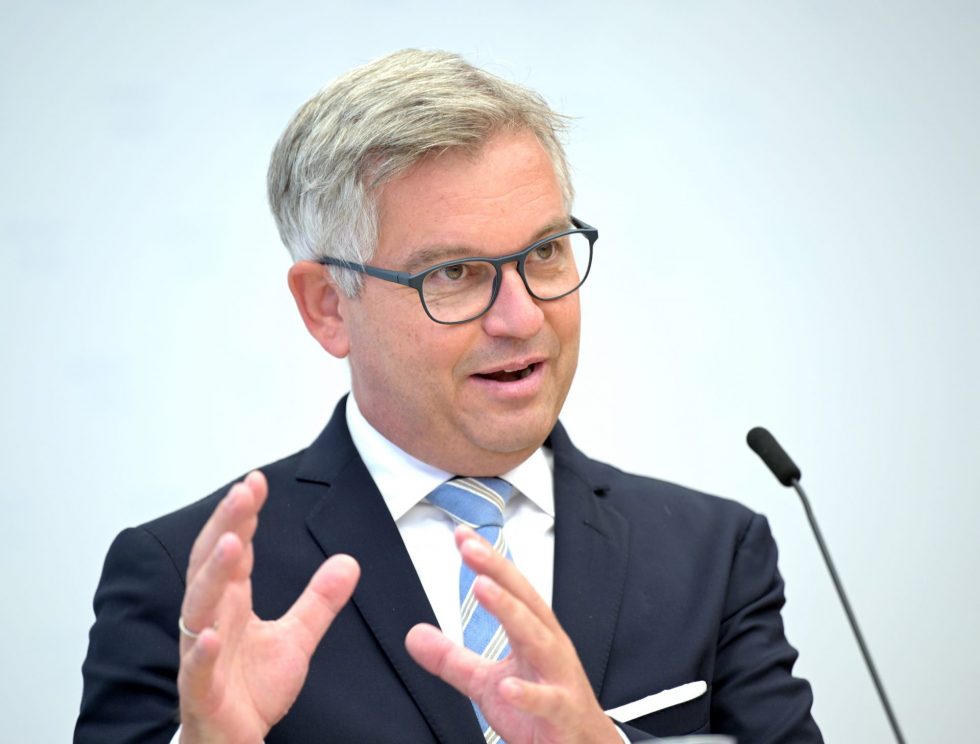
Bogota (APA) – Austrian EU Commissioner Magnus Brunner highlighted the significance of Latin America as a key partner for the European Union in combating crime and managing migration during an APA interview at the EU-CELAC summit in Colombia on Sunday. Brunner engaged with several Colombian ministers at the summit and led the third EU-Colombia drug dialogue, observing crime-fighting activities in Santa Marta. He noted, “Colombia is very committed and active.”
Brunner described the collaboration with Latin American nations as highly effective, stating, “I believe Colombia is doing everything possible to combat (drug trafficking). While quantities have risen, so too have the seizures.” The EU aims to provide operational support to Colombia, particularly through Europol’s assistance and the establishment of structures. He also mentioned the European Port Alliance, initiated by the EU Commission last year, from which Latin America seeks to draw insights to enhance logistics and security through improved cooperation between private and public sectors.
Brunner advocates for cooperation with the USA
Addressing the USA’s actions in the Caribbean, Brunner asserted, “Cooperation with states is essential to ensure developments proceed democratically, making collaboration significantly important. Withdrawal is not an option.” He emphasized to Colombian officials the importance of cooperation with both the USA and Europe in the fight against drug trafficking.
Migration was another key topic for the Commissioner at the CELAC summit. With instances of visa-free travel within the EU being misused, the EU Commission is set to introduce a new visa strategy at the start of 2026. Thus, immigration and visa policy were crucial discussions at the summit. “We will require legal migration to fulfill labor market needs in the upcoming years. However, it is vital that we determine who enters Europe, not human traffickers and smugglers.” The new EU Entry-Exit System is already proving effective in tracking individuals entering and exiting Europe, regardless of visa status.
EU faces escalating drug issues
Currently, US President Donald Trump is concentrating on Venezuela in the drug fight, advocating military intervention, which critics argue may aim for regime change. Nevertheless, rising drug consumption has also become a pressing issue for the European Union in recent years.
In 2023, Spain intercepted 9.5 tons of cocaine in a single shipment concealed within a banana shipment from Ecuador. According to the EU Drug Report 2024, criminal organizations are increasingly exploiting legitimate commercial infrastructures in global trade: “There are documented instances of supply chains being infiltrated, with employees in critical roles being manipulated through intimidation and corruption.” Nearly 70 percent of the drugs seized by customs are confiscated in European ports, with the port of Antwerp-Bruges in Belgium recording around 121 tons of cocaine seized in 2023, marking another high point.
The Commission plans to unveil its new drug strategy in December. Brunner noted that a significant shift from past strategies would include increased collaboration with international partners. Currently, there are existing Europol agreements with Brazil and Ecuador, with ongoing efforts to establish agreements with Peru, Bolivia, and Mexico. (09.11.2025)






Leave a Reply