



The international order, already frayed by years of shifting alliances and economic nationalism, appears to have reached a definitive breaking point in the opening days of 2026. While the world was still processing the sudden and dramatic American military intervention in Venezuela, the focus of the White House has pivoted with startling speed toward the Arctic.
President Donald Trump’s renewed and intensified demands for the “acquisition” of Greenland are no longer being dismissed as the eccentric whims of a real estate mogul turned politician. In the wake of “Operation Absolute Resolve” in Caracas, the rhetoric emanating from Washington has taken on a predatory quality that challenges the very foundations of Westphalian sovereignty.
The situation has escalated into a full-scale diplomatic crisis between the United States and its oldest allies. The narrative coming from the Oval Office is simple yet transformative. President Trump argues that Greenland is a “national security necessity” that Denmark is “incapable” of defending against the increasing strategic presence of other global powers.
By mocking the Danish defense posture as little more than a “dog sled” arsenal, the U.S. administration is attempting to establish a new standard for territorial integrity: that sovereignty is not an inherent right, but a privilege contingent upon a nation’s ability to project military power.
This “Don-roe Doctrine,” a blunt and aggressive evolution of the 19th-century Monroe Doctrine, suggests that the Western Hemisphere is not merely a sphere of influence, but a zone of potential American jurisdiction. The message to the international community is unmistakable.
If the United States deems a territory strategically vital or rich in the minerals necessary for the high-tech arms race, the traditional boundaries of international law will not be allowed to stand in the way.
The reaction from Nuuk and Copenhagen has been one of principled defiance mixed with genuine alarm. A joint statement from Greenland’s five major political parties today was unequivocal: they wish to be neither American nor Danish, but Greenlandic. This sentiment is echoed by a wary public. Recent polling in Denmark indicates that nearly 40 percent of the population now believes a U.S. invasion is a plausible scenario. This fear is not born of paranoia but of observation.
The capture of Nicolás Maduro has demonstrated that the current U.S. administration is willing to use its military as a tool of eminent domain to secure resources and “stabilize” regions it deems essential to its interests.
The economic dimension of this gambit is equally transparent. Greenland sits atop 25 of the 34 critical minerals identified as essential by the U.S. Geological Survey. As global demand for these minerals accelerates to fuel the green energy transition, the Trump administration views Greenland not as a country, but as a warehouse of strategic commodities.
The appointment of Jeff Landry as a special envoy – a nod to the Louisiana Purchase – underscores the transactional nature of this policy. However, treating a democratic, autonomous territory as a commodity to be bought or seized is a dangerous regression to an imperial era that the world supposedly moved past in 1945.
Danish Prime Minister Mette Frederiksen has warned that any move toward annexation would signify the “end of everything,” specifically the NATO alliance and the post-war security structure. This is not hyperbole. If the leading member of a collective defense pact threatens the territorial integrity of a fellow member, the alliance loses its reason for being. The security guarantee that has anchored European and global stability for eight decades is being traded for a gamble on Arctic minerals.
Rather than following this path of unilateral escalation, there is a clear need for a multilateral alternative. Japan, as a leader in diversifying mineral supply chains and a staunch defender of international law, could play a pivotal role. A collaborative framework – a “Global Commons” approach to the Arctic – would secure the necessary resources through partnership rather than coercion. Such a model would respect the self-determination of the Greenlandic people while ensuring that the Arctic remains a zone of scientific and commercial cooperation rather than a theater of conflict.
The coming weeks will be a test of whether the international community can restrain this new era of “transactional imperialism.” If the world remains silent as
Comments
10 responses to “Beyond the ‘Don-roe Doctrine’ – A Multilateral Future for the Arctic”
-
Isn’t it just charming how a real estate mogul turned politician thinks he can “acquire” Greenland like a summer holiday villa? 😂 Who knew the Arctic was on the market?
-
Isn’t it charming how the U.S. suddenly needs a “national security necessity” in Greenland after years of dodging winter holidays? 😂 Who knew that a dog sled arsenal could spark such a global diplomatic kerfuffle!
-
Seems like Greenland’s the new hot property on the global real estate market – who knew the Arctic would become the real ‘ice’ breaker for international relations? 🧊📈
-
Look, if I wanted to read a gripping thriller about real estate deals in the Arctic, I’d just check the local property listings in London. 🌍💼 But hey, nothing screams “world peace” like a good old-fashioned land grab, right? 😂
-
Seems like the Arctic has become the new playground for Uncle Sam’s latest acquisition spree; who knew Greenland would be the hottest real estate on the market? 🏡💼 Might as well throw in a “please” with that demand, eh?
-
Seems like Greenland has gone from a cozy little corner of the world to the hottest real estate on the block. Who knew that dodging dog sleds could lead to a bidding war? 🥴💼
-
Looks like the Arctic is the new playground for the U.S. to flex its muscles, eh? Who needs diplomacy when you can just grab your neighbor’s backyard with a “national security” excuse? 😏
-
Imagine thinking you can just pluck Greenland off the map like a ripe fruit—cheeky, innit? Guess the new motto is “Appropriate, not negotiate!” 🍏😏
-
Looks like the great Arctic land grab is on the menu, eh? Who knew we’d trade in diplomacy for a good ol’ real estate deal—just add a dash of military might and voilà, you’ve got yourself a geopolitical stew! 🥘
-
Simply splendid! Because who wouldn’t want to hand over a scenic chunk of ice just to keep the big boys happy? 🥶🍦

Last News

Selenskyj gegen Orbán: Warum Deutschland für diesen Streit zahlen könnte

European Scientologists Broaden Human Rights Education Globally
KINGNEWSWIRE / PRESS RELEASE // BRUSSELS, Belgium — March 12, 2026 — Human-rights education stands as a prominent public activity linked to Scientologists across Europe. Recent efforts rang
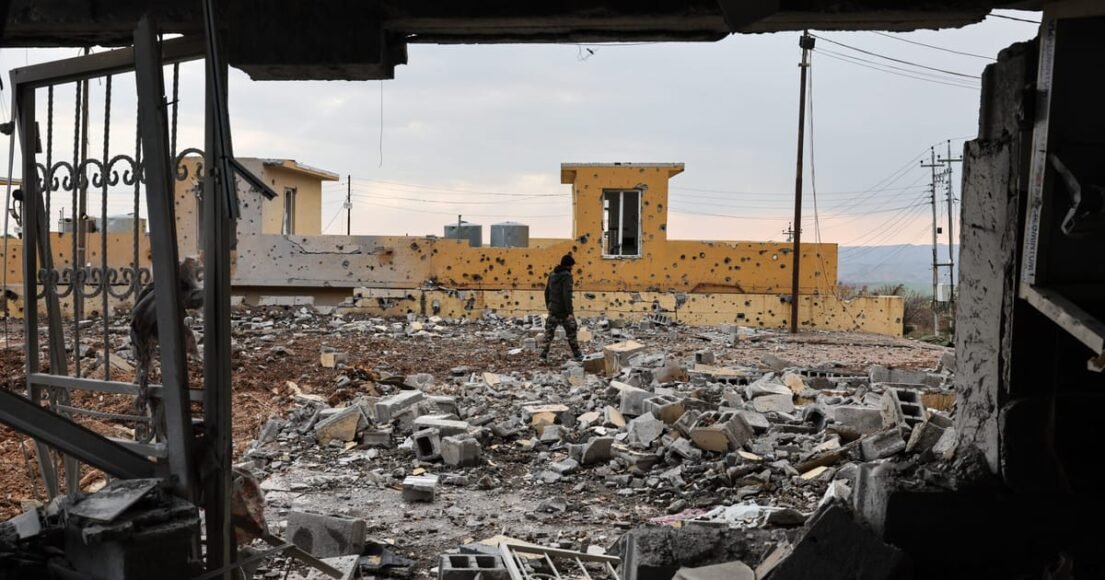
French soldier killed, multiple wounded in Iraq attack, Macron confirms
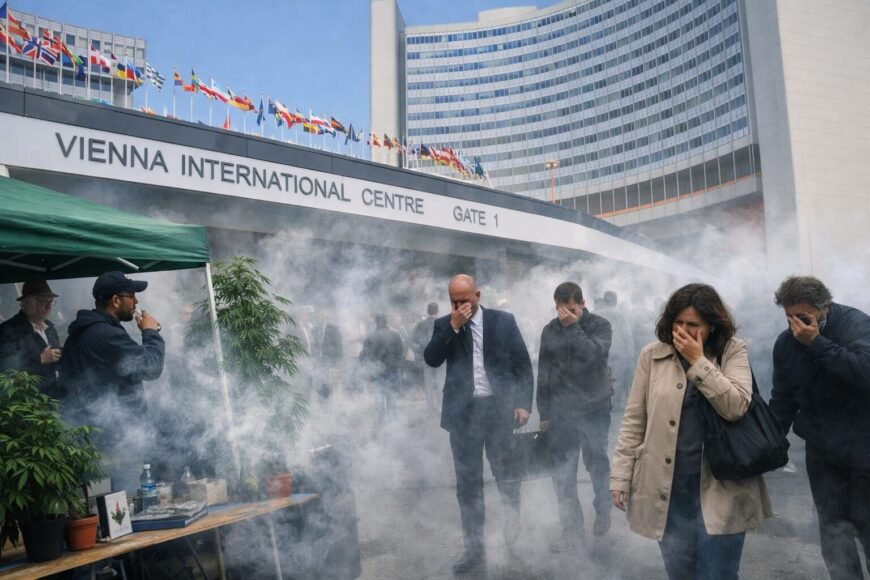
Outrage Erupts in Vienna Over Cannabis Smoke at UN Drugs Summit

Colombian President Cautions US Against Latin American Empire-Building
The Colombian president avoided direct criticism of Trump, instead referencing their February meeting in the White House as an example of the kind of intercontinental dialogue he advocates for. Before that meeting, Trump had called Petro

Researchers Reviving the Danube
Florian Borgwardt and Tibor Erős, ecologists and dedicated freshwater enthusiasts, are focused on restoring the Danube River. They are part of an international partnership involving scientists, conservationists, and local communities to revive the river’s ecosystem and biodiversity.
Flowing through 10 countries and 4 capitals, the Danube is crucial for both nature and people. However, human act
US Patience Wears Thin as Deadline Looms to Prevent New Trade War with EU
The EPP’s top trade lawmaker, Jörgen Warborn, last week pitched a “sunrise clause,” meaning the deal would only finall
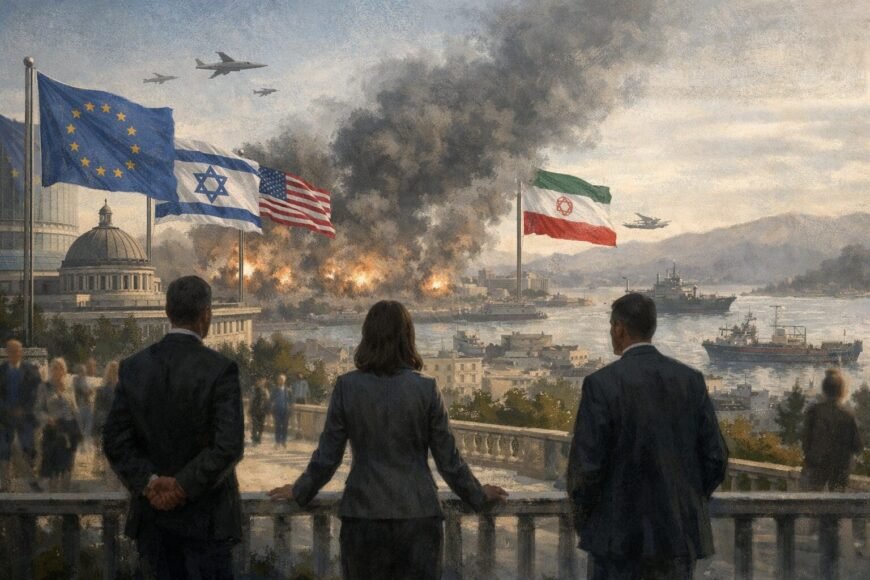
The Iran-USA-Israel War Concluded the Shadow Conflict, Leaving Europe with a Strategic Dilemma
Secretary General – European Muslim Initiative for Social Cohesion – Strasbourg
Thierry Valle
Coordination des Associations et des Particuliers pour la Liberté de Conscience
For Washington and Tel Aviv, the operation was framed as a strategic necessity to halt Iran’s nuclear ambitions. For Tehran, it was an act of aggression demanding retaliation.
But for Europe, the crisis present
EU Proposes Fact-Finding Mission to Ukrainian Pipeline at Center of €90B Loan Drama
“We have proposed a mission to inspect the pipeline to Ukraine,” Commission spokesperson Anna-Kaisa Itkonen stated to reporters on Thursday, noting that Ukraine had not yet repli
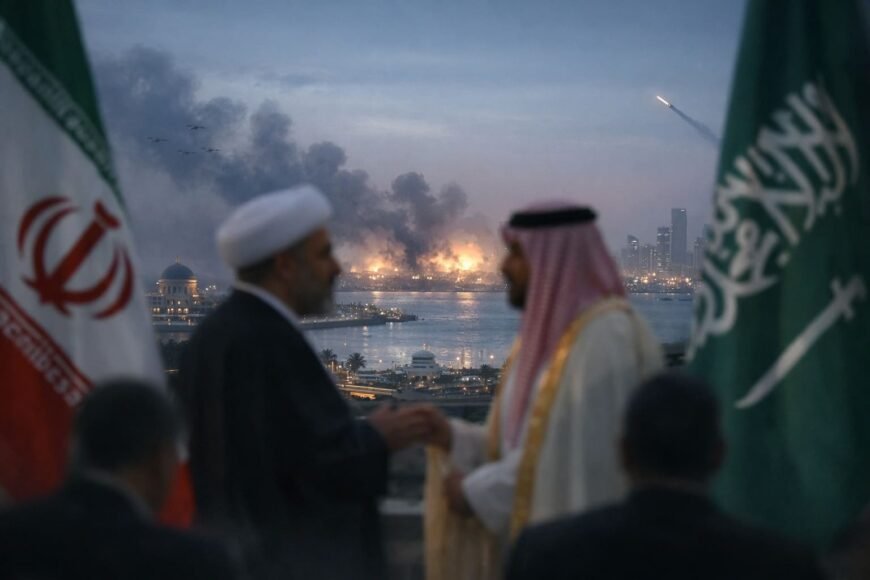
Sparing Saudi: The Back Channels and Deals That Shield Saudi Arabia from Iranian Attacks
The US-Israel and Iran conflict has expanded regionally, with Iran targeting Gulf neighbors. Tehran has significantly reduced missile and drone strikes on Saudi Arabia, placing the Kingdom in a “third tier” behind other Gulf states in terms of the amount of fire received. The United Arab Emirates has been the most attacked.
Iran’s retaliation following late-February US-Israeli strikes has focuse
Leave a Reply