


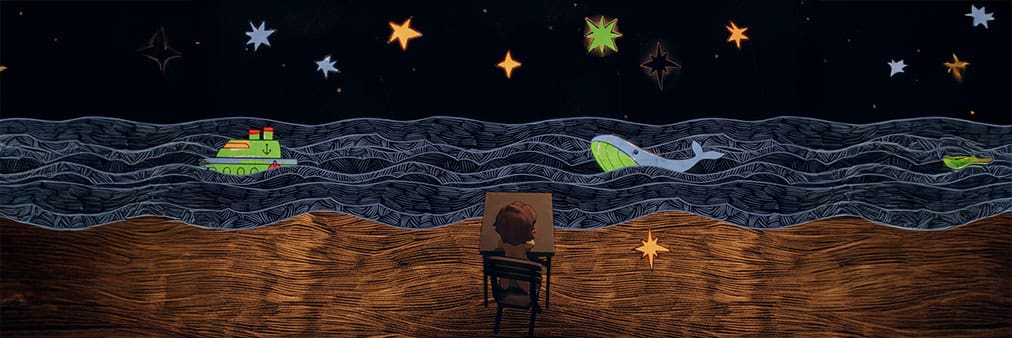
What does war look like through the eyes of a child? A new narrative adventure game, We Grew Up in War, seeks to answer that through the stories of Mak, Anna, Valerie, and Melisa. Co-developed by Prague-based Charles Games and the War Childhood Museum in Sarajevo, the game is based on real testimonies from children who experienced conflict.
The museum, established after Bosnia’s 1992–95 war, is building a vast archive on wartime childhood and is part of Sites of Conscience, a network that promotes dialogue through confronting difficult pasts. The game offers a record of events and insight into a child’s perspective of war. It’s unconventional, with no scoring or winning, focusing instead on the immersive experiences of children in conflict zones, particularly Bosnia and Ukraine. This aligns with the EU-funded MEMENTOES project, which explores using video games to tell complex historical stories.
Jasminko Halilović, founder and director of the Sarajevo museum, emphasizes the game’s focus on family life, friendships, education, dreams, and hopes, not just suffering. MEMENTOES involves researchers across Europe testing video games as a means to reach broader audiences.
We Grew Up in War is one of several MEMENTOES titles. Those From Below, another game, uses virtual reality to depict the 1956 Marcinelle mining disaster in Belgium. Developed with Causa Creations and input from the Le Bois du Cazier museum, it immerses players in the miners’ harsh realities.
Gulag Diaries, another project, transports players to Soviet-era forced labor camps in Siberia. Developed by researchers at ICS-FORTH with Gulag.cz, it bases its narrative on real expeditions and histories of labor camps.
Developers face the challenge of addressing sensitive historical topics interactively. The key is to create an engaging learning experience without trivializing events. Collaboration is crucial, ensuring comfort for those whose stories are shared.
The games seek to make cultural heritage tangible and memorable, fostering empathy by allowing players to experience events from others’ perspectives. Early findings indicate the game’s potential to change attitudes toward refugees and underscore the ongoing impact of war on children.
Although the MEMENTOES research ended in 2025, We Grew Up in War is set for broader release, including educational and commercial versions. Halilović sees this as an opportunity to engage global audiences with the museum’s collection, as digital tools become vital for connecting with the public and broadening access to cultural heritage. Games extend stories beyond museum walls, reaching new audiences.
Research was funded by the EU’s Horizon Programme. Interviewees’ views don’t necessarily reflect those of the European Commission.




Leave a Reply