


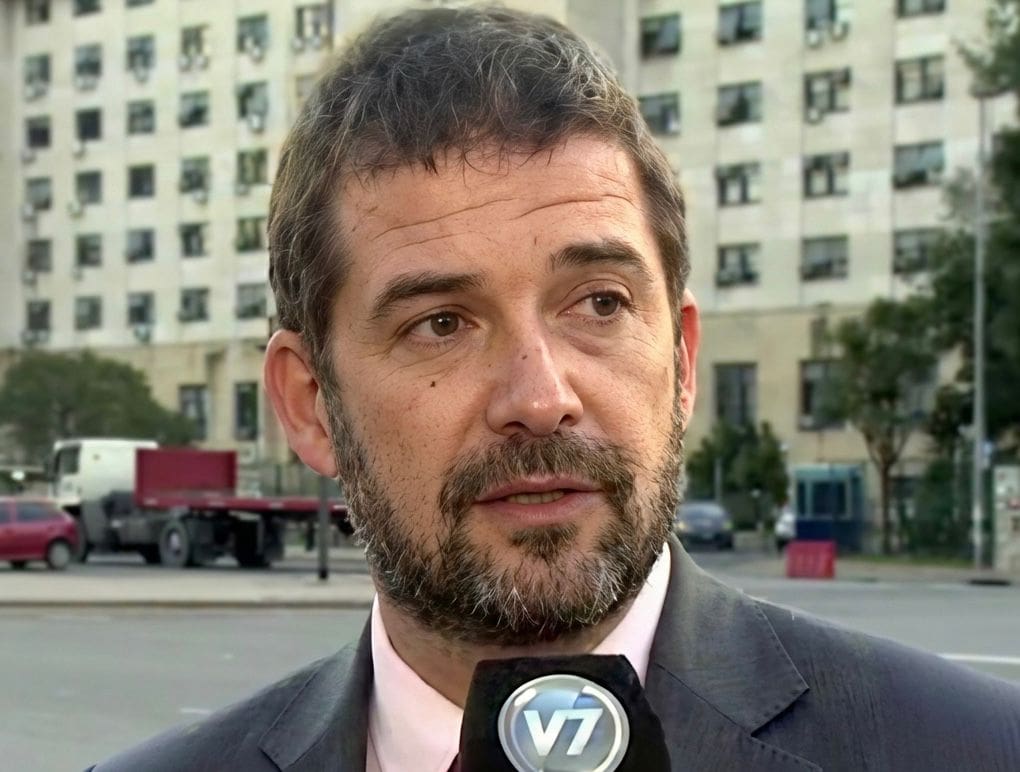
An Argentine prosecutor, often questioned for irregular methods, now faces criticism in three unrelated proceedings.
By Alessandro Amicarelli
I first became interested in Prosecutor Fernando Arrigo and his team due to their intense prosecution of Russian dissident and spiritual teacher Konstantin Rudnev, whom they accuse of being a “cult” leader. As I examined further, I found Arrigo similarly focused on the case against Mapuche leader Facundo Jones Huala. Argentine media report a third case has raised comparable concerns about his conduct: the case of Franco Casco.
Casco was a young man who disappeared in Rosario in October 2014 after being held for a few hours at the 7th Police Station. His body was later found in the Paraná River. Those police officers were acquitted after a long trial, though the Cassation Chamber annulled that decision following an appeal by the prosecution and complainants.
Casco’s family has long felt anguish and suspicion about what happened. Argentina has a history of police brutality, even in democratic times, and I understand the relatives’ concerns. I am not taking a position on the accused officers’ guilt or innocence. My focus is on the pattern emerging in Prosecutor Arrigo’s conduct.
According to a detailed complaint by retired police commissioner Diego José Álvarez, Arrigo and colleague Marcelo De Giovani are accused of using “false, incomplete, and contradictory statements.” The complaint outlines irregularities: selective forensic evidence use despite four autopsies aligning; reliance on a single expert with vague testimony; marginalization of witnesses contradicting the prosecution’s theory; and elevation of one detainee’s testimony despite location inconsistencies and admitted benefits. Overlooked videos, inaccessible documents, and shifting prosecutorial theories about detention time and place raise serious concerns about Arrigo and his team’s methods.
A similar situation is unfolding in Konstantin Rudnev’s case. Evidence is lacking, the case is delayed, and Rudnev’s former lawyer filed a complaint alleging case material falsification.
The Cassation Chamber hasn’t reviewed the Franco Casco case application filed in 2023. Yet, Arrigo’s Cassation appeal in the Rudnev case was hastily considered, breaching procedural deadlines. The lawyer couldn’t appeal the filing; the hearing was held, and Rudnev was sent back to prison. Arbitrary signs also appear in Facundo Jones Huala’s case.
These cases are drawing international attention. Many demand Fernando Arrigo’s removal due to bias, harshness, and repeated harmful actions, including allegedly cavalier evidence treatment. Such methods are unsuitable for a law enforcement role.
Why does Prosecutor Fernando Arrigo remain untouchable? Why are his actions seemingly shielded? It’s not about the substance of the Casco case; it’s about Arrigo.







Leave a Reply