


Arctic Circle, January, 2026 — Eurotoday. places the global spotlight on the Arctic Circle on April 14, 2026, as geopolitical attention intensifies across the planet’s northernmost region. Once viewed as a frozen buffer zone, the Arctic has become a central arena of strategic planning where climate change, security, and global power intersect. Governments with territory or influence near the pole are rapidly expanding military assets in the Arctic, transforming the region into one of the most consequential theaters of the modern security landscape.
The Arctic’s Strategic Awakening
For most of the twentieth century, the Arctic remained distant from daily geopolitical calculations. That reality has changed sharply. Shrinking ice coverage is opening new maritime routes, shortening transit times between major economies, and exposing mineral resources previously locked beneath ice. Defense planners now see the Arctic as a critical corridor rather than a remote frontier. This shift explains the growing emphasis placed on military assets in the Arctic as tools of deterrence, surveillance, and rapid response.
Geography That Shapes Global Power
The Arctic Circle surrounds the North Pole and touches North America, Europe, and Eurasia. Its geography offers the shortest routes for intercontinental missiles and long-range aircraft. Submarine patrols beneath polar ice can move undetected between oceans. These realities mean that developments in the Arctic affect security far beyond the region itself, elevating the importance of military assets in the Arctic to global strategic stability.
Key Arctic Stakeholders
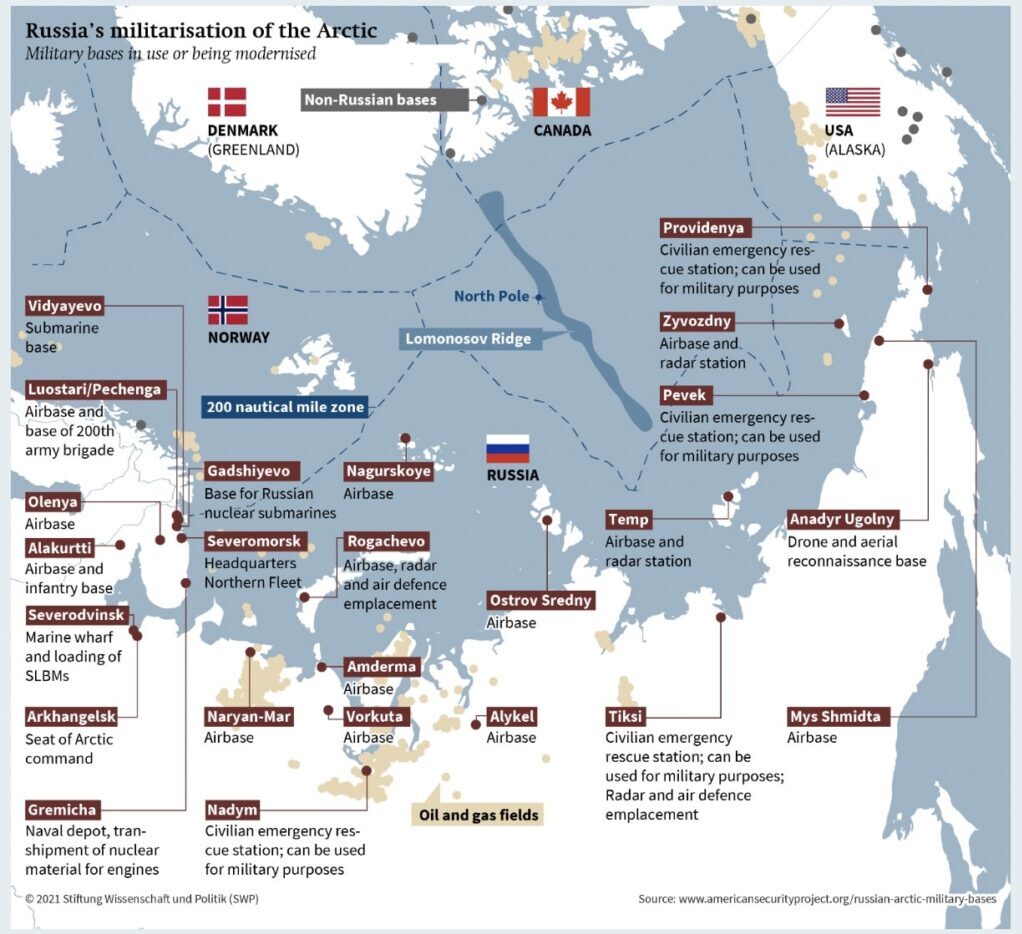
Several nations dominate Arctic security planning. The United States operates critical installations in Alaska. Russia maintains the largest Arctic footprint, stretching across thousands of kilometers of northern coastline. Canada focuses on sovereignty patrols and surveillance, while Norway and Denmark, through Greenland, anchor Europe’s presence. Each state’s investments highlight the rising value of military assets in the Arctic.
Permanent Bases and Forward Infrastructure
Fixed installations form the backbone of Arctic defense. Russia has reopened and






Leave a Reply