


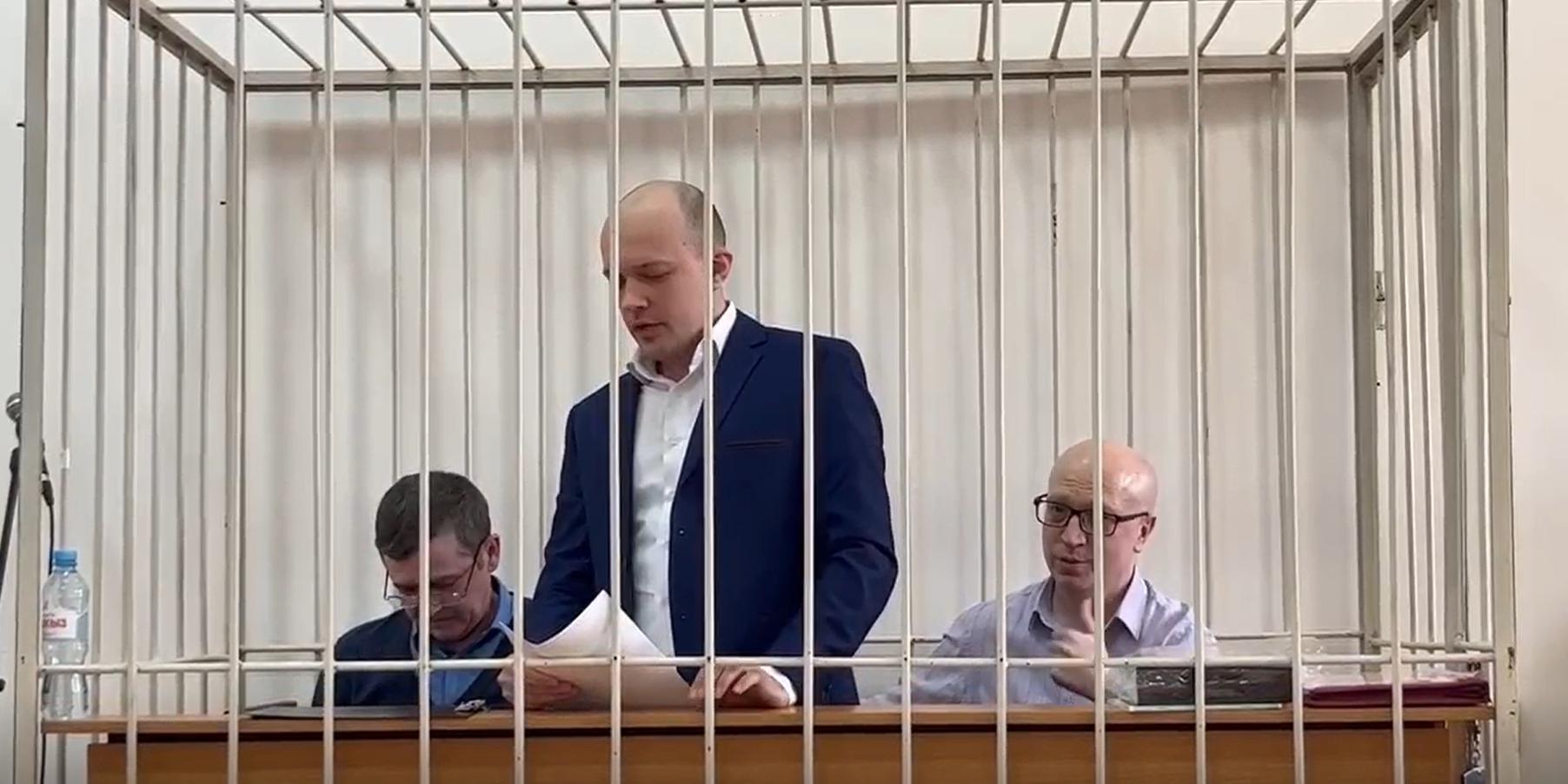
Jehovah’s Witnesses Face Escalating Religious Persecution in Russia: Over 140 Imprisoned and Record Sentences Handed Down
As of December 16, 2024, Jehovah’s Witnesses have faced increasing repression within Russia, experiencing severe judicial actions and record-breaking sentences. Since the Russian government’s 2017 ban on the religious group, state security forces have conducted a staggering 2,157 searches of believers’ homes, with 96 taking place in 2024 alone, 17 of which occurred in Crimea.
This year, 41 new criminal cases were initiated against Jehovah’s Witnesses, with 19 individuals detained and 15 of them still behind bars. Comparatively, in 2023, 100 believers were targeted with criminal charges, indicating a slightly reduced but still alarming trend of persecution.
Harsh Sentencing in 2024
In 2024, Russian courts sentenced 116 Jehovah’s Witnesses, with 43 individuals (37%) receiving prison terms. Notably, nine people were sentenced to forced labor, a form of punishment rarely seen in previous years. The severity of these sentences continues to rise, with 24 individuals receiving prison terms exceeding five years, representing nearly 56% of those incarcerated.
The most severe sentence handed down in 2024 was to Alexander Chagan from Tolyatti, who received eight years in a penal colony. Prior to this, three Khabarovsk residents—Nikolai Polevodov, Vitaliy Zhuk, and Stanislav Kim—were given record-setting prison sentences of over eight years each, though appellate courts later reduced their sentences to suspended terms.
Since the crackdown began in 2017, 842 Jehovah’s Witnesses have faced criminal prosecution, with 450 of them spending at least a day in detention. Currently, 147 individuals remain behind bars, either convicted or awaiting trial. While 27 believers have been released from prison to date, including eight this year, most continue to endure court-imposed restrictions that can extend for up to eight years or more.
Regional Disparities and Comparisons with Violent Crimes
The persecution of Jehovah’s Witnesses has been notably severe in southern regions of Russia, such as Astrakhan, Rostov, Volgograd, Crimea, and Sevastopol, where the average prison sentence exceeds six years. This starkly contrasts with other criminal cases in Russia. For example, in 2023, of the 1,297 individuals convicted of causing grievous bodily harm, only 11 (0.85%) were sentenced to terms of five to eight years. These figures suggest that Jehovah’s Witnesses are treated as more dangerous than individuals convicted of violent crimes.
Reflecting on these alarming statistics, Yaroslav Sivulskiy, a representative from the European Association of Jehovah’s Witnesses, remarked, “The cumulative numbers and severity of custodial sentences are increasing. To put it simply, during this year they imprisoned less, but more severely.”
International Condemnation and Limited Media Attention
International organizations have consistently criticized Russia’s treatment of Jehovah’s Witnesses. In 2024, the European Court of Human Rights (ECHR) ruled in favor of 16 Jehovah’s Witnesses subjected to illegal arrests and searches, ordering Russia to pay compensation. However, despite withdrawing from the European Convention on Human Rights in 2022, Russia has yet to implement these rulings.
In October 2023, the UN Human Rights Committee issued two judgments condemning the liquidation of local religious organizations (LROs) belonging to Jehovah’s Witnesses in Abinsk and Elista, which had set a precedent for the broader persecution of the group. The Committee emphasized that Jehovah’s Witnesses’ literature contains no incitements to violence, contrary to the Russian government’s accusations of extremism. The UN found Russia in violation of Articles 18.1 and 22.1 of the European Convention on Human Rights, which guarantee the rights to freedom of religion and assembly.
Despite these rulings, Russia has shown little inclination to change its policies. Following the UN’s decision on the Abinsk case, local authorities escalated their actions by initiating new criminal charges against Valeriy Baylo, a 66-year-old Jehovah’s Witness, sentencing him to two and a half years in a penal colony. He is currently in custody, awaiting appeal.
A Lack of Media Coverage
While international human rights organizations have condemned Russia’s actions, the persecution of Jehovah’s Witnesses receives limited media attention in Europe and beyond. Additionally, certain groups that claim to advocate for human rights have largely ignored or downplayed the systematic persecution of Jehovah’s Witnesses under Vladimir Putin’s government.
Conclusion
Over seven years, the







Leave a Reply