Turkey’s Grapes: A Lost Paradise

Seyit Karagözoğlu wasn’t present when inspectors arrived at his winery, Paşaeli, in 2021.

In addition to running his business, Karagözoğlu devotes much of his time driving across Anatolia, seeking to protect Turkey’s endangered winemaking heritage by rediscovering forgotten grape varieties. While on one of these journeys, he received a call from his brother warning him that the inspection at their winery was anything but routine.

Inspectors scrutinized Paşaeli’s operations for 13 hours, eventually finding a minor violation to justify their thorough probe. What followed was a grueling, two-year legal battle. Though Karagözoğlu and his brother were not convicted, they were hit with a $50,000 fine.

Their transgression? Producing wine in Turkey during a time when it has never been more challenging — or more vital.

Turkey’s wine industry is fraught with contradictions. While southeastern Anatolia is believed to be the birthplace of the domesticated grapevine, and the country ranks as the world’s sixth-largest grape producer with around 1,400 indigenous grape varieties, only 3 percent of the harvest is used for winemaking. Most grapes are repurposed for raisins or grape molasses.

Compounding this untapped potential are restrictive laws imposed by Turkey’s increasingly conservative government, which make it harder for independent wineries to survive. To exacerbate matters, climate change ushered in the country’s hottest summer in memory this year, hastening harvests significantly.

Yet, despite these obstacles, winemakers like Karagözoğlu are spearheading a growing movement to revive Turkey’s forgotten grape varieties and preserve its winemaking legacy.

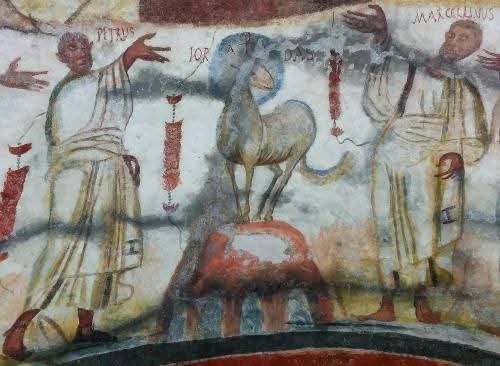
Much of Turkey’s viticultural heritage was devastated in the early 20th century during the forced migrations and population exchanges involving Anatolia’s Christian minorities. Following the removal of the Ottoman Empire’s Armenian and Greek populations — who played a crucial role in traditional winemaking — the industry suffered, and the crucial generational knowledge tied to it was lost. Today, as farmers increasingly replace grapevines with more lucrative crops, native grape varieties are disappearing at an alarming rate.

This is a loss that Umay Çeviker is committed to reversing. An architect turned viticulture advocate, Çeviker co-founded Yaban Kolektif, an organization focused on revitalizing Turkey’s wine industry in partnership with small, local vineyards.

“We owe it to the Greeks, to the Armenians,” Çeviker said, emphasizing the importance of rediscovering and preserving historic winemaking practices. “We’re not only losing grape varieties and old vines but also valuable knowledge about their adaptability to shifting climate patterns.”

Another passionate winemaker dedicated to reviving these endangered grape varieties is Udo Hirsch, an 81-year-old German living in Cappadocia. With a quiet but resolute determination, Hirsch grows native vines in the region’s volcanic earth and ferments wine in ancient amphorae.

Under the shadow of a dormant volcano, Hirsch roams his vineyard, tending to local grapes like Keten Gömlek, a sweet yet slightly bitter variety; Bulut, named after the word “cloud” in Turkish; and Taş Üzüm, whose tightly clustered grapes resemble a clenched fist. These grapes are the essence of his wines, which reflect the region’s rich terroir.

“This land,” Hirsch said, “is a paradise of grapes.” However, this paradise faces threats from climate change, evolving agricultural practices, and government policies.

This year’s intense heat brought record-high temperatures that disrupted traditional growing seasons and impacted grape quality. In one of Paşaeli’s vineyards in Gedik Köyü, grapes ripened by late August instead of their usual late-September timing. Similarly, Hirsch and his small-team boutique winery, Gelveri, felt the consequences of the early harvest. Producing only about 5,000 bottles a year, Hirsch found himself picking grapes alongside his wife after their workers fell ill. “If we wait too long, the grapes will become too sweet,” he explained.

Beyond climate challenges, standard agricultural practices and bureaucracy also pose hurdles.

Early in his winemaking career, Karagözoğlu realized that Turkey’s heritage grape varieties were being overlooked. Determined to change this, he set out with his Italian consultant, Andrea Paoletti, to visit rural villages, asking farmers to let them examine their grapes. This grassroots effort allowed him to source and cultivate thousands of kilos of indigenous grapes, including rare varieties like Karasakız and Çakal. However, the journey wasn’t always straightforward.

In one instance, Karagözoğlu identified a rare grape variety, Koloroko, in a farmer’s field and began vinifying it. But when he returned, the farmer had cleared the vines to plant a more profitable crop. Undeterred, Karagözoğlu



Comments

2 responses to “Turkey’s Grapes: A Lost Paradise”

  1. Friday Ferrari Avatar
    Friday Ferrari

    Honestly, nothing screams “success” like a $50,000 fine for daring to produce wine in a country that practically invented it! 🍷 But hey, at least those grapes are finally getting a taste of the spotlight—right before being turned into raisins again. Cheers! 😅

  2. Oh, look at that! A multi-year legal drama over a few grapes—who knew winemaking in Turkey was as thrilling as a political scandal? 🍇😂 Honestly, it sounds like a vintage soap opera where the grapes are the real stars, and the government just loves to play the role of the villain!

Leave a Reply

Your email address will not be published. Required fields are marked *

Last News

Morocco’s Ambitious Plan to Construct the World’s Largest Football Stadium

Morocco’s Ambitious Plan to Construct the World’s Largest Football Stadium

Morocco is making a bold move to host the 2030 World Cup by planning to construct the largest football stadium in the world, “Stade Hassan II,” to host matches in four years.
The stadium will be situated in the El Mansouria region, about 38 kilometers north of Casablanca, with a capacity of 115,000 spectators. It will feature modern architecture with 32 monumental entrances, incorpora

Read More

Merz and Macron Commit to Swift Action on EU Priorities Before Possible Le Pen Presidency

Merz and Macron Commit to Swift Action on EU Priorities Before Possible Le Pen Presidency

“The implementation plan must progress rapidly and vigorously,” Macron stated. “This is crucial for us — it is vital — as it is for Europe.”
Merz emphasized the urgency. “Collaboration between Germany and France is essential when Russia threatens our security, the People’s Republic of China challenges our economy, and the transatlantic partnership is no longer a

Read More

US Equity Funds Face Outflows Amid Decline in Chip Stocks: Federal Reserve News

US Equity Funds Face Outflows Amid Decline in Chip Stocks: Federal Reserve News

Washington, July 17 Eurotoday — Federal Reserve news remained a key focus for investors as US equity funds posted fresh outflows during the latest reporting period. A broad decline in semiconductor stocks weakened market sentiment, prompting investors to reduce exposure to technology-focused funds. Concerns over interest rate expectations, corporate earnings, and slowing momentum in high-growth

Read More

Can a Priest Be Stripped of His Rank?

Can a Priest Be Stripped of His Rank?

On June 30, a priest was stripped of his rank for prioritizing the gospel commandments and Christian conscience over church authority. The “For the Church and for the People” Telegram channel reported that 50 clergymen were defrocked in the ROC MP during the first quarter of 2026. This measure, once exceptional, has become routine under the current patriarch, as has the subsequent reinstatement o

Read More

Green Boss Polanski Says Burnham Can’t ‘Sit on the Fence’ Like Starmer

Green Boss Polanski Says Burnham Can’t ‘Sit on the Fence’ Like Starmer

Polanski, whose political broadcasts use the slogan “let’s make hope normal again,” remarked that “imitation is the sincerest form of flattery” but criticized Burnham’s “vibes-based” hope as “a distraction from actually implementing policies.”
He informed POLITICO that the Green agenda, featuring wealth taxes, rent controls, and measures

Read More

Starmer’s Issue: "He Isn’t a Politician"

Starmer’s Issue: "He Isn’t a Politician"

Andy Burnham is due to be named leader of the Labour Party on Friday, before he becomes prime minister on Monday.
The outgoing mayor of Manchester will be confirmed as Keir Starmer’s successor at a special party conference in central London later on Friday (17 July).
He replaces Sir Keir Starmer who spent just two years in office.
This site canvassed opinion on what is a momentous day in British

Read More

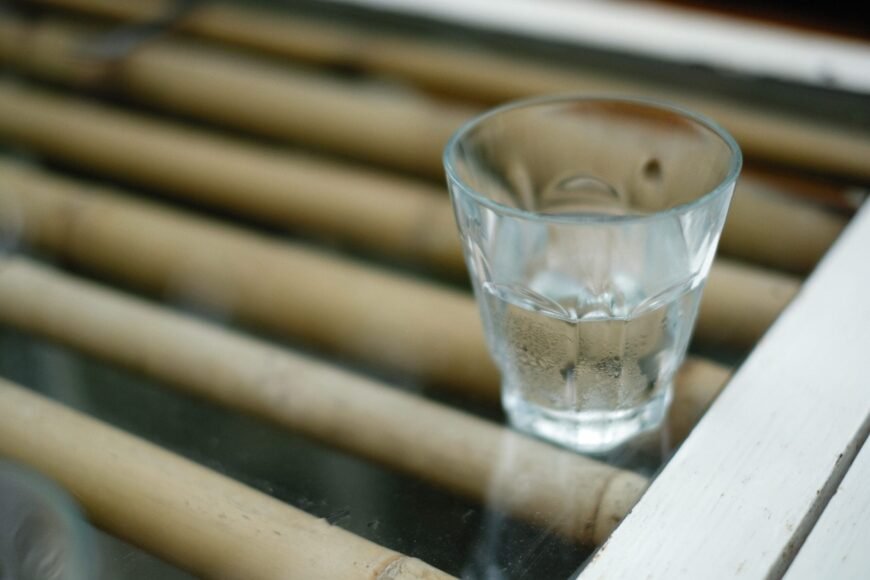
Drink Water to Combat Fatigue and "Brain Fog"

Drink Water to Combat Fatigue and "Brain Fog"

One simple indicator of good hydration is the color of your urine.
The recommendation of 30-35 ml per kilogram of weight doesn’t suit everyone.
Water isn’t just a fundamental physiological necessity – it regulates every bodily process. The fluid around cells aids nutrient transport, intercellular communication, and waste removal. Inadequate hydration puts the body under stress, showin

Read More

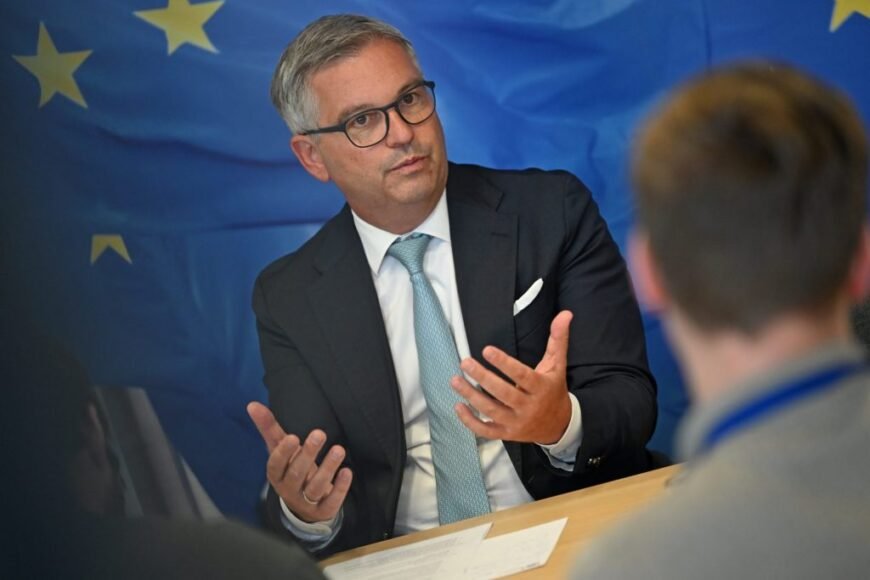
To Join the EU or Not? An Interview with Migration Commissioner Magnus Brunner

To Join the EU or Not? An Interview with Migration Commissioner Magnus Brunner

Migration policy is a key priority for the European Union. One month after the introduction of the Pact on Migration and Asylum, the EU is assessing whether it’s achieving the intended outcomes.
Magnus Brunner, the European Commissioner for Internal Affairs and Migration, expressed optimism in a recent interview with the European Newsroom. He noted that member states have started to apply th

Read More

Energieintensive Industrie kritisiert ETS-Reform

Energieintensive Industrie kritisiert ETS-Reform

— Der Kanzler und die Wirtschaftsministerin setzen sich in der EU für eine wirtschaftsfreundliche Politik ein und erzielen häufig Erfolge, analysiert Romanus Otte. — Es gibt Bedenken bezüglich eines Misserfolgs der Zollverhandlungen …

Read More

Smoking: A "Devastating Dependence" and "Disease Burden from Combustible Tobacco"

Smoking: A "Devastating Dependence" and "Disease Burden from Combustible Tobacco"

The current revision of EU legislation on tobacco has soared up the political agenda of late, with debate fiercely raging on how any new laws should look.
Dr Garret McGovern is an ardent advocate of ready access to safer nicotine products as an alternative to smoking.
In an exclusive Q&A with this site, he insists family members can “reap the benefits” of loved ones who smoke switching to e

Read More