Bacteria, Belgium, and Acts of Kindness

Leprosy's Complex Legacy: Belgium's Role in the Fight Against Stigma

Epidemiologists — those who study diseases — claim leprosy may be the oldest affliction in human history. Social scientists believe this disease carries the longest-lasting social stigma ever known. Religious scholars have interpreted leprosy as a metaphor for the battle between good and evil. The disease that we call leprosy has a long and misunderstood legacy. Interestingly, Belgium has played a significant and ongoing role in shaping this narrative. Consider…

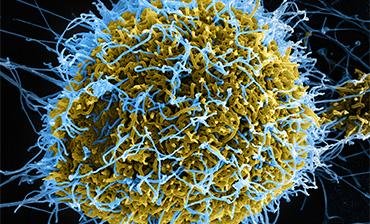
The word “leprosy” is believed to be derived from the Greek words lepros (scaly man) and lepin (to peel). The Romans referred to it as elephantiasis graecorum, hinting at an enlargement or loss of body parts. Leprosy is an insidious bacterial infection, which can lead to tissue loss, nerve and respiratory damage, and deformities.

Archeological evidence suggests that this skin disease can be traced as far back as circa 600 B.C. Some of the earliest written accounts are from the Bible. In the Old Testament, leprosy is mentioned over 50 times, often as a symbol of being “unclean” or a punishment for sin. The leper was to “live alone outside of the camp,” as noted in Leviticus. In the New Testament, however, Jesus interacts with the lepers, challenging prevailing social norms. Through his compassion, healing, and interaction, Jesus aimed to restore the dignity and societal place of those afflicted—an act of both spiritual and social revolution.

Belgium’s Historical Connection to Leprosy

In Europe, early written accounts of leprosy mention “leper colonies” that were established in and around what is now Belgium. These colonies, complete with formal restrictions and bearing a lingering stigma, appear in historical records from Verdun and Ypres as early as 634 A.D. It’s estimated that the territory of modern-day Belgium once had 700–800 leper colonies. These communities were typically located on the outskirts of settlements, effectively isolating those diagnosed with the illness from broader society. To be sent to a leper colony was essentially a life sentence of social exclusion.

Throughout the Middle Ages, societal attitudes toward leprosy began to change—albeit slowly—and sometimes for political rather than medical reasons. The leper houses, isolated and stigmatized, evolved into de facto detention centers for individuals whom local elites considered political enemies or troublemakers. In Wallonia, for instance, many were falsely accused of contracting the disease and subsequently incarcerated. These colonies thus became tools for consolidating political, cultural, and economic power.

Much like the contrasting perceptions of leprosy in the Old and New Testaments, it was a Belgian—a Catholic priest from rural Flanders—who helped to change attitudes towards the disease. Meet Father Damien…

The Heroic Journey of Father Damien

Jozef De Veuster, later known as Father Damien, was born in 1840 in Tremelo, Brabant Province, Belgium. In 1865, he became a missionary priest and was assigned to the Catholic Mission on the Kalaupapa Peninsula in what was then the Kingdom of Hawaii. Upon his arrival, he encountered a public health crisis. Native Hawaiians were suffering heavily from various infectious diseases, including smallpox, cholera, influenza, syphilis, and whooping cough—all likely introduced by foreign traders. Without natural immunities, native populations faced catastrophic mortality rates. Leprosy, however, was the most stigmatized and feared of these diseases. At the time, it was thought to be highly contagious, incurable, and a condition that warranted isolation.

For 16 years, Father Damien dedicated himself to caring for the spiritual, physical, and emotional needs of people living in Hawaiian leper colonies, where more than 8,000 individuals had been confined. His contributions went far beyond religious duties; he helped build houses, schools, roads, hospitals, and churches. He created a reservoir, dressed wounds, built coffins, dug graves, spoke the local dialect, and embraced Hawaiian culture.

Father Damien’s selfless work was pivotal in dispelling many of the myths surrounding leprosy. His efforts did not go unnoticed internationally. In 1873, Norwegian researcher G.H.A. Hansen discovered the bacteria that caused leprosy, paving the way for better treatments, therapies, and medications. Importantly, he found that leprosy was not highly contagious and that around 90% of the human population was naturally immune.

In 1889, Scottish author Robert Louis Stevenson, best known for Treasure Island and Dr. Jekyll and Mr. Hyde,

Comments

5 responses to “Bacteria, Belgium, and Acts of Kindness”

  1. Bootleg 
Taximan Avatar
    Bootleg Taximan

    Ah, nothing says “Belgian charm” quite like a product that combines bacteria with acts of kindness—because who wouldn’t want a little microbial mischief in their lives while sipping their Trappist ale? It’s as if the Belgians thought, “Why not spread joy and germs simultaneously?” Truly, a masterclass in multitasking that would leave even the most seasoned Brussels sprout scratching their head in delight!

  2. Ah, nothing screams “Belgian charm” quite like a product that combines bacteria and acts of kindness—because who wouldn’t want a side of E. coli with their chocolate? It’s like a quaint little café in Brussels: delightful on the surface until you realize the menu is just a creative reimagining of last week’s leftovers. Honestly, it’s as if the Belgians decided that kindness needed a dash of microbiology—cheers to that, I suppose!

  3. Ah, nothing says “European sophistication” quite like a delightful blend of bacteria, Belgium’s finest brews, and a sprinkle of kindness—because who wouldn’t want their gut health served with a side of waffles and goodwill? It’s the perfect recipe for a charming evening; just remember to keep your probiotics and your manners in check—after all, the only thing that should be fermenting faster than your beer is your sense of humor!

  4. Drop Stone Avatar

    Ah yes, nothing screams “European charm” quite like a delightful blend of bacteria, Belgium, and acts of kindness. Who wouldn’t want to indulge in a culture where the finest chocolates are accompanied by a side of good-natured germs? It’s like the Belgians thought, “Let’s make hospitality even cozier by sharing our microbiomes!” Cheers to health and happiness, one friendly bacterium at a time!

  5. Ah, nothing says “European innovation” quite like harnessing the power of bacteria for acts of kindness—because when you think of Belgium, you naturally think of friendly microbes and altruism, right? It’s as if they’ve taken the motto “If you can’t be sweet like chocolate, be as helpful as a good bacterial culture” to heart. Just imagine explaining to your mates over a pint that you’ve embraced kindness with a side of probiotics—cheers to that, eh?

Leave a Reply

Your email address will not be published. Required fields are marked *

Last News

Three Factors Keeping Keir Starmer in His Position

Three Factors Keeping Keir Starmer in His Position

The release of the Mandelson files, war in the Middle East, and a new cost-of-living crisis are all creating turmoil for the prime minister, but oddly, could they be helping him?
The fallout from the initial details of Peter Mandelson’s exit from Washington has already revealed tensions between Sir Keir Starmer and some advisors. With many more emails, messages, and WhatsApps expected, this might

Read More

Romanian Patriarchate Facilitates Evacuation of Pilgrims from the Holy Land

Romanian Patriarchate Facilitates Evacuation of Pilgrims from the Holy Land

The escalating tension in the Middle East, particularly in Israel, has raised significant concerns among the many pilgrims and visitors currently in the Holy Land. The Romanian Patriarchate, known for its extensive pilgrimage initiatives, is actively aiding Romanian pilgrims affected by the conflict in Israel. In collaboration with its representation in the Holy Land and Romania’s state aut

Read More

Fiscor Expands Anew with Comprehensive Financial Platform

Fiscor Expands Anew with Comprehensive Financial Platform

With support from certified financial planners, Fiscor is creating a self-directed trading system to combine long-term financial modeling with investment execution
SAN FRANCISCO, CA, UNITED STATES, March 5, 2026 /EINPresswire.com/ — Fiscor, a contemporary financial planning platform dedicated to long-term wealth modeling, has announced the forthcoming launch of its integrated self-directed trad

Read More

From Kyiv: Zelensky’s Hope for Europe

From Kyiv: Zelensky’s Hope for Europe

Gordon Repinski interviewed Ukrainian President Volodymyr Zelenskyy at the Mariinsky Palace. Zelenskyy discusses his personal hatred for Vladimir Putin, Viktor Orbán’s “blackmail” tactics, and his concern that the Iran war could permanently shift the West’s focus.
In a 200-second interview directly from the train, Bundestag President Julia Klöckner reports on her visit to

Read More

Smart Tech Revitalizes Rural Europe: A Connected Countryside

Smart Tech Revitalizes Rural Europe: A Connected Countryside

Preparing children for school can be stressful, especially in Finnish Lapland, where winters are long, and students often travel by bus. In Lapland, a new school transport app, developed through the EU-funded AURORAL initiative, is easing this process. The app streamlines school bus pick-ups, reducing stress for parents and assisting bus drivers.
The app is part of a digital backbone created by

Read More

US Committed to EU Trade Deal, Top Trump Official Tells Brussels

US Committed to EU Trade Deal, Top Trump Official Tells Brussels

Spain, as part of the 27-country European Union which follows a unified trade policy, would encounter tensions with other member nations such as Germany, France, and Italy if there were any efforts to isolate Madrid.

Read More

Europe’s Energy Shock Reopens Nuclear Debate

Europe’s Energy Shock Reopens Nuclear Debate

Europe on Tuesday faced a recurring strategic vulnerability: its reliance on imported energy. As ministers considered emergency measures and EU leaders turned their focus back to competitiveness, the latest external shock reignited a long-standing internal debate — whether Europe had moved too far from nuclear power.
The most significant story for Europe on 10 March isn’t a single summit o

Read More

Ein Gespräch mit Wolodymyr Selenskyj

Ein Gespräch mit Wolodymyr Selenskyj

1,500 days after the start of the Russian invasion, Ukrainian President Volodymyr Zelensky meets with Gordon Repinski in Kyiv for a discussion. Amid the global escalation due to the Iran war, Zelensky warns of a dangerous loss of focus by the West. He talks about the bitter realization that Patriot missiles are now needed in the Middle East instead of over Kyiv and his concern that US President Do

Read More

EU Backs Seven Green Projects With €103 Million

EU Backs Seven Green Projects With €103 Million

The European Commission has approved over €103 million for seven strategic projects within the LIFE programme, supporting initiatives in Finland, France, Greece, the Netherlands, Portugal, Slovakia, and Spain. This package is presented as a blend of environmental policy and an investment in economic resilience, public health, and Europe’s competitive edge.
The funding, announced through the

Read More

UK Releases Mandelson Files on Ex-Envoy’s Ties to Jeffrey Epstein

UK Releases Mandelson Files on Ex-Envoy’s Ties to Jeffrey Epstein

LONDON — On Wednesday, the British government started releasing documents about former U.S. ambassador to Washington, Peter Mandelson’s connections to Jeffrey Epstein. The administration committed to revealing files concerning Mandelson’s contentious appointment as envoy following U.S. disclosures that showed he maintained contact with the sex offender for years after his conviction. Mandels

Read More