


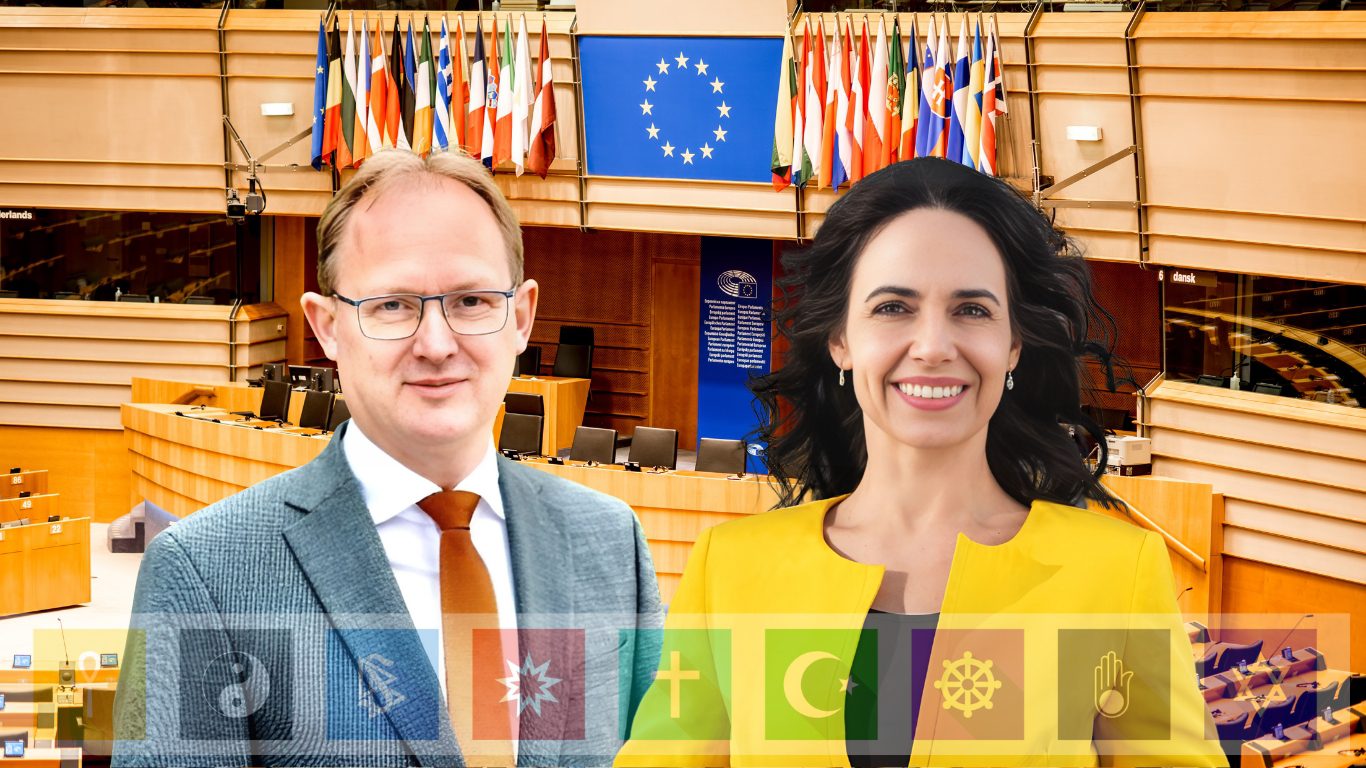
European Parliament Revives Intergroup on Religious Freedom Amid Rising Global Violations
Brussels – In a significant development aimed at bolstering the protection of religious freedom both within Europe and globally, the European Parliament has reconstituted the Intergroup on Freedom of Religion or Belief. The decision, finalized during the conference of parliamentary leaders on December 11, 2024, underscores the pressing need to defend individuals facing persecution due to their faith or beliefs.
Co-chaired by Bert-Jan Ruissen (SGP, ECR) and Miriam Lexmann (EPP), the intergroup aims to shine a spotlight on the struggles of those persecuted for their faith worldwide. Ruissen emphasized the urgency of this work, stating, “This intergroup gives us a crucial platform in the European Parliament to advocate for persecuted communities. The severity of the situation remains underappreciated by many.” Adding to this, Lexmann remarked, “From China to Belarus, freedom of religion or belief is increasingly deteriorating. It is vital for the European Union, especially the Parliament, to prioritize monitoring and supporting this fundamental freedom on a global scale.”
Rising Concerns Over Violations of Religious Freedom
The reinstatement of this intergroup comes during a troubling period marked by a surge in religious freedom violations. A recent letter from multiple civil society organizations and religious groups highlighted the alarming rise in attacks targeting individuals based on their religion or beliefs. The letter emphasized that freedom of religion or belief is a cornerstone of democratic values, as protected under Article 10 of the Charter of Fundamental Rights of the European Union.
The letter also detailed specific instances of concerning violations across the globe, including the use of blasphemy laws in northern Nigeria, the killing of Christians in Manipur, India, the closure of churches in Algeria, and targeted attacks on Ahmadiyya communities in Pakistan. It further shed light on the plight of Yazidis in Iraq, Baha’is in Iran, and the discrimination faced by atheists and humanists in countries like Nigeria and Pakistan due to apostasy laws. These examples illustrate the pressing need for decisive action from the European Parliament to address such abuses.
Though the letter did not directly highlight violations within Europe, it stressed the importance of ensuring that European nations lead by example. The message was clear: Europe must uphold the values it advocates internationally, as this strengthens its credibility when condemning violations abroad.
A Collaborative Effort to Protect Fundamental Freedoms
Since its inception in 2004, the Intergroup on Freedom of Religion or Belief has drawn support from various political factions, demonstrating its broad appeal. Following each election cycle, the intergroup must be re-established, requiring backing from at least three distinct political groups. Ruissen acknowledged the collaborative effort behind the initiative, saying, “We worked alongside colleagues from diverse factions to rally support, securing backing from my own faction (ECR), as well as from the liberals (Renew) and the Christian Democrats (EPP).”
A key priority for the intergroup will be the appointment of a new EU Special Envoy for religious freedom, a position that has lacked adequate resources and institutional support. The previous envoy, Frans van Daele, concluded his term in November 2024. Moving forward, the intergroup plans to strengthen communication with the EU’s diplomatic services to ensure that religious freedom remains a central focus in international discussions and policy-making.
A Platform for Advocacy and Unity
The civil society organizations behind the letter stressed that the intergroup is vital in empowering Members of the European Parliament (MEPs) to engage directly with communities affected by religious persecution. They also emphasized the importance of fostering unity among religious and belief groups, urging them to collectively address political factions in the European Parliament to underscore the global significance of this platform.
Domestically, the intergroup faces the challenge of ensuring that minority religions and belief groups within Europe are not sidelined. By protecting these communities, the European Parliament not only validates its commitment to diversity and inclusion but also reinforces its moral authority to advocate for religious freedoms on the global stage.
A Renewed Commitment to Freedom and Inclusion
The re-establishment of the Intergroup on Freedom of Religion or Belief comes at a time when such initiatives are desperately needed. In a world where religious freedoms are increasingly under threat, this intergroup represents a crucial step toward safeguarding the rights of individuals, irrespective of their beliefs.
As the European Parliament takes up this mantle, it must move beyond rhetoric to enact meaningful policies and strategies. Protecting religious freedom is not just an abstract principle but a tangible commitment to diversity, human dignity, and equal rights for all. By doing so, the European Union can ensure that it remains a beacon of hope and justice in an increasingly fractured global landscape.







Leave a Reply