



Norwegian authorities have judicially arrested a Russian state-owned expedition vessel in Svalbard, marking a significant phase in Ukraine’s attempt to secure compensation for energy assets seized in Crimea. The ship must stay in Barentsburg as Russia appeals, with a Norwegian court addressing sovereign immunity, commercial property, and those on board.
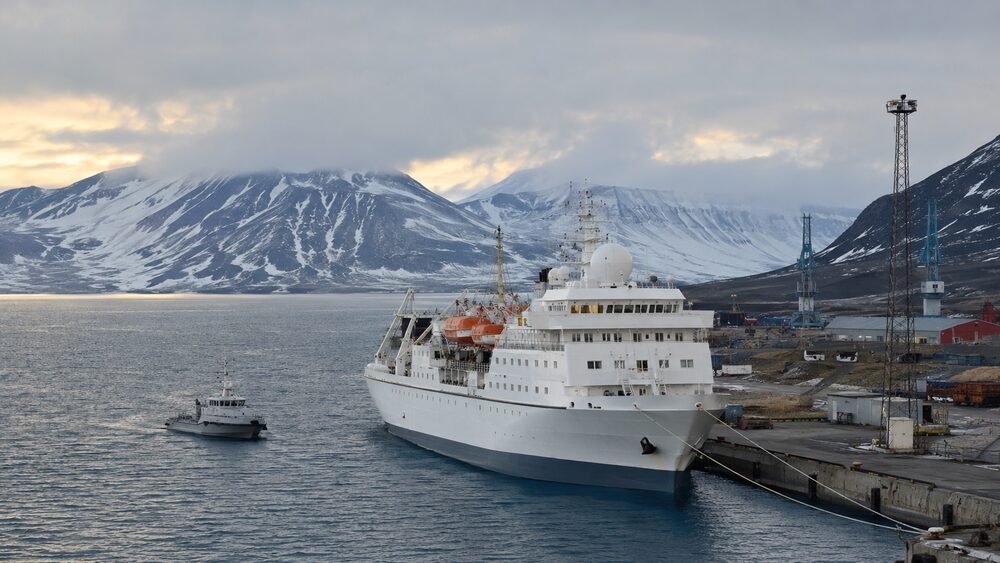
The Professor Molchanov was detained following an order from the Nord-Troms and Senja District Court on August 31. The vessel was docked at Barentsburg when the Governor of Svalbard acted as enforcement officer.
According to the Governor of Svalbard’s notice, the ship must remain at an authority-determined location until further decisions. Norwegian officials are collaborating with Russian company Trust Arktikugol for crew and passenger welfare.
The court ordered the vessel’s arrest to secure debt enforcement, not as a transfer of ownership. Disposing of the vessel requires further proceedings and is subject to Russia’s appeal. Issues of state ownership, commercial use, and sovereign immunity will be scrutinized.
This arrest differs from freezing under European sanctions, which restrict asset movement but don’t transfer ownership. The Svalbard action stems from an arbitration award Naftogaz obtained over oil and gas fields seized after Russia’s 2014 annexation of Crimea, an act unrecognized by Norway, the EU, and the global community.
Naftogaz initiated arbitration in 2016 under the Ukraine-Russia investment treaty. A Netherlands-seated tribunal held Russia accountable for expropriating investments, issuing a damages award in April 2023.
The Norwegian enforcement action covers approximately $4.22 billion in principal, aside from interest and costs. Naftogaz described the ship as a Russian Federation asset used for commercial expedition cruises, which may impact legal arguments.
The arrest advances Naftogaz’s case but doesn’t recover the full award. Even if upheld, one vessel covers only a fraction of the claim. Enforcement of international awards requires court recognition in countries where the state holds assets, each jurisdiction applying its own rules and state immunity principles, making the process slow and challenging.
Russia has opposed the action, calling it terrorism and piracy, and plans to appeal. The vessel wasn’t seized unlawfully but was stopped in a Norwegian port by local authorities under a court order. Russia can contest the court’s authority, the award’s enforceability, and the vessel’s attachment legally.
The location adds sensitivity. Svalbard is Norwegian but governed by a treaty allowing participating states’ access and economic rights. Barentsburg is a long-standing Russian center on the archipelago.
A civil-enforcement measure alone doesn’t change that framework. Retaliation against Norwegian interests could escalate the legal dispute into a diplomatic conflict. Cooperation is vital in the region, amid fragile relations due to Russia’s war against Ukraine.
For Ukraine, this case shows that compensation awards gain weight when enforced by courts. It might encourage other Ukrainian companies to trace Russian state assets abroad.
Procedural discipline is crucial. Durable enforcement requires clear court reasoning, meaningful appeals, and distinction between attachable commercial property and sovereign assets. The crew’s welfare must remain independent of the financial dispute.
The Professor Molchanov remains docked. Its arrest doesn’t resolve Russia’s seizure’s financial impact but turns an international award into a tangible action. The outcome of the appeal will decide if this sets an important enforcement precedent or is a dramatic pause in a prolonged legal campaign.










Leave a Reply