


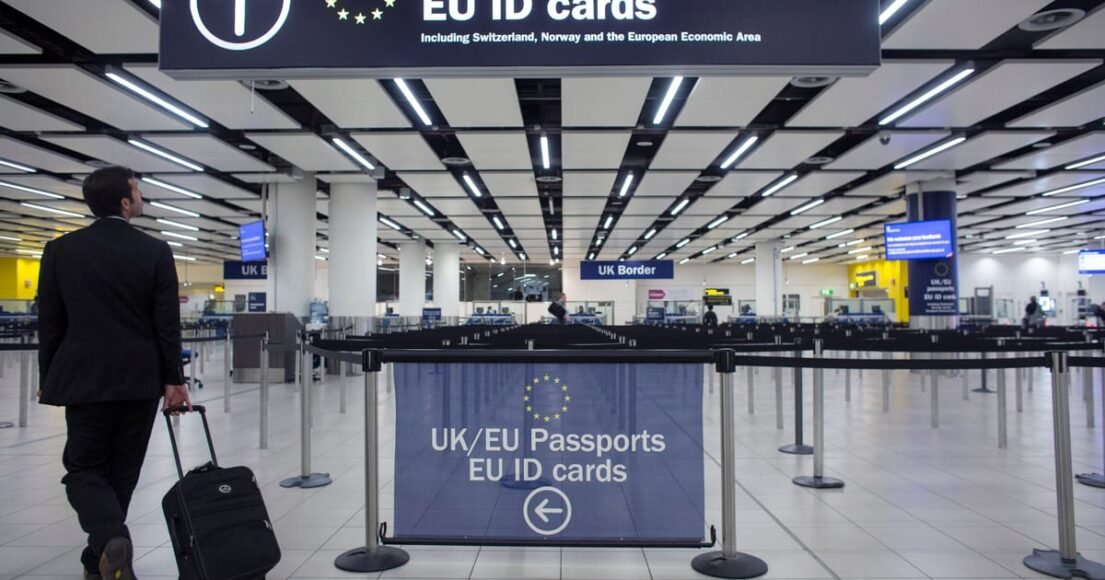
The eVisa database stores information such as an individual’s full name, date of birth, nationality, and a facial photograph. However, these details often closely resemble those of identical twins, like Webb, whose name is similar to her sister’s.
Many such cases
Monique Hawkins, acting CEO of the3million, which advocates for the rights of EU citizens in the U.K., noted that issues with the eVisa system sometimes left individuals unable to verify their identity when crucially needed.
“We have encountered numerous instances where a person’s immigration status is intertwined with another’s eVisa account. Despite raising this issue repeatedly, we had hoped the Home Office would have taken further steps to prevent it. It demonstrates that, despite claims of the eVisa system’s resilience, it can fail individuals when they need it most,” she stated.
Hawkins emphasized the need for a truly reliable means for people to prove their status, criticizing the digital-only system as “rushed.” She added, “We frequently observe individuals being denied boarding and lacking compensation due to carriers and the Home Office shifting responsibility between themselves.”
Although a Home Office spokesperson did not challenge Webb’s story, they supported the eVisa system, stating it had functioned for many individuals.
“Over 10 million people have already successfully used eVisas to verify their immigration status,” the spokesperson mentioned. “As we broaden our digital system, we remain committed to data accuracy and ensuring that the support mechanisms available to eVisa users are accessible to anyone dependent on the digital system. In the uncommon instances where errors are found, most cases are resolved within 24 hours.”


Leave a Reply