



The chain hasn’t disappeared; it’s just changed its name: Dialogue on Servitude 2.0
Christine Mirre & Yodith Gideon on the occasion of the International Day for the Remembrance of the Slave Trade and its Abolition (August 23)
Introduction
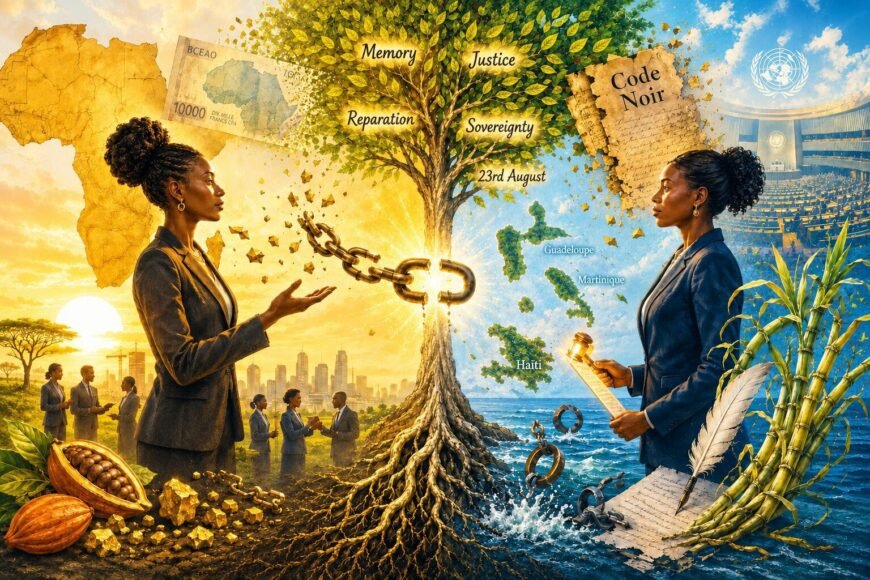
Observed each year on August 23, the International Day for the Remembrance of the Transatlantic Slave Trade and its Abolition commemorates the slave uprising in Saint-Domingue, now Haiti, which started on the night of August 22–23, 1791. This event was instrumental in abolishing the transatlantic slave trade. The first official commemorations occurred in 1998 in Haiti, then in 1999 in Gorée, Senegal. This day not only remembers the tragedy but also seeks to embed it in the collective memory, adhering to the “Routes of Enslaved People” project. It prompts reflection on the historical causes, mechanisms, and consequences of the slave trade, and its interactions between Africa, Europe, the Americas, and the Caribbean.
Presentation
Yodith Gideon, with a career in building and mentoring businesses in Switzerland and Africa, founded Supi Consulting and Neo Panthers, aiming to foster business development within African communities. She authored “Sankofa: How Africa Feeds the World and Starves at Its Own Table.”
Christine Mirre, Director of CAP Liberté de Conscience, engages in documenting human rights violations and has published analyses on France’s abstention during a UN vote and the repeal of the Code Noir. Her work bridges international law, historical memory, and restorative justice.
Memory as a Legislative Battlefield
Yodith Gideon discusses the erasure of African history in school curricula and the 2005 law which portrayed colonization positively, highlighting education as a battlefield for memory. Christine Mirre analyzes the Code Noir’s status in French law and the bureaucratic handling of history, impacting present-day discrimination and understanding of historical narratives.
The Economics of “Freedom”: Compensating the Master, Indebting the Slave
Christine Mirre discusses how compensation laws favored slaveowners and left freed slaves economically disadvantaged. Yodith Gideon illustrates how the same financial mechanisms persist today, with aid and contracts perpetuating economic dependency.
Colonial Psychology: From the “Lobotomized Brain” to the Industrial Prison
Yodith Gideon addresses historical and ongoing racial profiling, emphasizing a systemic continuity from past prejudices. Christine Mirre highlights how state violence and denial of historical wrongs continue to manifest today in socioeconomic discrimination.
Symbols vs. Action: What Comes Next After August 23?
Christine Mirre argues for the necessity of combining restorative justice with economic sovereignty. Doudou Diène’s remarks reinforce the need for actionable reparations beyond symbolic gestures. Yodith Gideon calls for immediate investment in African businesses, advocating economic empowerment alongside legal recognition of historical injustices. Both paths support achieving true freedom and autonomy.










Leave a Reply