



HRWF Report on Visiting 95-Year-Old Chairman Lee Man-hee of the Shincheonji Church of Jesus. He is in pre-trial detention during an extreme heatwave and questions whether Korean law’s supervised alternatives should be used.
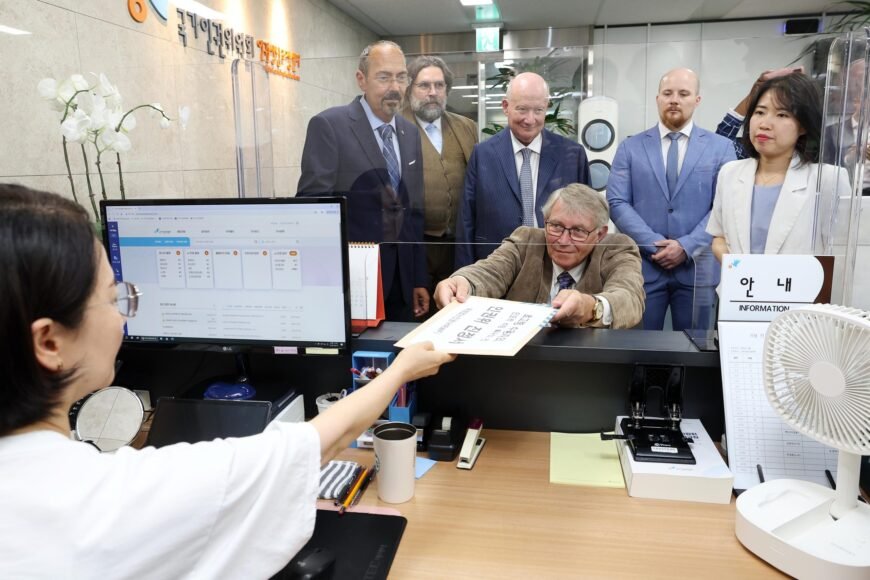
Thursday, 6 August 2026 at 2:00 pm. The detention-centre visiting room is a little more than four metres square. In front of us, a wall of double glass perhaps ten centimetres thick. Behind it, an equally small room. Within it, a guard at a small desk, and an old man already seated. He had heard we were coming – three human rights experts from Europe. We spoke through a microphone; his voice came back through a speaker that crackled and kept fading. We leaned forward for the whole ten minutes.
Chairman Lee Man-hee is 95! He has been held in pre-trial detention since 24 June.
I was joined by expert colleagues from CESNUR, Bitter Winter and CAP Liberté de Conscience. The rules were plain — no interviewing, no consulting, and no sending out messages he would give us. So we mostly listened to a man talking about his faith with an energy that clearly held him upright. Ten minutes through glass is not a medical examination. It is a witness statement, and I offer it as nothing more.
The question raised by this visit is therefore narrow but urgent: not whether Chairman Lee is guilty or innocent, but whether continued pre-trial detention of a 95-year-old defendant is necessary, proportionate, and safe when Korean law provides supervised alternatives. That question runs through the scenes that follow: the visit, the summer’s searing heat, the charges, the available safeguards in Korean law, and finally the request to the court.
The Waiting Room
Booking for an appointment at the detention center was simple, using the Ministry of Justice online service the day before and receiving an assigned time window. A passport is necessary to get in. Untried detainees may in principle be visited daily, a few people at a time. A visit may last only about ten minutes. We knew we were on the clock.
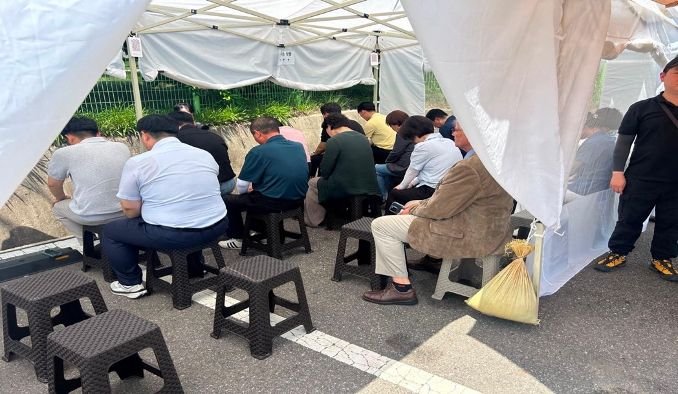
What no one usually describes is the waiting room outside the detention-centre visiting room. It is the room where families and visitors sit before being called in to meet an inmate for a few minutes through glass. Around us were men with tattoos and hard faces, elderly women holding plastic bags on their knees, and young women waiting alone. Nothing about the room was theatrical. It was ordinary, bureaucratic, and grey. Yet the weight of it was visible when some visitors came back out with tears in their eyes.
The Heat
The physical conditions matter, because this was no ordinary summer day. It was 39 °C, the fifth-highest reading in Seoul’s history, and the city was under the first “severe heatwave warning” ever issued for the whole of the capital. Nor was it an isolated peak. Since Chairman Lee’s arrest on 24 June, Seoul has passed through the most oppressive summer it has ever recorded: twelve days at or above 33 °C and twenty nights on which the temperature never fell below 25 °C. Korean media have begun calling them “super tropical nights.” Throughout the day, our phones sounded with emergency public safety alerts telling citizens to remain indoors and drink plenty of fluids.
That matters more than a visitor might guess, because Korean holding cells are generally not air-conditioned. Rumor has it that once in a while some fans were turned on for short periods of time.
Now put a nonagenarian into that arithmetic. Old bodies handle heat badly. They sweat less. They drink less. And they feel heat less accurately, so they overheat before they notice it. Prolonged heat then strains the kidneys and the heart, which is why heatwaves kill the very old first. What normally protects them is the cool of the night, and this month there was none. Shincheonji says Chairman Lee requires constant daily medical support. No independent medical assessment of him has been published — a gap any court would want closed before deciding anything.
The Charges
The factual background is straightforward. Chairman Lee is accused of directing the enrolment of 56,472 followers into the People Power





Leave a Reply