



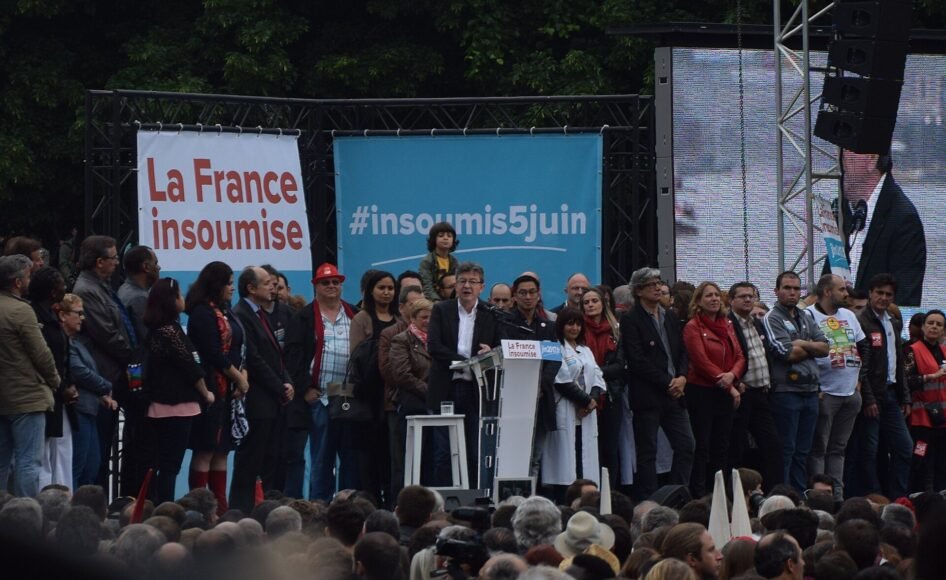
Jean-Luc Mélenchon is challenging the Franco-German alliance in France’s 2027 presidential campaign, proposing to replace it with a model of economic planning, non-alignment, and new diplomatic ties. He argues that the partnership has often prioritized German interests within the EU. Mélenchon wants France to remain in the EU but challenge its economic rules, exit NATO, reconsider defense pacts with Germany, and foster connections with Spain and non-Western countries.
For over six decades, France and Germany have been seen as the engine of European integration. The Élysée Treaty of 1963 and the 2019 Treaty of Aachen established deep cooperation. Despite the two countries presenting their friendship as central to European unity, Mélenchon questions this precedence. He claims the partnership often aligns more with German economic priorities than French needs.
Mélenchon criticizes Germany’s economic model, dating back to his 2015 book “Le Hareng de Bismarck — Le poison allemand.” He resists the admiration for Germany’s export-driven economy and labor policies, deeming them unsuitable for France. His current proposal, backed by the Institut La Boétie, calls for defying EU rules that conflict with national interests, opposing the “ordoliberal” principles in European treaties.
Mélenchon would bring immediate changes in defense, challenging the existing Franco-German cooperation on nuclear and conventional forces. He stresses French legislative scrutiny over defense agreements and maintains that France must retain control over nuclear policy and joint weapon programs, asserting France’s industrial leadership.
Mélenchon proposes France’s withdrawal from NATO, viewing it as a US-dependent bloc that limits sovereignty. While not leaving the EU, he suggests honoring EU mutual assistance while opposing NATO’s structure, which could unsettle European security frameworks heavily reliant on NATO and the US.
Mélenchon aims to shift alliances, emphasizing Spain as a key European partner and advocating closer ties with the Global South, including African countries, Latin America, India, and China. He supports non-alignment, stressing UN and international law, while critics question its consistency in crises.
Mélenchon’s candidacy comes amid existing Franco-German tensions, with disputes over borrowing, trade, and defense. Though not favored, his electoral potential prompts consideration of his policies’ implications. While dismantling the entrenched Franco-German relationship is unlikely, a shift in its privileged status could allow more diverse EU coalitions and challenge German-centric policies. This approach raises questions about the future of European cooperation, whether through longstanding partnerships or shifting alliances and a less predictable France.



Leave a Reply