



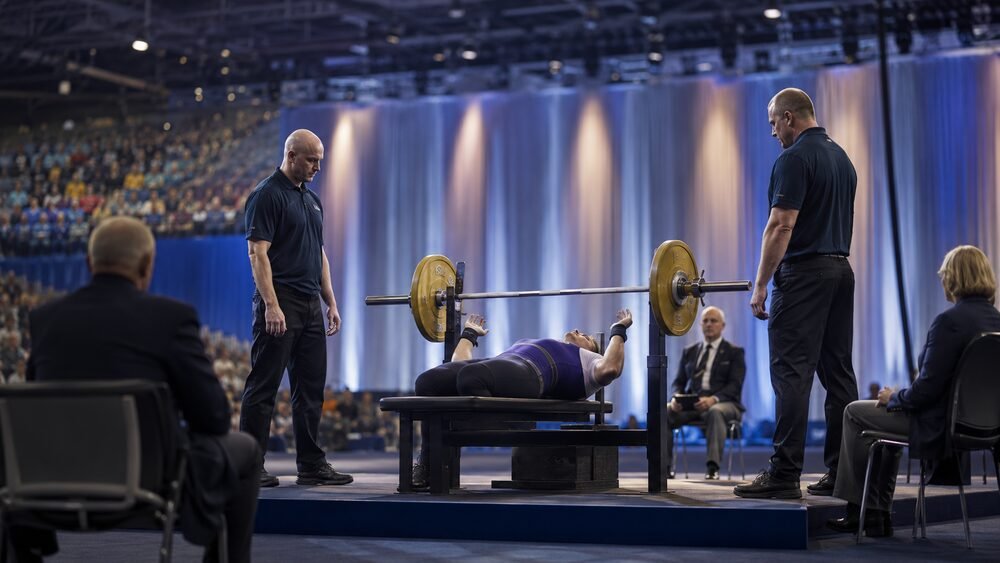
The Commonwealth Games’ opening gold medal sent a powerful message about inclusion, compact hosting, and the public value of sport. On the first day of competition, Para powerlifting took center stage. This deliberate choice turned the first gold medal into more than just a sporting result. England’s Mark Swan claimed the men’s lightweight title, emphasizing the visibility of modern multi-sport events.
The ceremonial significance of the first medal was highlighted in Glasgow, with Para powerlifting taking the spotlight. Commonwealth Sport noted that, for the first time, a Para athlete would receive the opening gold medal, preceding events in the pool, track, or gymnastics arena. Swan secured the title with a lift of 222kg, narrowly defeating Nigeria’s Roland Ezeruike on points, while defending champion Bonnie Bunyau Gustin took bronze. The technicality of the discipline was evident, as the result combined lifted weight and bodyweight.
Glasgow’s hosting from July 23 to August 2 featured a 10-sport program with six integrated Para Sports across four venues. This model arose from necessity after Victoria, Australia, stepped down as host, testing whether a leaner Games could still feel impactful. The reduced scale led to fewer sports, athletes, and visibility opportunities. However, it also allowed for sharper editorial choices. Commencing with Para powerlifting elevated disability sport to the forefront, rather than a later addition.
Inclusion in sport often receives praise but faces practical limitations like funding, broadcast time, and accessible facilities. While a medal ceremony cannot resolve these issues, the event order signals organizers’ priorities. Para powerlifting, a precise sport judged in the bench press, offers a simple yet profound spectacle. Preparation involves classification, coaching, equipment, travel support, and medical understanding, influencing who can compete.
Glasgow’s opening session provided exposure for smaller teams and athletes from less-resourced systems. Commonwealth Sport also highlighted athletes linked to the GAPS program, supporting Para athletes facing participation barriers. This detail should not be overshadowed by the medal table.
The broader European context underscores the need for participation, equality, and community value. As The European Times previously reported, sport should be accessible to all. Glasgow’s choice embodied this principle vividly.
Swan’s victory carries significant sporting weight, symbolizing a message beyond individual achievement. Glasgow must balance showcasing inclusion without reducing athletes to symbols. Para competitors should be recognized for competing by elite sports standards.
Symbols matter when supported by structure. If Glasgow’s compact Games encourages integrated scheduling, accessible venues, and visibility for Para athletes, its first medal will have transcended mere competition. It raises a crucial question for future hosts: who gets seen when the world watches?








Leave a Reply