



Brussels ceremony merges royal tradition, public celebration, and focus on defence and social unity.
Belgium celebrated its National Day in Brussels on Tuesday, combining royal ceremonials, military displays, civil-service recognitions, and public festivities, using the 21 July holiday to reaffirm constitutional stability amidst European uncertainties.
The day started with the Te Deum service at the Cathedral of St Michael and St Gudula, attended by the royal family and senior officials, then shifted to central Brussels for the military and civil parade. The annual event marks 21 July 1831, when Leopold I became the first King of the Belgians.
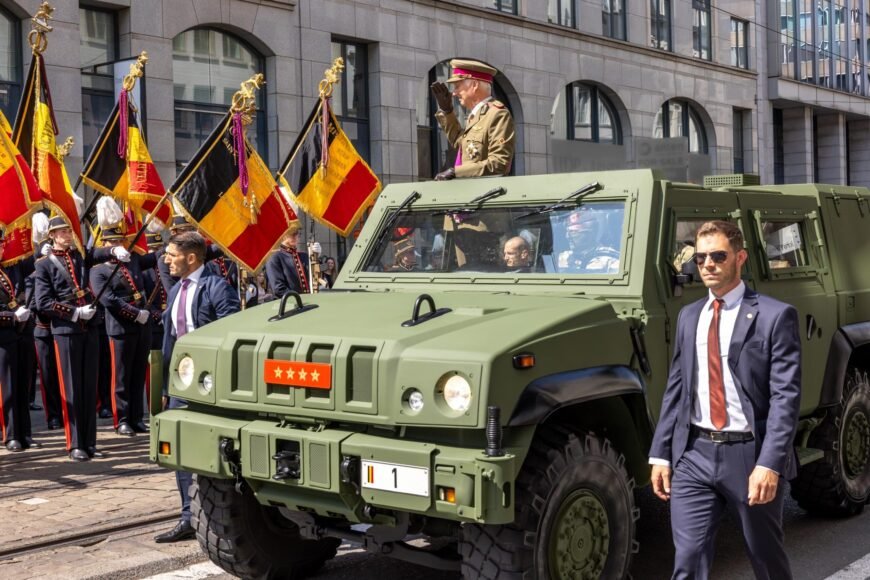
In the afternoon, soldiers, veterans, police, firefighters, customs, and civil protection services participated in the parade, one of Belgium’s key state ceremonies. The City of Brussels highlighted the military and civil parade as central to the day’s events, with public activities in Parc de Bruxelles and an evening concert and fireworks at the Cinquantenaire.
A Parade with Broader Implications
The parade followed King Philippe’s National Day address, where he urged Belgians to maintain social cohesion amid climate pressures, financial strains, geopolitical instability, and defence investment needs, placing the holiday in a sober context of responsibility.
“Budgetary measures are necessary,” the King stated in his official National Day speech, advocating for socially just solutions and attention to the vulnerable. He noted that climate, geopolitical, technological, and social changes challenge Belgium’s unity, but suggested that collective efforts could strengthen the nation.
This message gave the parade a more political significance. National Day often features familiar symbols like flags, uniforms, and royal presence. This year, these symbols were seen against a European backdrop influenced by the war in Ukraine, NATO defence demands, climate concerns, and public institution debates in a divided society.
The parade route and public events turned Brussels into a civic platform. Families, tourists, and residents gathered around areas near the Royal Palace, with public-service villages and cultural activities providing a broader state view than just the military procession. The day’s civilian aspects remained crucial: Belgium’s National Day honors not only armed forces but also emergency workers and public servants crucial during crises.
Security and Public Trust
For Belgium, the National Day symbolism is nuanced. The federal structure, linguistic communities, and coalition politics make national unity a continuous political effort. Public ceremonies don’t erase differences but offer a shared civic language around constitutional monarchy, parliamentary democracy, and public service.
The Brussels parade also underscored changes in European security. Military vehicles, police units, and protection teams are not only ceremonial but indicate a state ready for complex threats, including traditional defence, cyber risks, foreign interference, terrorism, emergency response, and public infrastructure resilience.
Simultaneously, democratic security culture relies on accountability and inclusion. Uniformed services thrive on public trust and clear legal and human-rights standards. Belgium has debated religious and moral support in state institutions, including discussions on spiritual assistance in armed forces and prisons.
Celebration During Uncertain Times
The day’s festive side remained central. The Brussels program included children’s activities, concerts, folklore parades, sports events, and an evening show, reflecting the holiday’s role as a popular urban celebration as much as an official ceremony. For many in the capital, National Day is more about public gatherings in parks and streets than abstract






Leave a Reply