


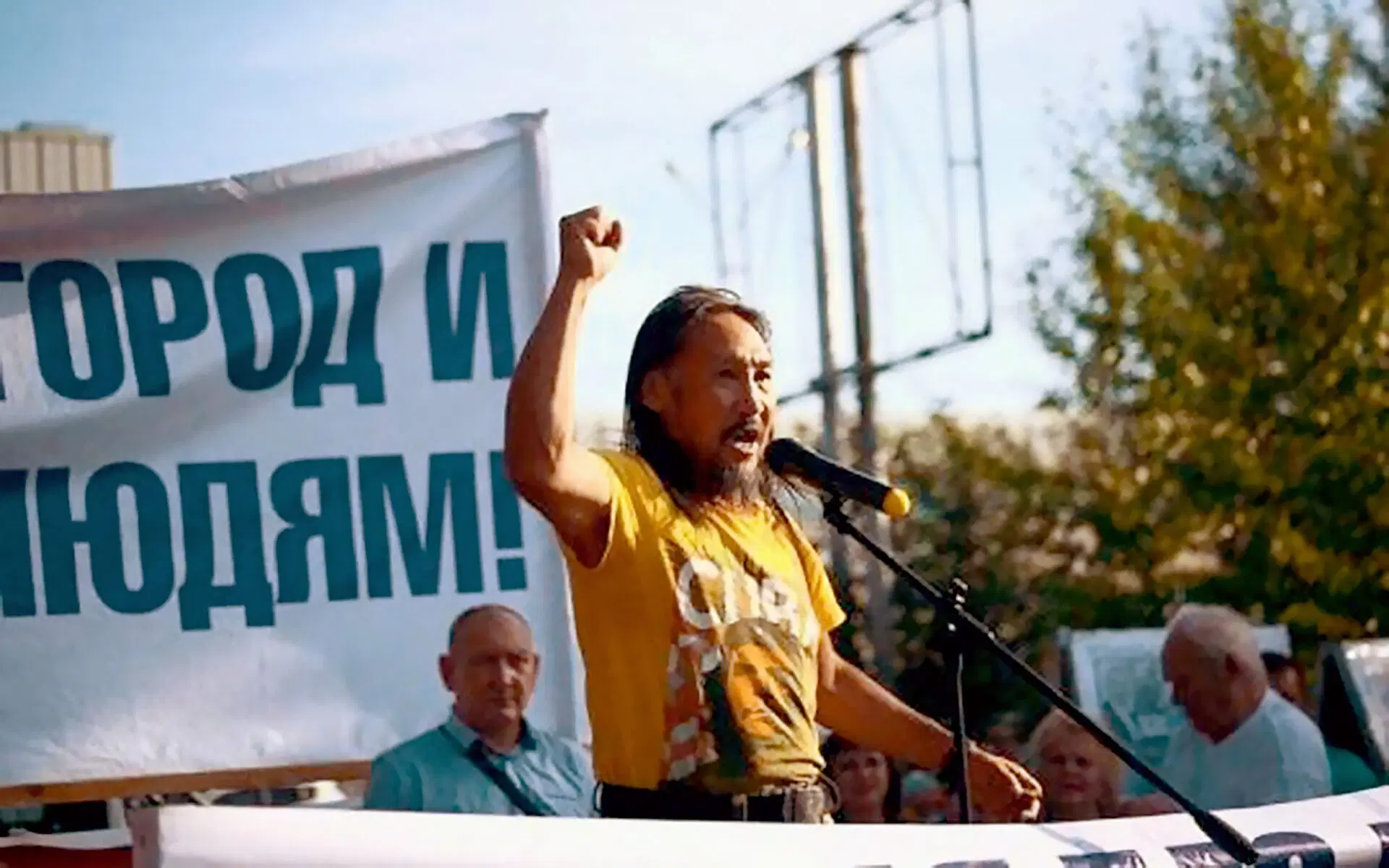
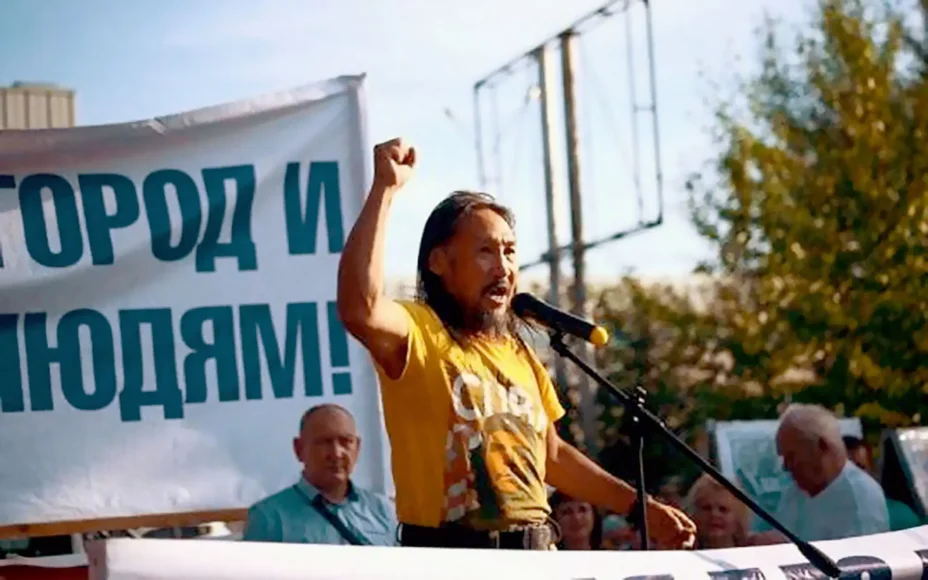
Alexander Gabyshev has been detained in Russia’s psychiatric system for over five years due to a spiritual and political act that started on a Siberian road.
In March 2019, Gabyshev, a Sakha shaman from Yakutia, set out from Yakutsk to Moscow, aiming to reach Red Square to perform a ritual to expel Vladimir Putin from power. This act was framed as a spiritual endeavor, but was also seen as political protest. Russian authorities treated it as a state security issue.
On June 19, 2026, the Yakutsk City Court extended Gabyshev’s psychiatric confinement for another six months, until December 18, 2026, denying a request for an independent psychiatric assessment by his defense team. Gabyshev remains in the Republican Psychoneurological Dispensary in Yakutsk, where he was moved in September 2025. His lawyers argue that the justification for his confinement is weak, with an independent review stating his detention lacks objective support.
Gabyshev’s march gained public attention in 2019, highlighting his unique stance against Putin rooted in Sakha shamanic traditions. His journey attracted followers before his arrest. He was detained by security forces in September 2019, returned to Yakutia, and subjected to psychiatric evaluations. By 2020, he was ordered into psychiatric hospitalization, with further compulsory treatments in 2021 in Novosibirsk and Ussuriysk, despite recommendations for less restrictive care.
Amnesty International considers Gabyshev a prisoner of conscience, calling for his release, citing punitive psychiatric detention for his opposition to Putin. The U.S. Commission on International Religious Freedom lists him as a victim of religious freedom violations tied to his opposition framed in religious terms.
The involvement of psychiatry is significant, reflecting a pattern from Soviet times where dissenters were diagnosed with mental illness to neutralize opposition. Gabyshev’s case suggests a repetition of this approach, with his shamanic identity and criticism of Putin seen as signs of mental disorder. Amnesty reported hospital officials used his anti-government ideas to argue for his hospitalization.
Involuntary psychiatric confinement requires strict safeguards, yet in Gabyshev’s case, these appear contested. Independent assessments found him stable and not a societal threat. His current medical care involves several doctors, raising transparency and accountability concerns due to forced treatment in a politically sensitive case.
This is also a religious freedom issue. Gabyshev’s beliefs, though unfamiliar to many, deserve protection. His ritual against Putin was part of his spiritual view of power, not a medical emergency. The case questions how Indigenous spiritual practices are treated in Russia, as shamanic traditions do not conform to typical religious structures, making them vulnerable to state judgments.
Gabyshev is expected to remain confined until December 2026, pending higher court decisions. His defense plans to use independent psychiatric reviews in their appeal to the Supreme Court of the Republic of Sakha.
Gabyshev’s case extends beyond a human rights issue, illustrating how psychiatric institutions can become tools of political repression, especially when dissent is expressed through spiritual language. For Gabyshev, it resulted in years of forced confinement, highlighting that spiritual opposition in Russia can be pathologized if it challenges authority.







Leave a Reply