


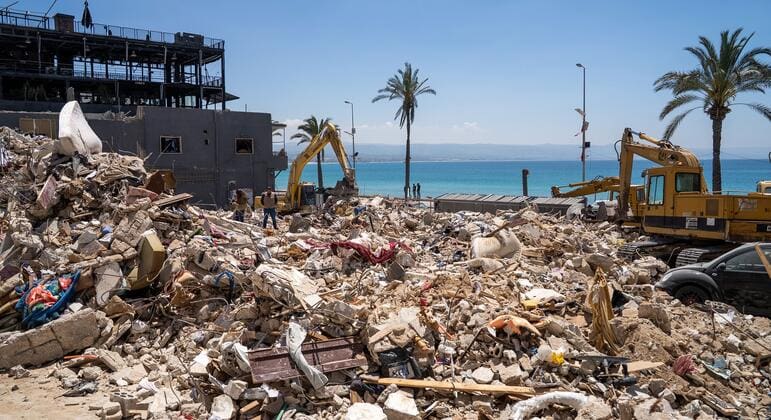
Few specifics have emerged about the resolution to the conflict that began in late February, affecting the Middle East, Gulf, and beyond.
The UN Interim Force in Lebanon (UNIFIL) reported observing reduced violence and fire exchanges in the south, where Israeli forces and Hezbollah militants have been engaged since the crisis started.
Stay in place
On the humanitarian side, OCHA noted some families have allegedly begun returning to their homes or assessing conditions in certain southern Lebanese communities, especially around Nabatieh.
“However, no large-scale returns have occurred, and people should not return until it is safe,” it added.
Local authorities report high occupancy in shelters as many displaced families await clearer security information before deciding to return home.
The Lebanese Armed Forces and some local authorities have reportedly advised residents against returning to high-risk areas now.
Meanwhile, the UN continues urging civilian protection, safe and voluntary returns, and sustained humanitarian access for all in need.
New displacement in Gaza as insecurity worsens conditions
Renewed insecurity in Gaza displaced more families over the weekend, intensifying an already strained humanitarian response, according to OCHA, the UN relief coordination office.
On Friday, an airstrike hit a UN schoolyard in Jabalia camp, slightly damaging the area sheltering displaced families.
The same day, many families in eastern Gaza City fled when Israeli troops expanded the “Yellow Line” westward using yellow cement blocks.
Initiated in October 2025, the line indicates restricted-access areas controlled by Israeli forces and has expanded repeatedly. UN human rights staff warn that Palestinians have reportedly been killed for approaching too closely.
Nearby residents told humanitarian teams that increasing insecurity is pressuring them to relocate again. Many newly displaced families reportedly left without tents or belongings and are now staying with relatives or friends.
Joint response
Humanitarian partners activated a joint UN response mechanism to support affected individuals with rapid assistance after sudden displacement.
Aid delivery remains constrained. OCHA reported that the Kerem Shalom/Karem Abu Salem crossing is still the only entry for approved supplies.
Restrictions continue on essential items like power generators and spare parts, though recent talks led to some additional supply approvals, including equipment for improved malnutrition screening.
Somalia receives emergency funding as famine risk grows
The UN has allocated $10 million in emergency funds to avert worsening hunger and reduce famine risk in Somalia, affected by drought, conflict, and rising prices.
Via the Central Emergency Response Fund (CERF), the funding will help UN agencies and partners offer food, health, nutrition, water, sanitation, and protection aid to about 640,000 people across nine priority districts.
Humanitarian agencies warn that nearly six million people, over 30% of Somalia’s population, may face crisis-level or worse food insecurity this year, including 1.9 million in emergency conditions.
A plausible famine risk exists in parts of Bay and Bakool regions, specifically in agropastoral areas.
Aid shortfall
Aid efforts remain significantly underfunded, with only 20% of the 2026 humanitarian appeal met so far.
Only 24% of those targeted have received assistance since January.
Simultaneously, higher food and fuel prices due to regional instability have further restricted families’ ability to meet basic needs.
Source link









Leave a Reply