


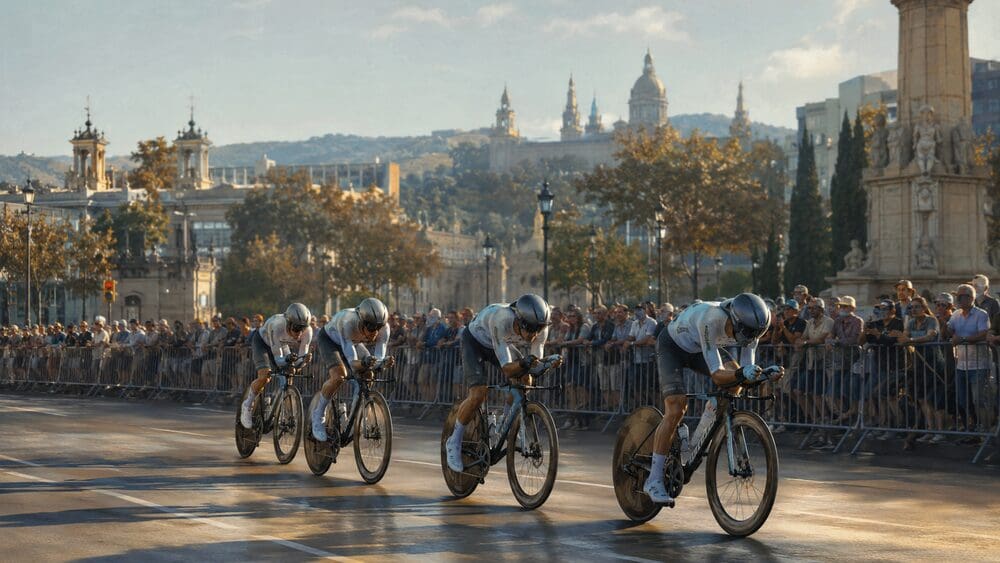
A team time trial on Montjuic kicks off the 2026 Tour de France, emphasizing that cycling’s premier race is also a public affair
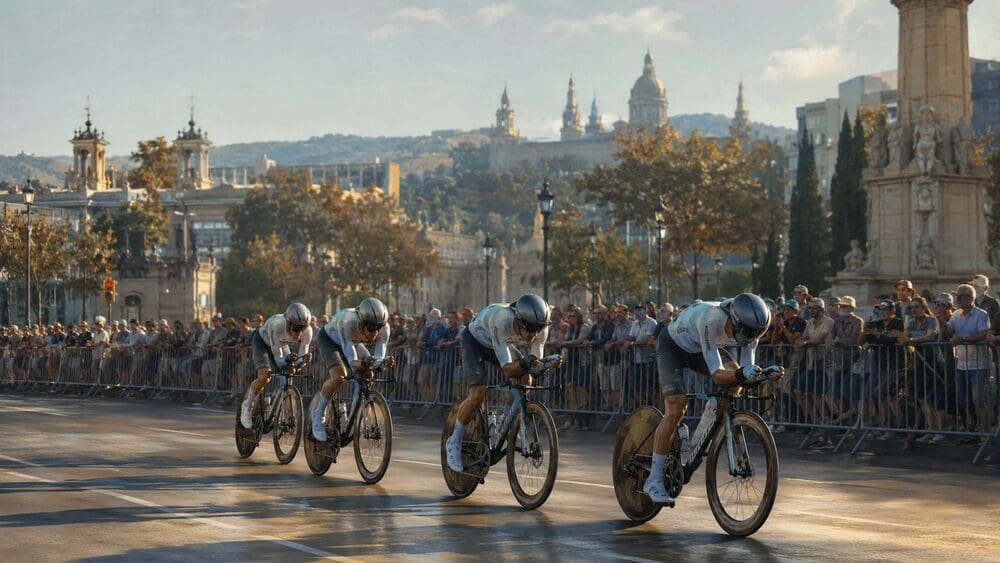
The 2026 Tour de France starts in Barcelona on July 4 with a 19.6km team time trial, highlighting teamwork, urban design, and public accessibility before the peloton moves toward France. The Grand Depart is not just a sporting kickoff; it is a civic engagement where elite performance relies on shared streets, patient residents, and public culture that imbues the Tour with much of its significance.
The Tour’s official route outlines 21 stages, 184 riders, and 23 teams, starting in Barcelona and concluding on the Champs-Elysees in Paris on July 26. Between these two urban stages lies a challenging course of flat, hilly, and mountainous days, featuring five summit finishes and two rest days.
A cooperative commencement
The first image of this Tour will be a line of teammates maintaining speed and form together, rather than a solo rider in yellow. This is significant. A team time trial emphasizes trust, rhythm, and sacrifice as much as individual strength. It’s an apt beginning for a race often marketed through star rivalries but won through the quieter efforts of domestiques, mechanics, sports directors, and support staff.
Barcelona offers an unusually symbolic backdrop for this commencement. The city has hosted Tour stages previously, but this marks its inaugural Grand Depart. The first two days focus on Montjuic, a hill associated with the 1992 Olympics and the city’s sporting history. The Tour’s Grand Depart page highlights that both initial stages will finish there, setting an early competitive tone before the route heads toward the Pyrenees.
The city integrates into the race
While major sporting events often promise lasting impact, their primary duty is immediate: to function fairly for their hosts. Barcelona’s public program surrounding the Grand Depart includes team presentations near the Sagrada Familia and fan activities before the races commence. These moments can attract new cycling fans but also necessitate careful management of mobility, crowd control, and access.
What sets the Tour apart from many stadium sports is its absence of barriers. It travels through ordinary streets, coastal roads, villages, and mountain passes. The public contributes to the spectacle that broadcasters sell and sponsors value. In return, organizers and host cities are responsible for keeping the event open, safe, and considerate of local life.
This is why access is a recurring issue in European sports. As The European Times has noted in its coverage of cycling’s broadcast reach, the Tour partially belongs to the public imagination. Its strength comes from those watching from roadside barriers, apartment balconies, village squares, and free-to-air screens, not just from paying subscribers or traveling fans.
A European sporting tradition
The significance of the 2026 route will ultimately be measured by attacks, time gaps, and endurance in the mountains. The double visit to Alpe d’Huez later in the race will capture much of the sporting focus, and the Paris finish will once again confer ceremonial importance. Yet, the initial days in Barcelona may reveal just as much about the race’s contemporary nature.
The Tour is commercial, global, and increasingly media-driven. However, it remains one of Europe’s most public sporting traditions. Its authenticity relies on maintaining a balance: elite competition at the highest level, held in locations where citizens can still feel the race has come for them, not just around them.
Barcelona’s role is not merely to launch the peloton





Leave a Reply