


Mayor Collboni has made the removal of STRs a key part of his housing strategy. The plan seems straightforward: eliminate STRs and the homes will return to local residents. However, the data suggests otherwise. The city council has not shown how removing legally licensed STRs would place these houses on the market.
The city’s own research contradicts their aim. A study by the Barcelona Institute of Economics, commissioned in September 2025, noted that a complete conversion of STR units for residential use “could be partial or might not occur at all for various reasons.” Homes might shift to the seasonal rental market or remain empty, awaiting court decisions.
New York’s 2023 STR ban serves as a warning: it didn’t reduce rent growth or boost housing supply. Instead, it made tourism less affordable, with hotel rates exceeding $300 per night, demonstrating less competition doesn’t mean lower prices, often the reverse.
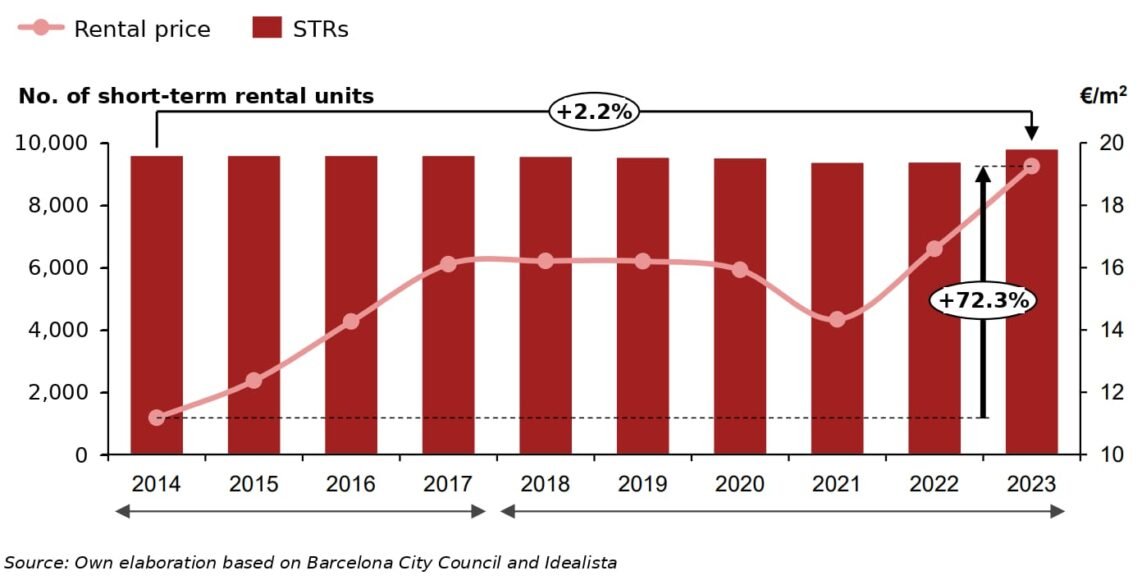
Marian Muro, director of Apartur, states: “Barcelona’s affordability crisis has deeper roots: a persistent lack of affordable housing, slow planning processes, limited new construction, and many vacant properties. Rental prices surged by up to 70% based on Barcelona City Council and Idealista data, while STR licenses have been capped since 2014. If short-term rentals were the issue, prices would have stabilized as supply remained flat. They didn’t. Removing a regulated activity that hasn’t expanded in over a decade won’t solve these structural problems.”
Despite this, the Barcelona city council is using public funds for advertising to present this unproven claim as definitive truth, just months before the municipal elections in May 2027. There’s a significant difference between a political party endorsing a position and a public body using taxpayer money to conduct what amounts to a pre-electoral political campaign.
Barcelona continues to invite the world but struggles to clarify where everyone will stay.









Leave a Reply