


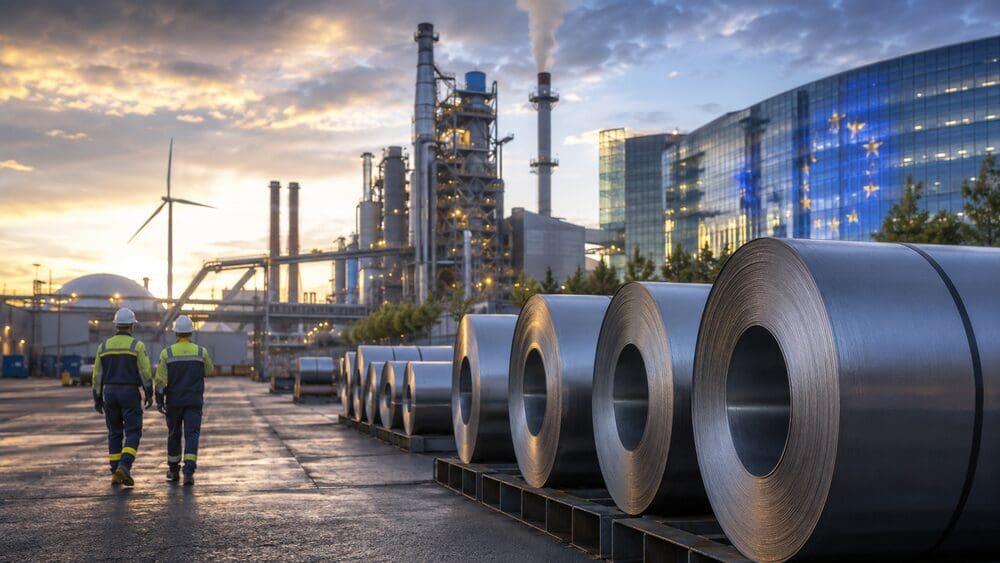
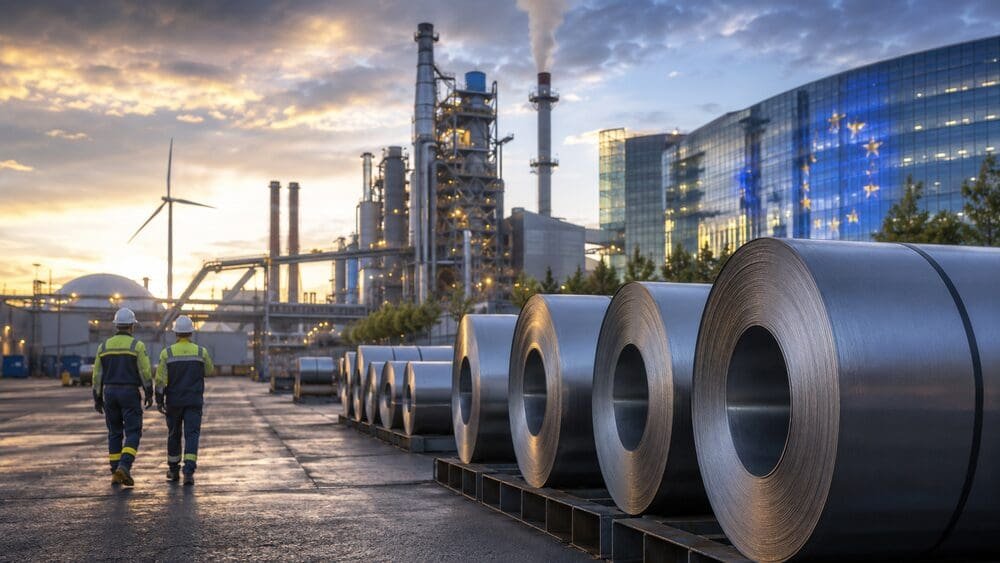
New trade regulations to replace expiring safeguards from 1 July, introducing tighter quotas and traceability for steel imports
The European Union has implemented a new steel protection system to safeguard one of its key industries from global overcapacity, low-cost imports, and trade redirection. The rules, approved by the Council on Monday, will succeed the EU’s expiring steel safeguards and test Brussels’ ability to protect industrial jobs while maintaining a steady supply for steel-reliant manufacturers.
The Council adopted the regulation on 8 June, indicating it will take effect from 1 July 2026, following the expiration of the current EU steel safeguard measure on 30 June. This measure is part of broader efforts to tackle structural excess capacity in global steelmaking, which EU officials claim has increasingly exposed Europe to dumped or redirected supply.
A stricter quota system
The new framework reduces the volume of steel allowed into the EU without extra duties and increases tariffs on imports exceeding those limits. According to the European Parliament, tariff-free steel imports will be capped at 18.3 million tonnes annually, a 47% reduction compared to 2024 quotas, with a 50% customs duty above the quota applied.
The regulation also establishes a “melt and pour” rule to identify where steel was initially melted and cast. This traceability requirement aims to prevent circumvention, such as lightly processing steel in a third country before entering the EU under a different origin claim.
MEPs backed the measure in May with 606 votes in favor, 16 against, and 39 abstentions. The European Parliament stated the rules align with World Trade Organization obligations and will include an early review of the product scope.
Industrial policy meets social policy
Steel is central to Europe’s climate, defense, and employment discussions. The sector is vital for wind turbines, electricity grids, railways, buildings, vehicles, and military equipment. It also supports regional economies in member states where steel plants remain significant employers.
The Council notes the EU steel industry directly employs around 300,000 people but faces declining capacity utilization, high energy costs, and escalating import pressures. Capacity use was 67% in 2024, with global excess capacity predicted to rise to 721 million tonnes by 2027, exceeding five times the EU’s annual consumption.
For Brussels, the economic case links to decarbonization. Steelmakers are urged to invest in lower-emission production while competing with imports from countries with differing energy costs, subsidies, or environmental standards. If plants close before green investments scale up, Europe risks losing both industrial capacity and the ability to clean it up.
Trade defense with challenging aspects
The measure will not resolve all issues. Downstream industries, such as construction, machinery, and automotive manufacturing, require reliable access to affordable steel. Over-tightening protection could increase costs across the economy. The regulation thus includes provisions for unused quotas to be carried over within the same year and a reinforced review mechanism for the Commission to propose adjustments if market conditions change.
Ukraine holds a sensitive spot in the framework. Parliament stated the country’s EU candidate status and security situation should factor into country quota allocations. The political message is clear: the EU seeks to combat global overcapacity without blaming Ukraine’s wartime steel sector.
The regulation also aligns with a joint declaration by the Council, Parliament, and Commission to reduce economic dependencies on Russia and gradually phase out Russian steel






Leave a Reply