


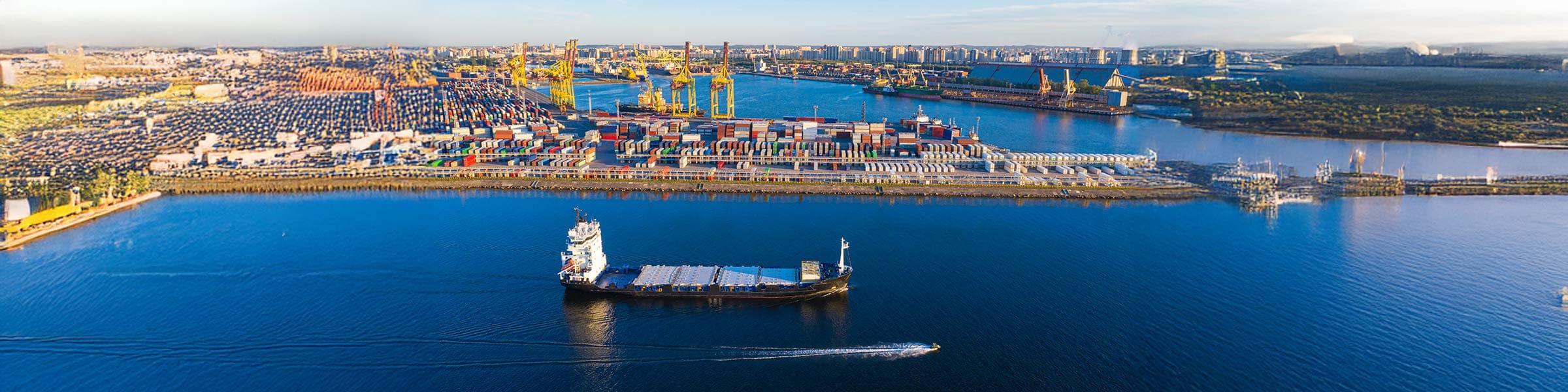
In September 2026, naval architect Thomas Koch will introduce his firm’s virtual shipyard at a maritime trade fair in Hamburg, Germany. This digital model monitors shipbuilding progress in real time, offering money and energy-saving suggestions, crucial for European shipbuilding to compete globally.
Over the past three decades, many large European docks have closed. Dominating in volume, China, Japan, and South Korea utilize scale and automation to produce commercial vessels like container ships and tankers. European shipyards have pivoted to high-value niche vessels like cruise ships, ferries, yachts, icebreakers, and offshore engineering vessels, often testing technologies to reduce emissions and fuel use.
“Europe can gain an edge in global shipping by adopting new clean technologies,” said Koch, founder of Atlantec Enterprise Solutions, an IT provider for the maritime industry.
Koch and a team are addressing challenges by merging renewable energy, digital advancements, and material tracking in an EU-funded project called ESY. They analyze emissions from ships and shipyards’ environmental impact, including energy consumption, material needs, and waste production.
Koch estimates assisted wind power could reduce fuel use by 20 to 30%, lowering costs and emissions. “Shipbuilding in Europe has a future and Europe has specific strengths,” he said, noting a surge in demand for retrofitting ships with new technology.
High labor costs, accounting for up to 70% of expenses, make Europe expensive for shipbuilding. Unlike car production, shipbuilding usually involves bespoke vessels with little automation. Small and medium-sized European shipyards operate independently without benefiting from scale and rely on costly long-term equipment.
“Shipbuilding is rather old-fashioned and still very labor-intensive,” said Dimitrios Lyridis, a naval engineer and professor at NTUA, also part of the ESY team. For decades, shipbuilding was seen as a declining industry in Europe, receiving little government or EU support, particularly from the 1970s to early 2000s.
This trend may shift. In March 2026, the European Commission adopted a new Industrial Maritime Strategy to enhance Europe’s manufacturing and shipping sectors. ESY researchers aim for the same.
“Our main focus is improving the competitiveness of the European shipbuilding industry by providing tools to monitor processes and improve their environmental footprint,” said Panos Evangelou, a naval economist at NTUA. This involves giving shipyards digital tools to identify energy and material waste and suggest simple improvements.
The goal is to build advanced, green-tech-enhanced vessels in more sustainable shipyards. The ESY team is launching an EU material passport to track materials from production to decommissioning, acting as a digital log for efficient repair, reuse, or recycling.
“There’s often lots of waste throughout shipbuilding,” said Lyridis. “By tracking waste, you can redesign, for example, the way you cut steel more efficiently.” The approach aims to use materials more efficiently, save energy, reduce costs, and improve standards.
One demonstration involves retrofitting a steel-cutting process at Astilleros de Santander, a century-old Spanish shipyard, to reduce energy use and emissions. This setup will test the material passport and other ESY tools in a real yard.
Researchers are developing an environmental performance index for shipyards, combining electricity, fuel, water use, waste, and emissions into a single score to track progress or compare projects.
“By benchmarking, you can find more economical, energy-efficient alternatives,” Lyridis said. This supports greener industrial processes with potential competitive advantages.
“Financing for shipping is easier if you have a greener profile, and cargo owners now demand greener ships,” said Lyridis, noting stricter regulations on emissions and noise.
The ESY material passport is a step toward sustainability compliance certification, crucial for future operations, according to Professor Marc Bonazountas at Epsilon Group. “Ports are considering giving priority to greener, less polluting vessels. Dirty, noisy ships might face limited harbor access in Europe,” Bonazountas added.
Europe must not disregard shipbuilding for strategic reasons. “Dominant global powers control the seas, necessitating shipyards,” said Bonazountas, pointing to US support for its shipbuilding.
Europe needs a unified maritime strategy, integrating shipyards into the transport value chain by constructing new vessels, offering lifecycle services, retrofitting, digital support, and leasing advanced ships, especially as nuclear propulsion evolves.
“Europe’s competitiveness will rely on the shipyards it preserves, modernizes, and empowers,” said Bonazountas.
Despite years of neglect, European shipbuilding has endured, said Lyridis. “Retaining a shipping industry is now recognized as vital for Europe.”
For Koch, Lyridis, and their colleagues, the next step is proving the efficacy of tools like the material passport and performance index in operational shipyards, demonstrating that greener ships can sustain European shipyards.
Research in this article was funded by the EU’s Horizon Programme. The views










Leave a Reply