


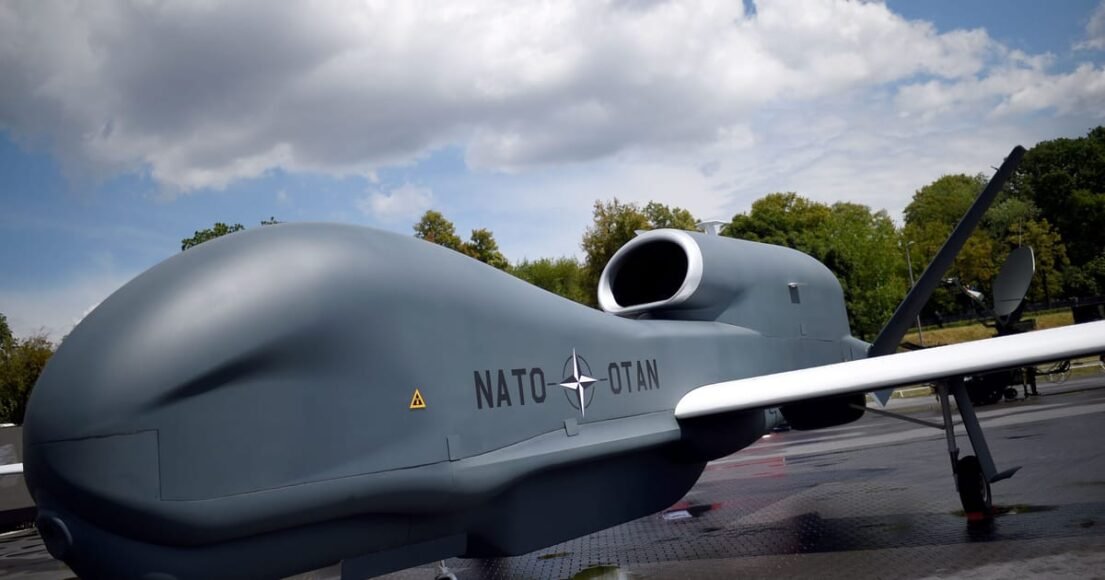
“During the discussion, there was consensus on the need to expedite NATO projects to counteract drone threats, ensuring support measures for affected Allies can be sanctioned at the upcoming Ankara summit next month,” he stated.
The scheduled meeting followed an incident where a Russian drone struck an apartment block in Romania recently, injuring two people and prompting an urgent request from Bucharest to accelerate NATO air defense provisions. The alliance has also deployed jets to intercept suspicious drones in Latvia and Estonia in recent weeks.
“Russia’s ongoing conflict with Ukraine has directly led to increased drone-related incidents along our eastern border,” commented NATO spokesperson Allison Hart.
There is still uncertainty on when NATO allies will procure the drones.
Wednesday’s assembly also highlighted the urgency of delivering “tangible initiatives” on drones for the July 7-8 summit of alliance leaders, noted the first NATO diplomat.
While NATO possesses limited military resources, as these are generally supplied by member nations, it can advise countries on acquiring necessary battlefield equipment, which can then be placed under the alliance’s top military leadership.
Allies also recognized threats to vital infrastructure in the Black Sea, including Romania’s €4 billion Neptun Deep offshore gas project, due to commence next year. There was discussion on whether NATO’s military command should enhance monitoring of drone threats to these installations.
Military officials from member nations, who convened last week at NATO’s military command in Mons, Belgium, showed readiness to reallocate more air defense assets to track and eliminate drones over Romania, according to the first NATO diplomat and another informed source.








Leave a Reply