


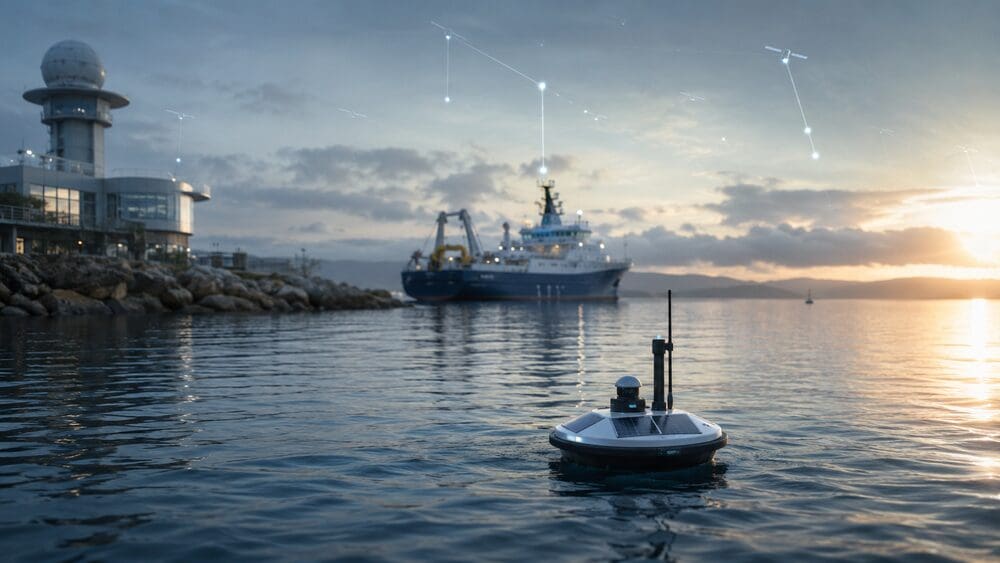
The European Commission has launched the OceanEye initiative to enhance Europe’s ocean observation capabilities, transforming marine data, sensors, and digital modeling into a strategic public resource for climate resilience, maritime safety, and coastal communities.
The ocean covers 70% of the Earth, but only a small portion is thoroughly explored. This knowledge gap impacts storm prediction, fisheries, biodiversity, shipping safety, offshore energy, and coastal communities in Europe.
The EU, through the OceanEye initiative adopted on June 3, aims to contribute 35% to the global ocean observing system by 2035, positioning itself as a leader in “ocean intelligence.”
The initiative includes €62 million from Horizon Europe for the Global Ocean Observing System and data systems, plus €30 million for new observation technologies. Features include underwater drones, AI sensors, data-sharing platforms, and a European digital twin of the ocean by 2030.
This digital twin will simulate ocean conditions, aiding in risk assessment. Improved data will enhance alerts for marine heatwaves, storms, coastal erosion, and ecosystem stress.
OceanEye aligns with the European Ocean Pact, integrating EU policies on marine protection, the blue economy, coastal communities, maritime security, and ocean diplomacy.
Ocean observation technology, such as satellites and robotic vehicles, affects climate models and resource management. The Commission aims for a unified European digital ocean system to be accessible to scientists, policymakers, educators, and innovators, emphasizing openness and funding sustainability.
Relying on existing European scientific infrastructure, OceanEye should align EU member states and industry towards a strategic ocean observation approach.
The initiative’s success depends on its benefits reaching coastal and island communities most vulnerable to ocean risks. If effective, it will aid public decision-making, enhance marine protection, and provide timely information to at-risk communities.
Europe strives to treat ocean knowledge as vital infrastructure, with sustained funding and access necessary to serve both science and society.











Leave a Reply