


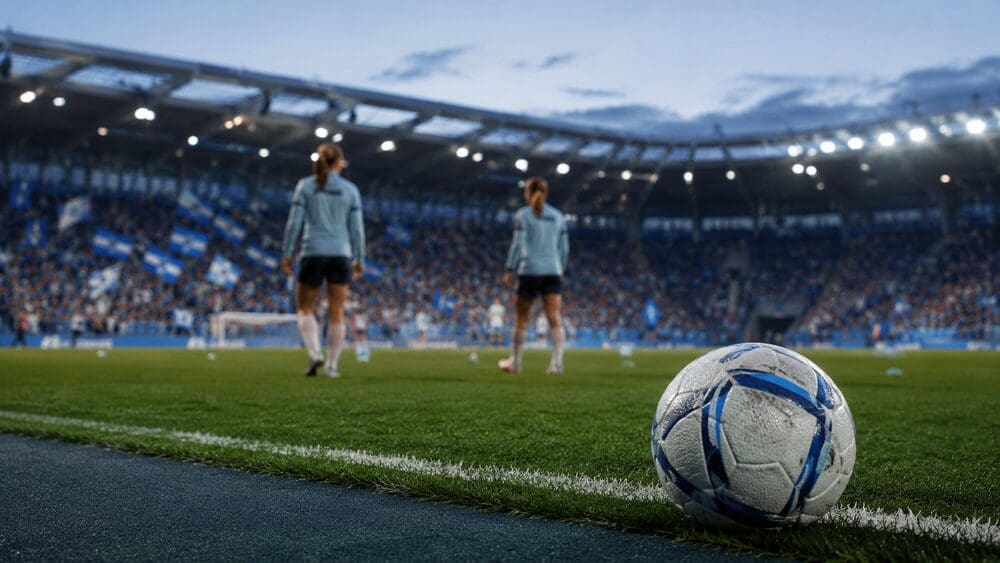
Europe’s women’s national teams are approaching a crucial June period, with direct qualification for the 2027 FIFA Women’s World Cup, play-off spots, and promotion or relegation all on the line. The fixtures not only test sporting skills but also reflect the progress and remaining challenges in advancing women’s football in Europe to make it more widespread, visible, and sustainable.
A Decisive Week Across Europe
The league stage of the Women’s European Qualifiers will conclude with matches on 5 and 9 June. UEFA states that four direct European spots for the 2027 tournament in Brazil will be determined by the League A group winners, along with finalizing the wider play-off contenders.
Friday’s schedule includes key matches with immediate stakes. Spain plays against England in Palma de Mallorca, Germany confronts Norway in Cologne, Denmark faces Sweden in Odense, and the Republic of Ireland takes on the Netherlands in Cork. These games illustrate the increasing competitiveness at the top of European women’s football.
Beyond Elite Football
The implications go beyond the teams familiar with major tournaments. League B and League C teams are also contending for play-off access, seeding, promotion, and relegation avoidance. For smaller football nations, these pathways are critical: a more competitive calendar can lead to greater visibility, increased federation investment, and clearer opportunities for young players.
This scenario intersects with broader equality issues. A joint EU and Council of Europe project on gender equality in sport found that women are still underrepresented in leadership, coaching, and participation within European sports organizations. While international football alone cannot bridge these gaps, high-profile matches can redirect attention, resources, and expectations.
Visibility as Part of the Contest
UEFA has connected the future of women’s football to long-term sustainability, professional development, and broader participation. However, there is an uneven pressure. Established teams like England, Spain, Germany, France, Sweden, and the Netherlands benefit from robust professional structures, whereas emerging nations often rely on fragile domestic systems and limited media coverage.
This disparity makes this qualifying window more significant than a typical round of fixtures. Leading European teams are striving for early assurance before Brazil 2027, but the overall tournament framework questions whether opportunities can be less concentrated. The outcome depends not only on this week’s winners but also on whether federations turn the attention into enduring support for players, coaches, and aspiring young athletes.
This is a well-known challenge for European sport policy. Initiatives promoting women’s empowerment in sport consistently highlight that participation and leadership gaps persist, even with larger audiences for elite women’s events. The final qualifying matches now provide a platform where sporting ambition and equality commitments converge.
By Tuesday night, Europe will have a clearer picture of its direct World Cup qualifiers and the autumn play-off landscape. It may also gain insight into the depth of its women’s football initiative: whether success remains concentrated among a few dominant systems or if the continent is starting to develop a broader competitive base that aligns with the sport’s growing public appeal.



Leave a Reply