


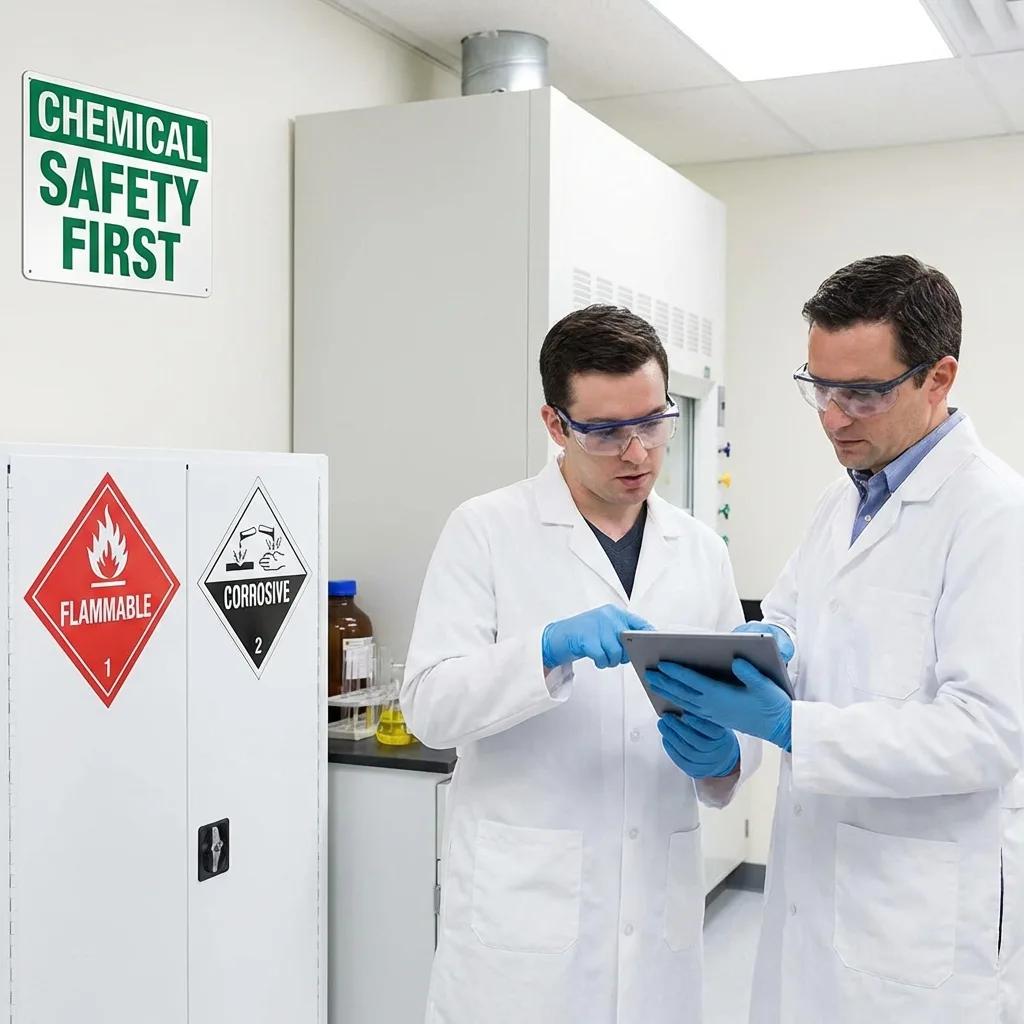
The European Commission has released a much-anticipated roadmap towards phasing out animal testing for chemical safety assessments.
There is a “firm commitment to phasing-out animal testing at the earliest opportunity”.
Campaigners go on to say the EU has acknowledged that, “up until now, overall progress to replace animal testing has been too slow”.
Cruelty Free Europe adds, “Importantly, the Roadmap identifies that eliminating redundant tests on animals, as well as introducing more non-animal approaches, is a priority for progress to be realised.”
The work to phase-out cruel, regulatory testing of chemicals on animals, including ingredients found in the thousands of products people may use every day, “is as urgently needed as ever,” state campaigners.
The latest statistics on animal use for the EU and Norway suggest that over 450,000 animals were used in regulatory tests in European laboratories in 2023 alone.
These include the testing of chemicals and medicines – two priority sectors that are addressed by the Roadmap.
Cruelty Free Europe goes on to say the Roadmap details commitments to improve key processes.
These, it adds, include the validation of non-animal approaches, engagement with regulators and stakeholders, including NGOs and the public, the identification of regulatory needs to support the development of new non-animal approaches.
It also welcomes collaboration with partner countries and international organisations, and the more comprehensive tracking of animal use for EU-driven regulatory toxicity testing.
“These commitments mark a serious move towards bringing about an end to the suffering of animals,” it says.
“In 2023, 9.1 million animals were used in scientific tests and experiments in the EU and Norway – the transformation of the use of animals in regulatory testing could lead the way for much needed change across all uses of animals.”
Cruelty Free Europe’s Director of Science & Regulatory Affairs, Emma Grange, said: “This Roadmap is a very welcome step in the right direction – we believe it can bring about the transformative change that European citizens want, but only if it is implemented effectively with ambition and strong leadership.
“Without this, we will face never-ending stagnation and insufficient reductions in the use of animals.
“We’re very pleased to see that the Roadmap identifies that legislative action is required to fully realise change, as well as acknowledging that EU regulations drive animal testing in laboratories located inside and outside of the EU.
“We look forward to working with politicians, legislators, regulators, researchers and industry to ensure this strategy delivers on its promises, and will continue our work to drive progress over the years and political cycles to come.”
Comments
7 responses to “EU Advances Toward Cruelty-Free Chemical Safety Testing”
-
Typical EU, promising the moon while we’re still stuck on the ground! 🌍 Maybe by 2050 we’ll finally stop using our furry friends as lab props—if we play our cards right! 🐾
-
Looks like the EU’s finally decided that maybe testing chemicals on our furry friends isn’t the most charming pastime. 🐾 About time we swapped the lab rats for some ethics, eh?
-
Finally, the EU is taking its sweet time to ditch animal testing – I suppose the tortoise really is the model for progress here! 🐢💼
-
So, the EU has finally decided to phase out animal testing, eh? Guess they figured it’s better late than never—after all, why rush when you can take your sweet time? 🐢💼
-
Looks like the EU is finally getting its act together on animal testing—better late than never, eh? 🐾 Let’s just hope they don’t take as long to implement it as they do to decide on a new coffee machine for the office! ☕️
-
Looks like the EU’s finally decided that testing chemicals on fluffy friends isn’t the best PR move. Can’t wait to see how they manage to phase it out with the usual bureaucratic finesse. 🙄
-
Finally, the EU is taking a break from its usual pastime of kicking the can down the road and is pretending to care about animal welfare—how quaint! 🎩🐾
-
Oh sure, let’s all applaud the EU for finally getting around to addressing this cruelty business. Maybe next they’ll tackle world hunger… or, you know, just keep patting themselves on the back while they sip their lattes. ☕🐾

Last News

Andy Burnham on Question Time: 5 Key Points from the UK Leadership Hopeful’s TV Appearance
Burnham dismissed allegations of unequal policing in Greater Manchester, commending Chief Constable Stephen Watson. He emphasized Watson’s commitment to “never take the knee
EU Advances Toward Cruelty-Free Chemical Safety Testing
The European Commission has released a much-anticipated roadmap towards phasing out animal testing for chemical safety assessments.
There is a “firm commitment to phasing-out animal testing at the earliest opportunity”.
Campaigners go on to say the EU has acknowledged that, “up until now, overall progress to replace animal testing has been too slow”.
Cruelty Free Europe adds, “Importantly, the R

A Court That Turns a Blind Eye: Argentina Relegates Rudnev to Obscurity

Socialists Urge Defector to Relinquish EU Parliament Vice Presidency
“Although EP rules technically permit her to remain in the vice-presidency, it would be politically inconsistent,” stated Andrea Maceiras, spokesperson for the S&D group’s chair, Iratxe García.
Maceiras e

Experts of EU AI Act Confront Initial Enforcement Challenge

Retailleau: Uniting Efforts Proves Challenging

Strasbourg Forum Highlights Rights of Environmental Defenders
This week, in Strasbourg, European institutions and UN rights bodies are gathering for the inaugural European Forum on Environmental Human Rights Defenders. The event aims to enhance protection for those advoc
Rubio Suggests Greenland’s Ties to Denmark May Change
Earlier this year, Trump’s attempt to purchase Greenland caused concern among European allies and led Denmark to

Do Posthumanist Ideals Challenge Our Understanding of Moral Agency?
Current thinkers are questioning if posthumanist ideals are changing our understanding of moral responsibility. As technology increasingly blurs human-machine distinctions, the core of moral agency is facing unprecedented challenges. There are potentially risky changes in accountability, particularly when autonomous systems make critical decisions. However, these ideals also present significant

Leave a Reply