Inequalities – The Hidden Norm of Our Economic System?

Consider the term inequality. It refers to the condition of being unequal, unfair, imbalanced. These terms themselves are quite ambiguous and can convey different meanings based on the context. For instance, when two children play a game and one cheats, the other might exclaim, ‘Hey, that’s unfair!‘ meaning ‘that’s against the rules‘. When dividing a cake into two smaller pieces, and they are split unevenly, they are unequal, not the same. However, matters become more complex when discussing significant issues beyond a child cheating or cutting a smaller piece of cake than desired.

Inequalities are prevalent today. We encounter them daily— in shops, schools, workplaces, or while walking or driving. They are embedded in our economic system, an integral part of the global economy. For one to have, another must lack. Yet this is a simplistic explanation, which sometimes obscures the problem rather than clarifying it.

From an economic perspective, there are three primary inequalities: income inequalities, wealth inequalities, and inequalities of opportunity. All are linked to an individual’s economic engagement. For example, income inequalities involve differences in earnings over time. Wealth inequalities pertain to pre-owned assets like real estate. Inequalities of opportunity relate to differing opportunities due to societal or socio-economic factors such as age, gender, background, or location.

These economic inequalities are entwined with economic issues. More concerning is that they seem to enhance the growth of our economic system. Like economic growth, economic inequalities are crucial for developing the world economy. Cynically speaking, for one to prosper, another must suffer. But how did we reach this point? Inequalities, as we know them today, have not always existed.

Inequality is not uniform everywhere. While we often discuss inequalities within countries, we rarely consider the world as a whole. Understandably, a high-income country and a low-income country are incommensurable. Such comparisons yield little constructive outcomes. Can’t compare apples to oranges, as they fundamentally differ.

But are they? Both are tree-grown fruits, sweet or sour, rich in vitamins and minerals. Both originate from roughly the same areas—modern-day Kazakhstan for apples, and Northern India and Western China for oranges. So, they can be compared broadly. Yet, specific characteristics differ. Oranges are not consumed with their peel, apples have less vitamin C but more fiber, etc. Similarly, comparing high-income and low-income countries depends on the goal of the comparison. Depending on the aim, a high-income country can be compared to a low-income one. Thus, each comparison can yield different outcomes, especially when the differences in comparison are understood.

Even comparing high and low-income countries only highlights current developments. More crucially, we need to understand why inequalities exist to address them. The central question in comprehending inequalities is, ‘How did they come into existence?’

The current world economic system developed over a long time, filled with extraction, exploitation, subjugation, and the creation of inequalities. With the rise of colonialism, economic expansion outweighed individual well-being. The domination of colonized peoples by colonizers fueled economic expansion that lasted for centuries. Resource extraction in colonized regions underdeveloped indigenous populations, hindering their integration into a hierarchical world economy. The end of colonialism led to economic neo-imperialism, positioning former colonizers atop the world economic hierarchy as they attempted to “fix” former colonies’ politico-economic conditions.

In summary, today’s economic inequalities result from centuries of active under-development starting with colonialism. This created a divide between Global North and Global South, and other purely geo-political divisions used today. Such usage is problematic as it perpetuates old norms and structures of exploitation and inequality. However, explaining these complexities requires more than simplistic terms like income inequality.

In this segment of Hidden from the Economy, I will explore the issue of inequalities. Not just wealth inequalities, the Gini Index, or other politically and economically sensitive concepts. I will present the broader picture of current inequality development—how they evolved to today’s state from an economic inequality perspective? And, how should they be addressed? Or should they be addressed at all? Are they a necessary component of the development we strive for? Are they steps to achieve well-being for everyone? These questions and more will be addressed in upcoming articles, starting with the history of inequalities. Sustainable solutions are possible once the root problem is understood.

Comments

2 responses to “Inequalities – The Hidden Norm of Our Economic System?”

  1. mafia princess Avatar
    mafia princess

    So, we’re just gonna ignore that the rich keep getting richer while the rest of us are left fighting over crumbs, eh? Classic! 🥐💸

  2. Plegasus Avatar
    Plegasus

    Inequalities in our economic system? Brilliant! It’s like saying the sky is blue—just a tad obvious, innit? 🤷‍♂️

  3. lope lope Avatar
    lope lope

    Seems like some folks have finally decided to notice the elephant in the room – oh wait, that’s just the economic inequalities we’ve been tiptoeing around for centuries! 🍰💸 Honestly, who knew that for every rich bloke sipping espresso in Milan, there’s a poor soul in a corner fighting over crumbs?

Leave a Reply

Your email address will not be published. Required fields are marked *

Last News

Albania Advances Further in EU Accession Process

Albania Advances Further in EU Accession Process

The eighth meeting of the Accession Conference with Albania confirmed that Albania has, overall, met the interim benchmarks on the so-called cluster (fundamentals).
This cluster covers notably the functioning of democratic institutions, public administration reform, the rule of law chapters and economic criteria.
Comment came from Marilena Raouna, Deputy Minister for European affairs of the Repu

Read More

Inequalities – The Hidden Norm of Our Economic System?

Inequalities – The Hidden Norm of Our Economic System?

Consider the term inequality. It refers to the condition of being unequal, unfair, imbalanced. These terms themselves are quite ambiguous and can convey different meanings based on the context. For instance, when two children play a game and one cheats, the other might exclaim, ‘Hey, that’s unfair!‘ meaning ‘that’s against the rules‘. When dividing a cake into two smaller

Read More

L’UE inflige une amende de 200 millions d’euros à Temu

L’UE inflige une amende de 200 millions d’euros à Temu

L’application de vérification de l’âge est vue comme un élément crucial des efforts de l’UE pour protéger les enfants des dangers en ligne et des risques pour la santé mentale.

Read More

US Keeps Kyiv Embassy Open as Ukraine’s Security Situation Remains Tense

US Keeps Kyiv Embassy Open as Ukraine’s Security Situation Remains Tense

Eurotoday is a daily online newspaper based in Belgium. BM publishes unique and independent coverage on international and European affairs. With a Europe-wide perspective, BM covers policies and politics of the EU, significant Member State developments, and looks at the international agenda with a European perspective.

Read More

Europe’s Far Right Faces Ban Threat

Europe’s Far Right Faces Ban Threat

Europe’s far right is facing scrutiny as a European Parliament watchdog aims to ban the Alternative for Germany’s EU party.
On the show, Zoya Sheftalovich and Sarah Wheaton examine how the far-right Europe of Sovereign Nations party — associated with Germany’s AfD — is at risk of losing EU funding and its political party status. A 300-page letter from the Authority for European Political Par

Read More

European Citizen Rights Guide

European Citizen Rights Guide

A delayed flight, a refused residency document, or a suddenly blocked bank account after moving to a new country often pushes individuals to seek guidance on European citizen rights only when problems arise. This is when the gap between formal rights and practical access becomes evident. European citizenship provides actual protections, but these are not automatic and are not always smoothly impl

Read More

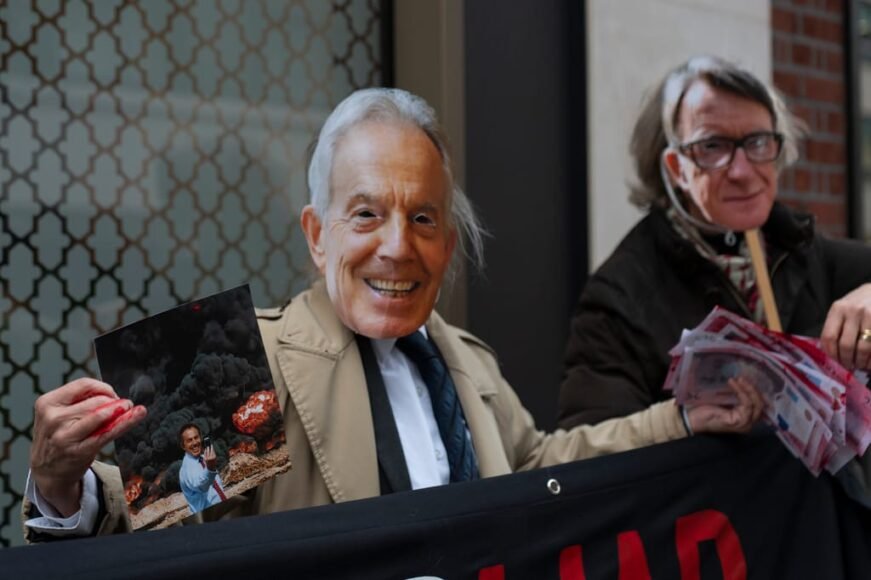
Blair’s Speech Sparks New Debate on Labour’s Identity, With or Without Starmer

Blair’s Speech Sparks New Debate on Labour’s Identity, With or Without Starmer

Blair and Starmer have had distant relations in recent months, as noted by a senior figure at the Tony Blair Institute for Global Change. Blair, having relinquished significant influence over the Starmer operation, now aims to transcend the traditional right or left dichotomy, focusing on broader centrist ideas essential for Britain’s advancement. He envisions politics that are more aspirati

Read More

Norway Aligns with France’s Nuclear Deterrence Policy

Norway Aligns with France’s Nuclear Deterrence Policy

“Russia’s largest nuclear arsenal is located in the High North, near Norway,” he stated, emphasizing Norway’s continued reliance on NATO for security.
On March 2, the French president announced that Germany, Poland, Greece, the Netherlands, Belgium, Denmark, and Sweden agreed to discuss nuclear cooperation with Paris. This may include joint nuclear drills, information shari

Read More

Debate on European Nuclear Deterrence Intensifies Following Norway’s Support for France’s Security Role in Oslo 2026

Debate on European Nuclear Deterrence Intensifies Following Norway’s Support for France’s Security Role in Oslo 2026

OSLO, Norway – May 27 – Eurotoday Newspaper — European nuclear deterrence discussions are gaining momentum after Norwegian Prime Minister Jonas Gahr Støre indicated that Norway would come under France’s nuclear umbrella, marking a potentially significant development in Europe’s evolving security structure.
The statement comes during a period of heightened geopolitical uncertainty, increasing Arcti

Read More

Von der Leyen to Meet Hungarian PM Magyar on Friday

Von der Leyen to Meet Hungarian PM Magyar on Friday

Budapest aims to mend its strained relationship with Brussels following long-standing conflicts under former leader Viktor Orbán.
Magyar, whose centrist party recently won Hungary’s election, is working to access billions in EU funds frozen due to violations of EU laws under Orbán’s 16-year governance.
Securing €10.4 billion in EU post-pandemic recovery funds is the top priority for th

Read More