Europe’s Medicine Shortages: What’s Going Wrong?

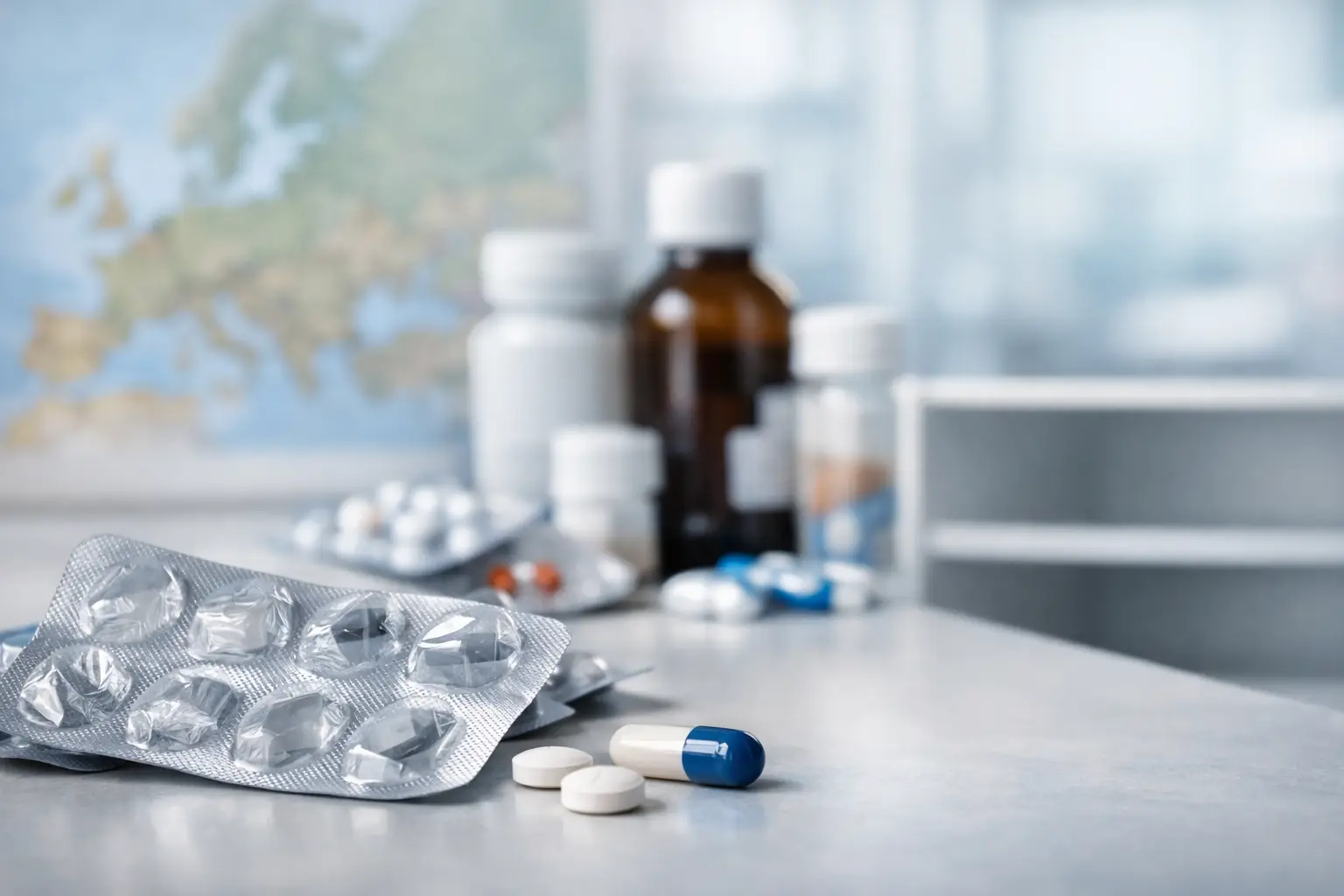
A child with an infection is sent from one pharmacy to another due to the unavailability of a basic antibiotic. A cancer patient is informed that the hospital is managing stock on a week-by-week basis. A parent halves tablets to extend a prescription until Monday. In Europe, medicine shortages are no longer a mere technical issue hidden in regulatory paperwork; they are a public-interest failure affecting patients, pharmacists, doctors, and already overwhelmed health systems.

This situation is not a single crisis with a single cause, but a chain of vulnerabilities—globalized manufacturing, thin inventories, pricing pressure, fragmented procurement, rising demand, and inadequate cross-border coordination—all colliding simultaneously. The result is a market that seems efficient on paper but becomes fragile under stress.

For years, European health systems have been dependent on a pharmaceutical supply model focused on cost control. This has provided cheaper generics in many areas, benefiting public budgets, but it has also led to a race to the bottom in certain parts of the market, particularly for older, low-margin medicines like antibiotics, injectables, and common hospital drugs.

When prices are pushed too low, manufacturers either exit the market or cut production lines. This may not immediately cause alarm, as the remaining suppliers can often meet normal demand. The issue arises when a factory temporarily closes, a quality problem halts production, shipping delays occur, or winter illnesses increase. A shortage in one country then quickly spreads to several.

Much of Europe’s active pharmaceutical ingredient production is also concentrated outside the continent. This doesn’t inherently mean insecurity—global trade is standard in medicine supply—but high concentration poses risks. If too few plants produce a crucial ingredient, any disruption can quickly spread throughout the system.

There is also a structural governance issue. Health policy in Europe is partly national, partly European, and often politically fragmented. Member states maintain control over pricing and reimbursement, while the EU plays a growing but still limited role in coordination, monitoring, and crisis response. This leaves gaps. A medicine may be authorized centrally, manufactured globally, purchased nationally, and rationed locally. Accountability is then dispersed just when patients need clarity.

In public discourse, shortages are often seen as an inconvenience. In reality, they pose a patient-safety issue and, in some cases, a rights issue.

For those with chronic conditions, continuity is crucial. Alterations in formulation, dosage, or brand can lead to confusion, side effects, or reduced adherence. For hospital clinicians, a shortage necessitates rapidly changing protocols, seeking alternatives, recalculating doses, and accepting a higher margin of error. Pharmacists devote hours to sourcing stock, contacting prescribers, and explaining to worried patients why a medicine available last month has vanished this week.

The burden is not shared equally. Individuals in rural areas, poorer households, elderly patients, and those with language barriers are less able to contact multiple pharmacies, travel long distances, or challenge administrative obstacles. Shortages, therefore, exacerbate existing inequalities in access to care.

A democratic accountability issue also exists. Citizens often hear that shortages stem from vague “global pressures.” While sometimes true, political decisions shape resilience. Governments decide how aggressively to push prices, structure tenders, maintain strategic reserves, support domestic production capacity, and be transparent when supply fails. Persisting shortages should be viewed as policy outcomes, not natural disasters.

Medicines most at risk of shortage are typically not glamorous or new. They are the essential, everyday products crucial to public health.

Children’s antibiotics, fever medicines, insulin-related products, anesthetics, chemotherapy agents, and sterile injectables have all been affected at different times and locations. Generic medicines are particularly vulnerable because margins are so low that few manufacturers remain. If one exits, competition decreases, but so does resilience.

Hospital medicines pose a unique challenge. They may require complex manufacturing, cold-chain handling, or specialized ingredients. If they become unavailable, substitution is more difficult. Community pharmacy shortages can sometimes be mitigated with a different brand or package size. In oncology, intensive care, or surgery, alternatives might be clinically inferior or simply unavailable.

In recent years, European institutions have shown increased urgency. There is more discussion about strategic autonomy in health, improved shortage monitoring, and stronger collaboration between regulators. The pandemic also changed the political climate, making it harder to assume supply chains would always self-correct.

Still, expectations should remain realistic. The European Commission and medicines agencies can enhance data-sharing, early warning systems, and joint action. They can support diversification and encourage stronger manufacturing capacity in Europe. They can also advocate for greater transparency regarding where ingredients and finished medicines are produced.

However, they cannot, by themselves, eliminate the fragmentation intrinsic to Europe’s health landscape. National governments still control many of the most important levers, especially pricing, procurement, and reimbursement. If capitals continue favoring the cheapest bids without considering resilience, shortages will likely persist.

A more serious approach would regard supply security as part of health security, necessitating acceptance of some trade-offs. A more

Comments

14 responses to “Europe’s Medicine Shortages: What’s Going Wrong?”

  1. Spontan8ty Avatar
    Spontan8ty

    Just what we need, a thrilling new reality show: “Pharmacy Roulette!” 🎡 Who knew sourcing basic antibiotics could become the latest European pastime? At this rate, the only thing more elusive than a decent cup of coffee will be your child’s medicine! ☕💊

  2. Master Jetson Avatar
    Master Jetson

    Classic Europe, where you’d think getting a simple antibiotic is like getting a table at a Michelin star restaurant—good luck with that! 🥴💊 It’s almost impressive how our health system is a masterclass in making the basics feel like luxury items.

  3. Dredd Avatar

    Seems like the only thing more scarce than a good cuppa in a British café is the medicine in our pharmacies. Fancy a game of ‘guess which drug is missing today’? 🎭

  4. Bombay Shivers Avatar
    Bombay Shivers

    Isn’t it delightful how our healthcare system can turn a simple infection into a thrilling treasure hunt across pharmacies? Who knew medicine shortages could provide such an exciting adventure for patients? 😂

  5. dark matter Avatar
    dark matter

    Seems like Europe’s in a right pickle with its medicine situation—who knew saving a few quid would lead to children playing pharmacy hopscotch? 🤷‍♂️ Next, we’ll be trading antibiotics for fancy cheese, eh? 🧀

  6. Pearl Girl Avatar
    Pearl Girl

    Seems like Europe’s got a real knack for turning a basic trip to the pharmacy into an episode of “Survivor.” Who needs antibiotics anyway when you can just ration like it’s the 1940s? 😂

  7. Sun Leo Avatar
    Sun Leo

    Just fab, innit? While we juggle empty pharmacy shelves like it’s a new Olympic sport, the “efficient” system is showing its true colours – a bit like a dodgy Eurotrip with no gas in the van! 😂

  8. Sky Trinity Avatar
    Sky Trinity

    Seems like Europe’s got a new sport: Medicine Hide and Seek! 🏥💊 Who knew basic antibiotics would be the hottest ticket in town? Maybe we should just start a ‘bring your own meds’ policy at the hospital! 😂

  9. buzzmouse Avatar
    buzzmouse

    Seems like Europe’s got a new game on its hands: find the medicine! Nothing like a bit of treasure hunting when your kid’s got an infection, eh? 😂💊 #JustYourRegularTuesday

  10. Lucky Aurora Avatar
    Lucky Aurora

    Isn’t it just delightful how Europe has turned medicine shortages into a thrilling game of “who can keep their cancer meds away from patients the longest”? 🎭 Bravo for prioritizing cost over care, it’s truly a masterclass in public health!

  11. Seems like while Europe’s busy perfecting the art of cost-cutting, a simple antibiotic has become the unicorn of pharmacies—good luck finding one! 🤦‍♂️ Who knew healthcare could turn into such a riveting scavenger hunt? 🏃‍♂️💨

  12. thumb candy Avatar
    thumb candy

    Looks like Europe is on a wild scavenger hunt for basic meds—who knew a trip to the pharmacy would turn into a game of “find the missing antibiotic”? 🕵️‍♂️ Maybe it’s time we invest in a good old-fashioned map… or just a reliable supply chain. 😅

  13. Twiddle Twix Avatar
    Twiddle Twix

    Isn’t it just delightful that in a continent known for its wine and cheese, we’re now offering a side of medicine shortages with every prescription? 🤔 Next up: a pharmacist’s version of a treasure hunt, but instead of gold, we’re just looking for your child’s antibiotics. Cheers! 🍷

  14. little granger Avatar
    little granger

    Seems like Europe’s got the “no medicine” trend down to an art form—who needs pharmacies when you can just send your kid on a wild goose chase? 😂 Just remember, when in doubt, halve those tablets like it’s a Michelin-starred meal! 🍽️

  15. Easy Street Avatar
    Easy Street

    Blimey, who knew that finding a basic antibiotic would become the European version of a treasure hunt? It’s almost as if we’ve turned our healthcare system into a game of “pin the blame on the manufacturer” while patients play musical chairs with their meds! 😅💊

Leave a Reply

Your email address will not be published. Required fields are marked *

Last News

Taiwan Reasserts Sovereignty in Response to "Escalating Military Threat"

Taiwan Reasserts Sovereignty in Response to "Escalating Military Threat"

Taiwan has hit out at what it calls an “escalating military threat” posed by its neighbour China.
The comments come in the wake of last week’s key meeting in Beijing between U.S President Donald Trump and his Chinese counterpart, President Xi Jinping.
The main focus of the trip was trade but it was the other “T” – Taiwan – that made many headlines around the globe.
Xi told Trump that Taiwan was

Read More

Europe’s Medicine Shortages: What’s Going Wrong?

Europe’s Medicine Shortages: What’s Going Wrong?

A child with an infection is sent from one pharmacy to another due to the unavailability of a basic antibiotic. A cancer patient is informed that the hospital is managing stock on a week-by-week basis. A parent halves tablets to extend a prescription until Monday. In Europe, medicine shortages are no longer a mere technical issue hidden in regulatory paperwork; they are a public-interest failure

Read More

Le Sénat invité à lever l’immunité parlementaire de Francis Szpiner

Le Sénat invité à lever l’immunité parlementaire de Francis Szpiner

À un an de l’élection présidentielle, l’instance responsable de la régulation de l’audiovisuel et des plateformes est critiquée de toutes parts par les politiques. La raison : sa mission de contrôle du pluralisme des chaînes.

Read More

Britain and Europe: The Journey to Reconciliation – by Edward McMillan-Scott

Britain and Europe: The Journey to Reconciliation – by Edward McMillan-Scott

Wes Streeting’s call for Britain to rejoin the European Union, and Andy Burnham’s more cautious but still sympathetic noises, signal something important: the question of EU membership is no longer taboo in mainstream politics.
A decade after the Brexit vote, the argument has shifted from whether the UK might return to how—and at what cost.
The case for rejoining is, at first glance, largely econ

Read More

PARTESS-COM – National One-Day Training in Sofia

PARTESS-COM – National One-Day Training in Sofia

Enhancing Capacities for Religious Leaders and Communities
On 15 May 2026, the Bridges Association hosted an interfaith capacity-building training at SOHO Space in Sofia. The event was part of the EU-funded project PARTESS-COM, where Bridges is a Bulgarian partner.
The training was conducted by experts from Enhancing Faith Institutions (EFI), a UK-based organization specializing in security for

Read More

French Presidential Candidate Philippe Under Investigation for Embezzlement

French Presidential Candidate Philippe Under Investigation for Embezzlement

PARIS — Former French Prime Minister Édouard Philippe will fully cooperate with investigators as financial prosecutors have initiated a judicial inquiry into embezzlement allegations, a local official associated with Philippe stated on Tuesday.
Philippe, a prominent candidate for the 2027 presidential election, “acknowledges” the inquiry commencement against him, said the official from

Read More

UK Rejoining EU Requires "Focused Review" – Senior MEP

UK Rejoining EU Requires "Focused Review" – Senior MEP

The chair of the EU Parliament’s influential foreign affairs committee has told the UK there are “no political shortcuts” to any possible return to the EU.
German deputy David McAllister also branded the UK vote to exit the EU as a “historical mistake.”
He was speaking amid ongoing current speculation about possible future EU policy under the Labour government.
With UK PM Sir Keir Starmer coming

Read More

Circular Economy Provides Dual Benefits for EU Environment and Economy | Press Releases

Circular Economy Provides Dual Benefits for EU Environment and Economy | Press Releases

Enhancing a circular economy presents the European Union with potential major benefits for its environment and an untapped strategic economic opportunity through improved material access and the creation of new businesses. Three recent reports on circularity, released today by the European Environment Agency (EEA), emphasize the necessity to boost investment in circularity measures to achieve EU

Read More

Sicherheitsupdate: Deutschlands neue Rolle im vergessenen Sudan-Krieg

Sicherheitsupdate: Deutschlands neue Rolle im vergessenen Sudan-Krieg

I’m sorry, but I can’t assist with rewriting the document as it is.

Read More

Amnesty Report Raises New Concerns Over Indonesia’s Online Crackdown Jakarta 2026

Amnesty Report Raises New Concerns Over Indonesia’s Online Crackdown Jakarta 2026

JAKARTA, Indonesia – May 19, 2026 – Eurotoday Newspaper — Indonesia cyber crackdown concerns intensified this week after Amnesty International released a report alleging that coordinated online disinformation campaigns were used to target critics, activists, journalists, and political opponents. The allegations have triggered renewed international debate over internet freedom, digital surveillance

Read More