


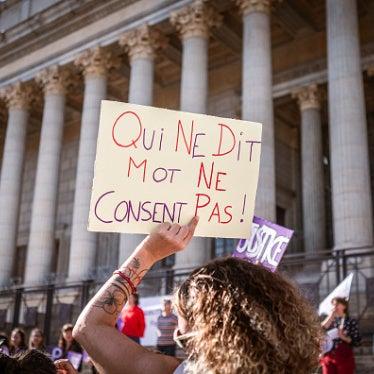
On Tuesday, April 28, 2026, the European Parliament called on the European Union to adopt a consent-based definition of rape. “No means no” needs to be replaced with “yes means yes”.
This conceptual shift is grounded in trauma-informed studies that have conclusively evinced the “freeze response”: people are incapacitated in situations they perceive as threatening. They are unable or too terrorized to asserts their rights and boundaries.
The transition to “yes means yes” is a welcome development. But courts all over the West have been taking it in an unwelcome and shocking direction: even affirmative and enthusiastic consent at the heat of the moment can be retroactively invalidated on multiple grounds, thus denying the consenting party all agency and criminalizing the ensuing proceedings.
A “yes” granted by a sober, enthusiastic partner has been construed by prosecution services and courts across the West as an attempt to please. Or a lack of awareness of the full details of the act. Or a response to imminent trauma or to the resulting bonding (“Stockholm Syndrome”). Or implicit coercion. Or a reflection of a power differential (“imbalance”). Or the psychological “annihilation” and captivity of the “victim” or “survivor” (the French dubious psycho-legal construct of “emprise”). Or being start-struck. Or any of a number of other qualifiers.
If consent is an ever-shifting construct, reversed in hindsight, no consent is possible. People are not mind-readers. Such legal convolutions vitiate any consent granted and criminalize flirting, courting, foreplay, and the sex act itself. All future actions of the “victim” or “survivor”, however exculpatory, are interpreted as a “fawn response” (in itself a controversial idea among scholars).
Of course, such a malleable approach to consent unequivocally granted, opens the door to bad actors who renege on consent proffered or use sex to entrap: liars, blackmailers, political or business adversaries, takedown smear campaigners, or partners who merely regret their decisions post-facto, sometimes years or decades after the event and with zero corroborating evidence.
The legal scene now resembles witch trials and relies on “spectral evidence” and the judgment of judges or, in some countries, juries as to the credibility of conflicting testimonies in “he said, she said” showdowns. These often devolve into morality plays with all centuries-old evidentiary-procedural rules intended to safeguard the rights of the accused summarily discarded.
The presumption of innocence, sequestration of witnesses, contamination of evidence and witness testimonies, the right to confront one’s accuser and cross- examine them (or even know who they are) are all dead letter in cases involving alleged sex offenses. Trials by public opinion and social media have now become the norm. Both judges and juries are not immune to overwhelming peer and social pressures and expectations.
Trauma theory is in its infancy. It is hotly debated. It is infested with charlatans and faddish constructs. Psychology is prone to outlandish crazes as it is: “refrigerator mothers” caused autism in the 1950s, homosexuality was a mental illness in the 1960s, false memories of childhood sexual abuse were “recovered” in the 1990s. Many an innocent suffered as a result of these unfounded speculations.
Comments
20 responses to “Yes Means Yes – But Sometimes It Means No”
-
Honestly, if “yes means yes” can turn into “no” faster than a cabbie can hit the brake, maybe we should just stick to a polite nod and a wink. 🤔🚕
-
Just what we needed, another legal labyrinth where “yes” can turn into a “no” faster than you can say “quagmire.” At this rate, flirting will require a notarized contract – perhaps I should start selling them on the side? 😂
-
A novel approach, isn’t it? Next, they’ll be telling us that “yes” really means “maybe” and “maybe” is just a polite “no” in a fancy suit. 😂
-
Seems like “yes means yes” is just code for “let’s see how we can twist this later,” eh? 🤔 Perfect for those who enjoy a bit of legal gymnastics with their morning coffee! 🥴
-
Interesting concept, isn’t it? Just when you thought you could get a clear “yes,” it turns out it’s a bit like ordering a pint of lager—good luck figuring out if it’s actually what you wanted! 🍻
-
A brilliant rebranding of consent, really. Who knew “yes” could be a slippery slope into a legal quicksand? 🍷🥴
-
Isn’t it just delightful how “yes” can now mean “perhaps” or “oh, I didn’t really mean it”? Next thing you know, we’ll need a consent translator to navigate these legal minefields! 😂
-
Brilliant move, EU! Who knew consent could be as slippery as a politician’s promise? Just when you think you’ve got it sorted, they throw in the ol’ “maybe” card. 🙄
-
So, we’re just gonna ignore that “yes” is now a pun intended to mean “maybe” if you ask the wrong crowd? Brilliant! 😏
-
Trust the bureaucrats to turn a simple “yes” into a legal labyrinth that would make a game of chess look like tic-tac-toe. Just when you thought consent was a straightforward concept, here comes a delightful dose of “maybe” wrapped in a thick layer of legalese. 😏
-
Who knew that a simple “yes” could turn into a legal circus? Might as well just stick to a hearty handshake and a bottle of wine to avoid the entire mess! 🍷😂
-
Isn’t it just delightful how “yes means yes” has become the new “no means maybe”? Who knew legal jargon could turn consensual fun into a game of emotional roulette? 😏
-
Brilliant! So, “yes means yes” now means “maybe, if I feel like it later”? Who knew consent could come with such delightful fine print! 🙄💼
-
Typical EU logic, isn’t it? One minute “yes” is the golden ticket, the next it’s a slippery slope to a courtroom drama worthy of a telenovela. 😂
-
Isn’t it just delightful how a “yes” can be transformed into a legal game of Twister? Just your average Tuesday in Parliament, eh? 🤷♂️✨
-
Who knew we were signing up for a legal version of “Simon Says”? Next, they’ll tell us “maybe means yes” is a binding contract! 😂
-
Seems like “yes means yes” is just the new “no means yes” in a fancier dress. 🤷♂️ Only in Europe would we turn consent into an art form, mate! 🎨
-
Blimey, who knew a simple “yes” could be such a slippery slope? Next, we’ll be trading in our nods for a full-on consent committee, right? 😂
-
Nothing like a good ol’ legislative shift to keep us on our toes, eh? Next thing you know, “I’m just being polite” will be the new “yes” – can’t wait for the court cases! 😂
-
What a brilliant idea—turning consent into a legal labyrinth! Can’t wait for the next courtroom drama: “Your Honor, my client said ‘yes’ under duress of charming conversation—clearly a case for the history books! 🤦♂️📚”

Last News

Short-Handed Al Nassr Rallies to Defeat Al Ettifaq 3-2 in Dammam
Dammam, Saudi Arabia, 26 August (Eurotoday Newspaper) – A remarkable Al Nassr comeback saw the Saudi Pro League champions recover from two goals down to beat Al Ettifaq 3-2 despite playing most of the match with 10 men. Sadio Mané scored twice, including the late winner.
Early red card changes the contest
Al Nassr suffered a major setback after just 12 minutes when goalkeeper Bento was shown a s

Dogmatic Debate with Donatism (Part 2)

Carney of Canada to Attend EU State of the Union
An official from the European Commission, close to von der Leyen, confirmed to POLITICO that Carney has accepted the invitation to this significant event in the EU’s calendar, where the presiden

Japan to Extend Weather Forecasts to Two Weeks by 2030
Tokyo, Japan, 26 August (Eurotoday Newspaper) – Japan plans to extend detailed daily weather forecasts from seven days to two weeks by 2030, as authorities seek to improve preparations for extreme heat, heavy rain and snow linked to a changing climate.
Longer forecasts widen the warning window
The Japan Meteorological Agency (JMA) plans to provide daily forecasts covering up to two weeks. These

Dogmatic Debate with Donatism (3)
France and Germany Clash Over Europe’s Industrial Future

EU Climate Risks Require Accelerated Response as Extreme Heat Intensifies
Brussels, Belgium, 25 August (Eurotoday Newspaper) – European governments face growing pressure to act earlier and more proactively against EU climate risks, as extreme heat, drought, wildfires and flooding increasingly threaten public health, infrastructure and economic activity across the continent.
The challenge has become particularly visible during successive hot summers. European authoriti
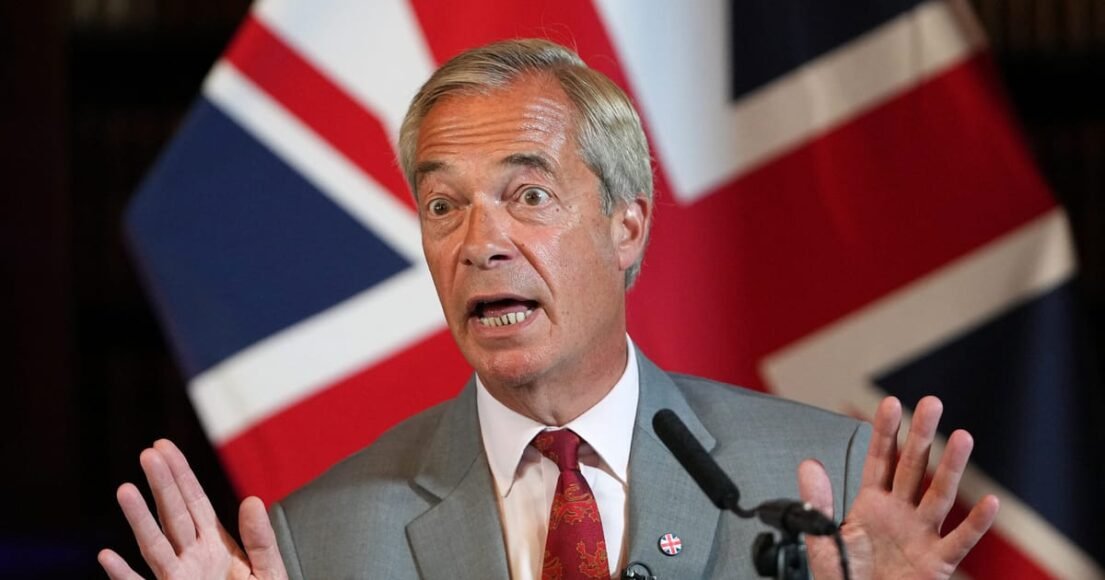
Nigel Farage Advocates for Eliminating GDPR in the UK
The EU GDPR offers broader individual rights concerning personal data, such as the “right to be forgotten,” compared to New Zealand’

France Calls for Swift Action as Heatwave Alert Levels Increase
Paris, France, 25 August (Brussels Morning Newspaper) – French authorities are urging people to act quickly when France heatwave alerts are triggered, as official guidance stresses that health effects can begin during the earliest stages of unusually hot weather.
Météo-France operates a four-level heat vigilance system — green, yellow, orange and red — designed to warn the public and authorities

Britain-Europe Trains Set to Run Every 15 Minutes
Piling in
Despite these obstacles, the London route is con
Leave a Reply