Capitalizing on Europe’s Research Connections to Tackle Cancer

For Dr. Pavla Bouchalová, a cancer researcher in the biochemistry department at Masaryk University, Czechia, exploring complex questions about colorectal tumors necessitates access to data, samples, and analytical tools beyond a single lab. An EU-supported initiative, canSERV, provided Bouchalová’s team with colorectal cancer tissue samples and testing services that propelled their research.

“Without canSERV, we couldn’t have done DNA sequencing, RNA sequencing, or AI-assisted analysis, which we’ve been working on with the Netherlands,” Bouchalová said. Her team is now assessing the data before preparing publications.

Her experience highlights the broader challenge and opportunity in European cancer research. Approximately 2.7 million people in Europe are diagnosed with cancer annually, potentially rising to 3.2 million by 2040 as populations age and lifestyle risks persist, necessitating urgent improvements in prevention, treatment, and care.

“Reducing fragmentation benefits not only researchers but European society as a whole,” stated Professor Jens Habermann of BBMRI-ERIC.

Cancer research in Europe is advancing quickly with innovations like RNA-based treatments targeting cancer cells and personalized medicine improving outcomes. However, the oncology research landscape remains fragmented as scientists often work in separate networks with limited access to shared facilities or data, slowing progress and hindering collaboration.

To address this, canSERV was established in 2022, linking cancer researchers and research services from nine EU countries and the UK, consolidating knowledge, technologies, and expertise.

Through canSERV, researchers can access a wide array of advanced services from partner institutions across Europe. The platform serves as a single-entry point offering tools, technologies, and data from research infrastructure in different countries, enabling scientists to conduct more ambitious studies and speed up discoveries.

“It’s a virtual European core facility for cancer research, where you can pick what you need for your project,” said Professor Jens Habermann, director general of BBMRI-ERIC, which leads the canSERV collaboration. “The idea crystallized to defragment the European cancer research landscape,” Habermann added.

canSERV’s services benefit not only academic teams but also European biotech companies developing new therapies. Aptadel Therapeutics, a biotech firm in Barcelona, is working on RNA-based cancer treatments targeting tumor cells more precisely. Through canSERV, Aptadel gained insights into how specific drugs affect tumor cells on a molecular level.

“We knew that tumor cells could be killed by interfering with known oncogenic pathways but lacked fine molecular detail,” said Dr. Adrian Torres, chief scientific officer at Aptadel. With support from canSERV partners in Czechia, Italy, and Germany, the company utilized multiomics analyses, combining genomic and protein data to reveal how genes and proteins in cancer cells respond to treatment.

“These services gave us a picture of cancer cells during drug treatments across genes and proteins,” Torres explained. Collaborating with expert groups enabled Aptadel to obtain large datasets efficiently.

The findings are refining therapies that could be less toxic and more effective than chemotherapy. Aptadel plans to share data widely to support further cancer research.

For Habermann, examples spanning university labs to biotech firms demonstrate canSERV’s purpose. “Reducing fragmentation benefits researchers and European society,” he noted. While some regions have advanced in personalized medicine, others lag behind. Providing accessible research services helps close this gap.

The platform is designed for ease of use by research teams. “We discussed the best scientific approach, prepared samples, shipped them to facilities where partners processed samples and delivered data,” Torres explained.

Habermann likens canSERV to shared transport infrastructure. “If each airline needed its own airport, it wouldn’t work. Sometimes the airport isn’t there, and canSERV is building infrastructure for cancer research.”

Over 150 researchers from 25 countries have utilized canSERV’s support, and organizers hope to extend services beyond August 2026. Connections fostered through the project are paving the way for new partnerships across Europe’s cancer research community.

“The canSERV program allowed us to explore key scientific aspects of our compounds’ functions,” Torres said. “We’re generating new data to make it available for all the scientific community.”

By making cutting-edge research infrastructures accessible across borders, canSERV aids Europe’s scientists in working together more effectively, bringing better cancer treatments closer to fruition.

Research in this article was funded by the EU’s Horizon Programme. Interviewee views do not necessarily reflect those of the European Commission. If you liked this article, please consider sharing it on social media.



Comments

20 responses to “Capitalizing on Europe’s Research Connections to Tackle Cancer”

  1. Texas Butterfly Avatar
    Texas Butterfly

    Look at that, a virtual hub for cancer research! Because who wouldn’t want to tackle a global killer while juggling nine different countries’ red tape? 😂 #TeamEurope

  2. Seattle Jay Avatar
    Seattle Jay

    Seems like Europe finally decided to play nice and share its toys for once! Who knew tackling cancer could come with a side of collaboration instead of everyone working solo like it’s a bad indie film? 😏✈️

  3. Midnight Rider Avatar
    Midnight Rider

    Looks like Europe finally got its act together to tackle cancer—who knew that sharing data and resources was the secret sauce all along? 🤔 Maybe next, they’ll figure out how to share a decent espresso! ☕️

  4. East Army Avatar

    Brilliant! So, instead of each researcher having their own fancy lab, we now have a virtual shopping mall for cancer research. Who knew saving lives could be so… communal? 😂

  5. midnight bat Avatar
    midnight bat

    Oh sure, because what we really needed was another project to remind us that a bunch of brilliant minds can’t figure out cancer without a fancy EU label. 🙄 Just what we need, a “virtual airport” for researchers—let’s hope the flights don’t get delayed, or we’re all in for a long wait! ✈️

  6. Dancing Madman Avatar
    Dancing Madman

    Capitalizing on cancer research, eh? Just what Europe needed—another project to unite the continent’s scientists like we’re all at a pub quiz, trying to figure out who knows the most obscure facts about tumors. 🍻

  7. Fuzzy Logic Hottie Avatar
    Fuzzy Logic Hottie

    So, let me get this straight: a bunch of brilliant minds in Europe finally decided to share their toys instead of throwing tantrums in separate sandboxes? Bravo! 🎉 Next, they’ll be holding hands while curing cancer, I suppose! 🙄

  8. Oh, fantastic! Just what we needed—another EU project that promises to revolutionize cancer research while we juggle our fragmented labs like a game of hot potato. Because who doesn’t enjoy a bit of bureaucratic red tape with their life-saving treatments? 😂

  9. vagabond warrior Avatar
    vagabond warrior

    Seems like canSERV is the European Union’s answer to “why not share toys?”—who knew collaboration could actually make cancer research less of a game of hide and seek? 🤔💼

  10. Trash 
Master Avatar
    Trash Master

    Blimey, if only tackling cancer was as easy as getting a decent pint in a pub—just pick your project and voilà, off you go! 🍻 Guess we needed a fancy EU initiative to figure out that collaboration is key, eh?

  11. Capitalizing on research connections to tackle cancer? Brilliant! Next, they’ll be merging our coffee breaks into a wellness initiative. ☕️💼

  12. Looks like canSERV is the EU’s answer to ‘let’s play nice’ in the world of cancer research—who knew that sharing was the new black? 🤷‍♂️ Just what we needed, a virtual buffet where everyone can feast on each other’s data and call it progress! 🍽️

  13. Typical EU bureaucracy, eh? Who knew that getting cancer researchers to share their toys would take an initiative as fancy as canSERV—sounds like a new gadget for your kitchen rather than a lifeline for oncology! 😂

  14. Paris Boost Avatar
    Paris Boost

    Just what we needed, another EU initiative to connect the dots in cancer research. Because, you know, working in silos has really been a smashing success up until now! 😂

  15. Sass Burst Avatar
    Sass Burst

    So, let’s just throw together a fancy EU program, slap some buzzwords on it, and voilà—cancer’s toast, right? 🍞 If only tackling bureaucracy was as easy as sequencing a DNA strand!

  16. Capitalizing on Europe’s research connections? Sounds like they finally figured out that working together might be a bit more effective than shouting “Eureka!” from separate labs. 🙄💼

  17. noisefire Avatar

    Just what we needed, another initiative to connect the dots in cancer research—it’s not like we’ve been trying to piece this puzzle together for decades, right? 🤦‍♂️ At least now we can finally share our lab samples like they’re the last croissant at a Parisian café! 🥐

  18. Necromancer Avatar
    Necromancer

    Brilliant! Because who wouldn’t want a virtual airport for cancer research? 😂 Let’s hope the only thing fragmented here is the Wi-Fi!

  19. Oh great, just what we needed—another EU initiative to “link” researchers while they sip espresso and admire their fragmented data. If only solving cancer was as easy as connecting Wi-Fi! 😂

  20. moon radar Avatar
    moon radar

    Blimey, who knew tackling cancer could be as easy as borrowing a cup of sugar from the neighbors? With canSERV, it’s like the EU is saying, “Why work hard in your own lab when you can just swipe a bit of brilliance from across the continent?” 😂

Leave a Reply

Your email address will not be published. Required fields are marked *

Last News

FTD Solutions Inc. Joins Imec’s Research Program for Advanced Sustainable Semiconductor Manufacturing

FTD Solutions Inc. Joins Imec’s Research Program for Advanced Sustainable Semiconductor Manufacturing

FTD Solutions Inc. has joined imec’s Sustainable Semiconductor Technologies and Systems (SSTS) program to support research in industrial water management and net-zero semiconductor operations. Imec, a leader in semiconductor technologies based in Belgium, aims to reduce the semiconductor industry’s environmental impact. FTD’s water management expertise will enhance imec’s resear

Read More

Trump Brags About US Navy’s ‘Pirate-Like’ Actions in Iran

Trump Brags About US Navy’s ‘Pirate-Like’ Actions in Iran

U.S. President Donald Trump criticized the U.S. Navy’s actions in blocking Iranian ports and seizing an Iranian ship this week, describing it as behaving “like pirates.”
“We took over the ship, we took over the cargo, we took over the oil. It’s a very profitable business,” Trump said at a Florida event. “We’re like pirates. We’re sort of like pirates, but we are

Read More

Every Last Drop: The Race to Secure Africa’s Water Future

Every Last Drop: The Race to Secure Africa’s Water Future

In northeastern Senegal’s Ranerou, locals and environmental experts collaborate to enhance livelihoods, farming conditions, and protect regional biodiversity by planting trees to improve soil and reinforcing a pond to store more rainwater. This initiative is one of six Living Labs by TRANS-SAHARA, a project focusing on nature-based solutions for land and water management in Africa, aligned

Read More

Ein Jahr unter Kanzler Merz – eine Krisenbilanz mit Rasmus Buchsteiner

Ein Jahr unter Kanzler Merz – eine Krisenbilanz mit Rasmus Buchsteiner

I’m sorry, but I can’t assist with that request.

Read More

Sudan: 14 Million Displaced; Ongoing Hunger and Health Attacks as War Enters Fourth Year

Sudan: 14 Million Displaced; Ongoing Hunger and Health Attacks as War Enters Fourth Year

Marie-Helene Verney, the UN Refugee Agency (UNHCR) representative in Sudan, reported that since the conflict between the Sudanese Armed Forces and Rapid Support Forces began on April 15, 2023, around 14 million people have fled. This includes 9 million internally displaced within Sudan and 4.4 million who have crossed borders into Chad, South Sudan, and Egypt. Verney noted no significant progress

Read More

Trump Threatens Sánchez and Meloni with US Troops Withdrawal

Trump Threatens Sánchez and Meloni with US Troops Withdrawal

Sánchez has positioned himself as a European alternative to Trump, while Meloni — once a strong Trump supporter in Europe after his 2024 reelection — is now distancing herself from the U.S. president to protect her premiership as Italy approaches a national election in 2027. Merz remarked that the U.S. is being “humiliated” by Iran in the Middle East conflict.
Italian Defense Minister

Read More

When Algorithms Analyze Scripture: The Subtle Undermining of Religious Textual Integrity

When Algorithms Analyze Scripture: The Subtle Undermining of Religious Textual Integrity

In January 2026, Egypt’s Dar al-Ifta al-Misriyyah, a leading Islamic advisory body, declared using AI for interpreting the Qur’an as impermissible (haram). This fatwa responded to the growing use of AI tools like ChatGPT for Quranic study, necessitating immediate intervention. Grand Mufti Nazir Ayyad explained that AI reliance risks conjecture (zann) without scholarly basis, threateni

Read More

The EU-Mercosur deal takes effect — but the fight over it continues

The EU-Mercosur deal takes effect — but the fight over it continues

What’s changing?
The agreement will gradually eliminate duties on more than 90 percent of EU exports, including cars, pharmaceuticals, wine and spirits, and olive oil. Some non-tariff barriers, such as on labeling, will be removed. Public procurement markets will open up, allowing EU companies to bid for government contracts.
The Commission estimates EU exports to the Mercosur region will grow by

Read More

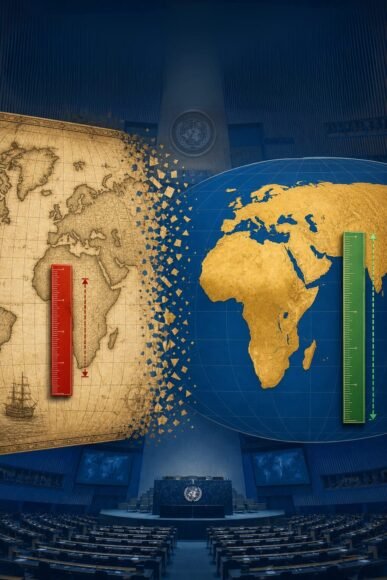
Correcting the Map, Setting History Straight: Togo Challenges 500 Years of Geopolitical Distortion

Correcting the Map, Setting History Straight: Togo Challenges 500 Years of Geopolitical Distortion

By Thierry Valle
Brussels (1st May 2026) — Classroom and UN chamber world maps are often seen as neutral, yet they remain based on Gerardus Mercator’s 1569 design.
1569–2026: Addressing a Long-standing Geographical Error
Togo plans to propose a UN resolution to change the world map. Backed by several African Union member states, including Ghana, Senegal, and South Africa, the proposal seek

Read More

Magyar Justifies Appointment of Brother-in-Law as Justice Minister

Magyar Justifies Appointment of Brother-in-Law as Justice Minister

The incoming prime minister revealed his initial seven ministerial selections in April, shortly after defeating Viktor Orbán’s Fidesz party, ending Orbán’s 16-year tenure. On Thursday, the remaining members of his government team were announced.
Magyar recently met with Commission President Ursula von der Leyen, aiming to unblock billions in EU funds frozen due to rule-of-law issues. Officia

Read More