


SOFIA – Bulgaria has officially joined the euro area as its 21st member effective 1 January 2026, nearly two decades after becoming a member of the European Union (EU). This milestone was achieved following a unanimous vote by the EU Council on 8 July 2025 to finalize Bulgaria’s euro adoption. Earlier that same day, the European Parliament approved the report on Bulgaria’s introduction of the single European currency with a substantial majority.
The Governor of the Bulgarian National Bank (BNB) will now hold a voting position on the Governing Council of the European Central Bank (ECB), while the Bulgarian Minister of Finance will participate in the Eurogroup, an informal assembly of finance ministers from euro-using nations.
Christine Lagarde, President of the ECB, expressed a warm welcome to Bulgaria and BNB Governor Dimitar Radev at the ECB Governing Council in Frankfurt.
The euro’s introduction marks a significant step in Bulgaria’s integration into the European Union—a recognition of the country’s rich history and cultural contributions, stated Bulgarian President Rumen Radev in his New Year address.
For Bulgaria, 2026 represents a pivotal moment as it achieves full membership in the euro area, allowing it to secure its rightful place within the European family, commented Bulgarian Parliament Speaker Raya Nazaryan on her Facebook.
Welcoming the New Year as a member of the euro area is a strategic advancement that promises increased security, financial stability, and enhanced opportunities for citizens and businesses, remarked Bulgarian caretaker Prime Minister Rosen Zhelyazkov on the official Facebook page of the Council of Ministers.
I am proud to contribute to realizing a dream cherished by generations of Bulgarians, said caretaker Minister of Finance Temenuzhka Petkova on Facebook.
In his pre-New Year address, Governor Dimitar Radev emphasized that the euro represents more than an economic decision and a currency; it signifies a sense of belonging to a community defined by shared rules, trust, and responsibility. He added, “The newest European coins say ‘GOD SAVE BULGARIA,’ symbolizing that Bulgaria is an integral part of Europe.”
“Welcome to the euro, Bulgaria,” noted Roberta Metsola, President of the European Parliament, on her official page in both English and Bulgarian.
The shift from the lev to the euro is not merely a currency change; it positions Bulgaria at the heart of Europe, stated European Commissioner for the Economy Valdis Dombrovskis. He praised Bulgaria’s significant efforts in preparation for euro adoption, encouraging Bulgarians to take pride in this accomplishment.
Bulgaria’s entry into the euro area is a transformative event reflecting sustained efforts and reforms, reinforcing the common currency and the foundational economic structures of the EU during a crucial period for Europe, remarked Kyriakos Pierrakakis, Minister of Finance of Greece and President of the Eurogroup.
The European Central Bank announced it would illuminate its main building in Frankfurt each evening until 11 January in celebration of Bulgaria’s entry into the euro area.
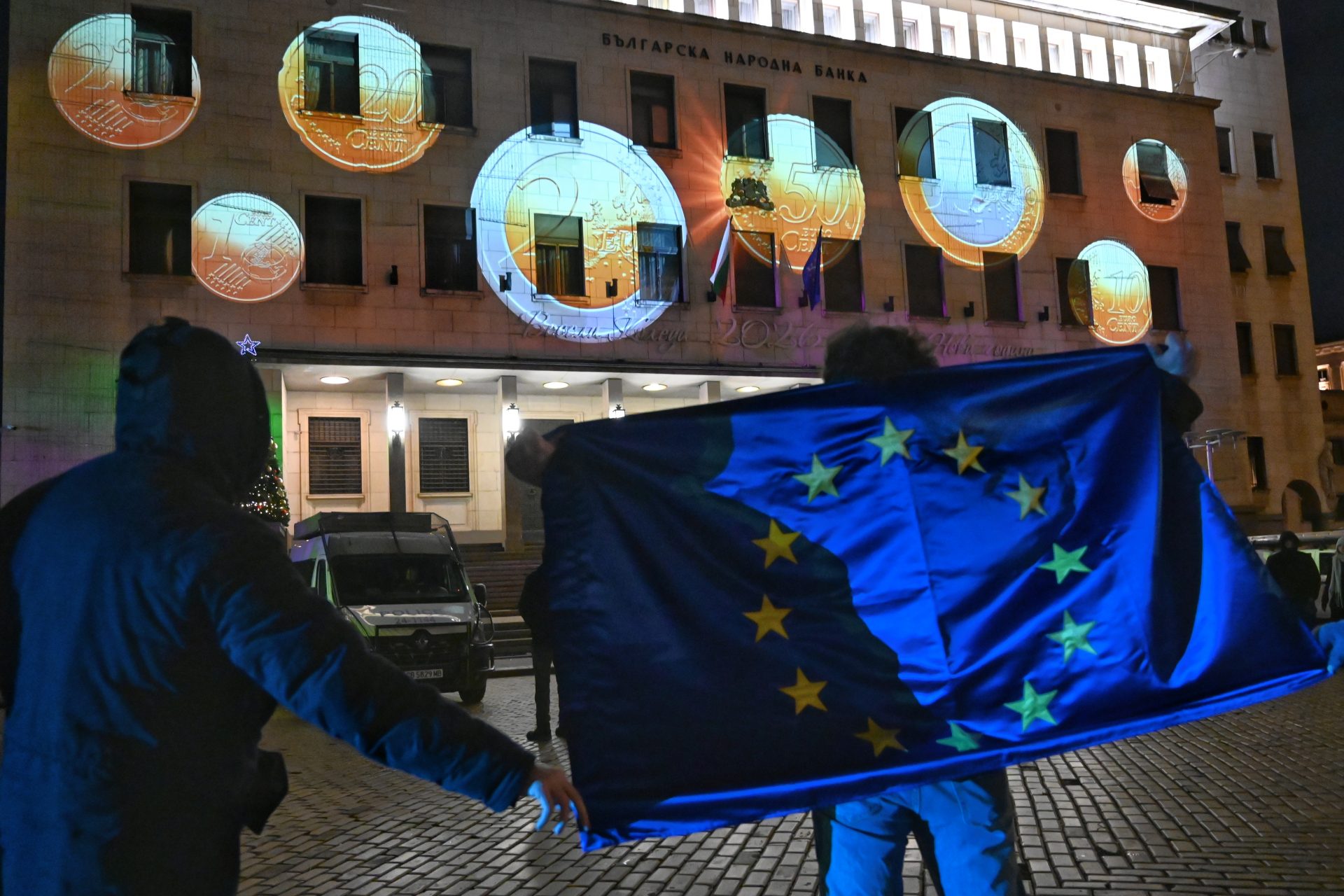
On the night of 31 December 2025 to 1 January 2026, Sofia commemorated the euro’s arrival with a light show and 3D mapping on the BNB building.
Throughout January, the lev will remain an accepted means of payment in Bulgaria, transitioning to euro-only usage starting 1 February, in accordance with the Law on the Introduction of the Euro in Bulgaria. The established exchange rate is 1.95583 leva for 1 euro, aligning with the lev’s central rate in the currency board. Dual pricing in euros and leva will continue until 8 August 2026, as mandated by law, displayed in the same font, size, and color.








Leave a Reply