



Despite the challenges posed by funding cuts, conflicts, and climate shocks straining global health systems, which have disrupted essential services in many nations, notable progress in disease control, prevention, and preparedness has been achieved by governments and partners.
The United Nations health agency reported that the balance of progress and pressure in Looking ahead to 2025 highlights what can be accomplished through evidence-based cooperation and what could be lost if momentum and funding wane..
Victories for disease control
Several nations have achieved historic milestones in the elimination of infectious diseases.
The Maldives is the first nation to achieve “triple elimination” of mother-to-child transmission of HIV, syphilis, and hepatitis B, while Brazil has eliminated mother-to-child transmission of HIV, making it the most populous country in the Americas to accomplish this.
Progress has also been observed in combating neglected tropical diseases. Burundi, Egypt, and Fiji eliminated trachoma; Guinea and Kenya eliminated sleeping sickness; and Niger became the first African country to eradicate river blindness. Since 2010, the amount of people needing treatment for a neglected tropical disease has decreased by almost a third.
Deaths from tuberculosis (TB) have continued to drop, especially in Africa and Europe, where reductions exceeded 45 percent over the last decade. However, the disease claimed an estimated 1.2 million lives in 2024, highlighting ongoing risks from HIV, undernutrition, and other factors.
Advancements have also been seen in the fight against malaria. Georgia, Suriname, and Timor-Leste were certified malaria-free, while seven other African nations introduced malaria vaccines in 2025. Coupled with new tools, like improved bed nets, these efforts prevented an estimated 170 million cases and one million deaths in 2024.
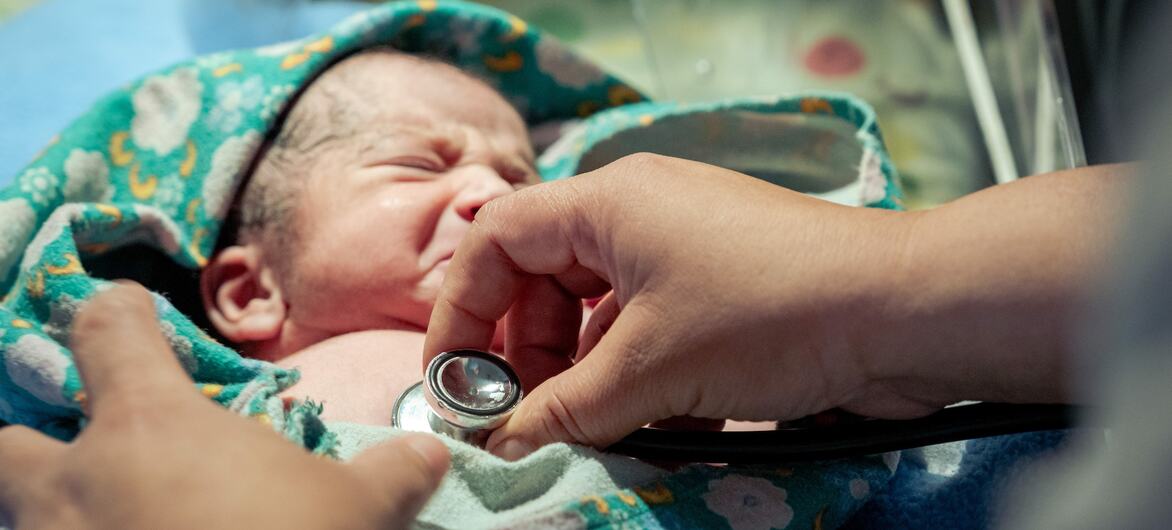
A doctor examines a newborn baby at a hospital in Kathmandu, Nepal.
Global health cooperation
Besides disease-specific progress, 2025 also marked significant strides in global health cooperation.
Countries endorsed the first global agreement on pandemics and strengthened the International Health Regulations (IHR), laying the groundwork for a faster and more equitable response to future health emergencies.
World leaders ratified a historic political declaration on noncommunicable diseases and mental health. New evidence-based guidance was also published, covering areas from maternal care and meningitis to diabetes in pregnancy and child-suitable anti-cancer drugs.
Healthier lives, uneven progress
WHOThe World Health Statistics 2025 report highlighted that 1.4 billion more people are leading healthier lives through reduced tobacco consumption, cleaner air, and improved water and sanitation.
Vaccination has been central to this progress. Global vaccination initiatives have reduced measles deaths by 88 percent since 2000, saving nearly 59 million lives. By 2025, several countries expanded vaccination against











Leave a Reply