Europe’s Largest Desert is Blanketed in Black Sand

The Largest Desert in Europe: A Landscape of Black Sand in Iceland

When we think of deserts, the image of the Sahara’s vast golden sand dunes often comes to mind. While the Sahara may be the largest desert on Earth, Europe also has its own desert, one that stands apart with its unique characteristics.

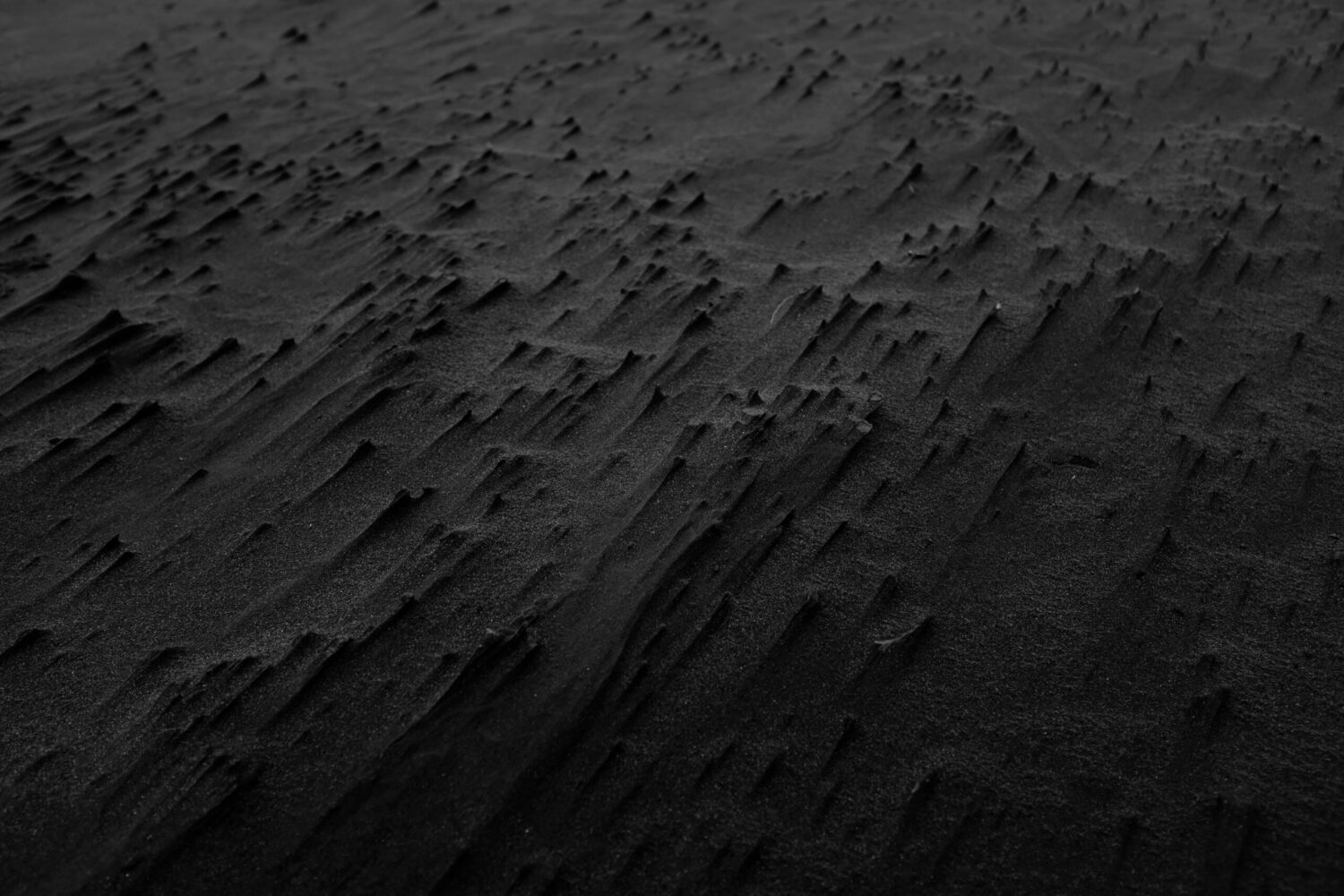
Iceland, an island nation in the northern Atlantic Ocean, is renowned for its breathtaking northern lights and active volcanoes. But it turns out Iceland is also home to Europe’s largest and most dynamic desert. Spanning over 44,000 square kilometers, this desert is unlike the traditional sandy landscapes we’re familiar with—it is covered in black sand of basaltic origin, interspersed with volcanic glass.

The black sand that blankets this massive area is the result of a combination of natural processes, including glacial-river deposits, volcanic eruptions, and the weathering of sedimentary rocks. However, Iceland’s desert hasn’t always appeared this way—it was once a flourishing forested region.

From Forests to Black Sands: The Process of Desertification

Centuries ago, this region of Iceland was home to birch forests, offering lush vegetation and biodiversity. But over time, the landscape underwent a dramatic transformation, a process the United Nations refers to as desertification. This phenomenon, driven by climate change and human mismanagement of land, results in the conversion of fertile, vegetated areas into arid, barren landscapes.

When the Vikings settled in Iceland, much of the island was forested. Over the years, unsustainable land-use practices, including overgrazing, coupled with Iceland’s harsh climate, led to widespread deforestation and soil erosion. Today, only about 2% of Iceland’s landmass remains covered by forests. In a bid to counteract these effects, Iceland has adopted policies aiming to double its forest cover by 2050.

The Impact of Iceland’s Black Sand on Europe’s Climate

Iceland’s black deserts don’t just stay confined to the island—they have far-reaching effects across Europe. While Saharan dust storms often make headlines for traveling thousands of kilometers, Icelandic winds also carry black sand beyond their shores. Samples of this high-latitude dust have even been found as far away as Serbia, according to reports from Euronews.

These dust storms, carrying dark, sun-absorbing particles, have significant implications for the climate. When the black sand settles on Europe’s glaciers, even in thin layers as little as one centimeter, it accelerates their melting by increasing solar heat absorption. This not only contributes to rising sea levels but also poses a serious environmental challenge in regions dependent on glacier stability.

Additionally, the dusty air from Iceland’s deserts acts as a pollutant, further amplifying climate change. Beneath the glaciers lies an “unlimited source of dust,” which makes it incredibly difficult to manage and slow down these warming processes. Scientists warn that the continued spread of this black sand could exacerbate global warming and its effects on sensitive ecosystems.

A Growing Environmental Concern

Iceland’s black desert is more than a geological curiosity—it’s a stark example of how natural forces and human activity can combine to reshape entire landscapes over centuries. The interconnectedness of this desert with Europe’s broader climate systems highlights the urgency of addressing desertification and its cascading effects.

As Iceland takes steps to restore forest cover and combat land degradation, the black desert remains an active reminder of the challenges posed by climate change. While efforts to mitigate its spread and impact are ongoing, the consequences of this unique desert extend far beyond Iceland’s shores, influencing the entire continent in ways that are only beginning to be fully understood.

Illustrative photo by Adrien Olichon: Pexels


Comments

3 responses to “Europe’s Largest Desert is Blanketed in Black Sand”

  1. So, Europe finally got its own desert, but instead of golden dunes, we get a black sand beach that looks like it’s been through a volcanic midlife crisis. 🌋🥴 Who knew our landscapes would take style tips from a goth club?

  2. Lincoln Rider Avatar
    Lincoln Rider

    Look at Iceland, turning its once lush forests into a black sand paradise—who needs beaches when you’ve got volcanic chic? 🌋😂 At this rate, the only thing greener than their forests will be the envy of the Sahara!

  3. Moon Cricket Avatar
    Moon Cricket

    So, Europe finally got a desert—just what we needed, eh? 🌍 I suppose it’s the new black; after all, who needs sunshine and beaches when you can have volcanic glass and climate change in style? 😅

Leave a Reply

Your email address will not be published. Required fields are marked *

Last News

Ukraine wakes to more violence as Russia’s full-scale invasion enters its fifth year

Ukraine wakes to more violence as Russia’s full-scale invasion enters its fifth year

Four years ago, Europeans awoke to a new reality as peace ended with Russia’s full invasion of Ukraine, Ms. Baerbock said in Geneva. UN officials highlighted the war’s human and economic impacts, urging the world not to grow accustomed to war. Russian drone attacks injured five in Zaporizhzhia, hitting residential and public areas. Matthias Schmale in Kyiv noted systematic attacks on

Read More

US Senator Apologizes for Lindsey Graham’s ‘Appalling’ Outburst at Danish PM

US Senator Apologizes for Lindsey Graham’s ‘Appalling’ Outburst at Danish PM

The South Carolina senator began the meeting with strong language, reportedly saying to Frederiksen: “Who gives a fuck who owns Greenland?” Graham allegedly called the Danish premier a “little lady,” prompting Slotkin to leave in under 10 minutes due to its “appalling” nature, according to a Congressional aide, as first reported by Puck.
In response to criticisms, Graham told POLITICO, “I don’t gi

Read More

EU "Buy European" Plan Tests Single Market Rules

EU "Buy European" Plan Tests Single Market Rules

Brussels plans a major procurement shift as industry applauds—and lawyers highlight trade and competition risks
The EU is adopting a “Buy European” strategy for public spending to direct taxpayer funds towards EU-made strategic technologies. Proponents believe it will support jobs and supply chains; critics argue it may increase costs, provoke trade disputes, and challenge the single market&#821

Read More

Exclusive Survey: In Marseille, Vassal Falls Behind, Payan and Allisio Lead

Exclusive Survey: In Marseille, Vassal Falls Behind, Payan and Allisio Lead

SONDAGE Cluster 17 x POLITICO. Quelques jours après la mort de Quentin Deranque, la ville est divisée entre les partisans du maire sortant Écologiste, Grégory Doucet, et ceux de l’ancien président de l’Olympique lyonnais, Jean-Michel Aulas.

Read More

Sudan: SAF Drones Strike Civilians Despite Protection Claims

Sudan: SAF Drones Strike Civilians Despite Protection Claims

In a span of one week, Sudan’s Kordofan region has faced a series of devastating drone strikes and indiscriminate attacks on civilians, attributed by multiple sources to the Sudanese Armed Forces (SAF).
At least fifty-seven people were killed in just two days, according to United Nations human rights officials, with many of the victims being children. The types of targets—a market, a displa

Read More

What to Anticipate in Reeves’ Spring Statement

What to Anticipate in Reeves’ Spring Statement

As the spring statement nears and a senior official leaves No 11 Treasury, can the chancellor secure more funds to satisfy the public and her party?
Sam and Anne examine the sectors demanding additional funding—particularly student loans and defense—even though Rachel Reeves claims this isn’t the time for increased expenditure.
Meanwhile, in the Lords, is the assisted dying bill nearing its

Read More

Four Years Later: LWF Sustains Hope in Ukraine

Four Years Later: LWF Sustains Hope in Ukraine

Reflecting on the four-year mark of the conflict in Ukraine, Bishop Pavlo Shvarts, head of the German Evangelical Lutheran Church of Ukraine, remarked, “It is a tragic day for our people and our history.” He expressed gratitude, saying, “We sincerely thank all of you who continue to pray for us and to keep our church in your heart.” Bishop Shvarts urged continued support for the church’s efforts

Read More

Inside the EU Ambassadors’ Crisis Bunker

Inside the EU Ambassadors’ Crisis Bunker

Brussels is adapting to a changing geopolitical scene.
Coreper meetings — regular assemblies of EU ambassadors — are increasing in frequency, showcasing how the bloc is evolving. Previously seen mainly as preparatory, these meetings now play a crucial role in shaping discussions before leaders meet.
The energy narrative progresses. The European Commission addresses Hungary’s alerts about disrupti

Read More

EU Eases Supply-Chain Due Diligence Rules

EU Eases Supply-Chain Due Diligence Rules

Member states have approved a pared-down version of the EU’s corporate sustainability rules, focusing mainly on the largest companies and extending key deadlines. Proponents claim the revisions reduce bureaucracy and maintain competitiveness; opponents believe they diminish a mechanism designed to tackle human rights violations and environmental damage in global supply chains.
On Tuesday, 2

Read More

Merz Advocates for Adjusting Germany’s ‘Unhealthy’ Trade Relations with China

Merz Advocates for Adjusting Germany’s ‘Unhealthy’ Trade Relations with China

Prior to Merz’s visit, several German business executives urged the chancellor to adopt a tougher stance on China’s industrial strategies, which give its firms price benefits through means such as subsidies, strategic dumping, and an undervalued currency.
Responding to these concerns, Merz called for fair competition, emphasizing the need for transparency, reliability, and adherence to established

Read More