


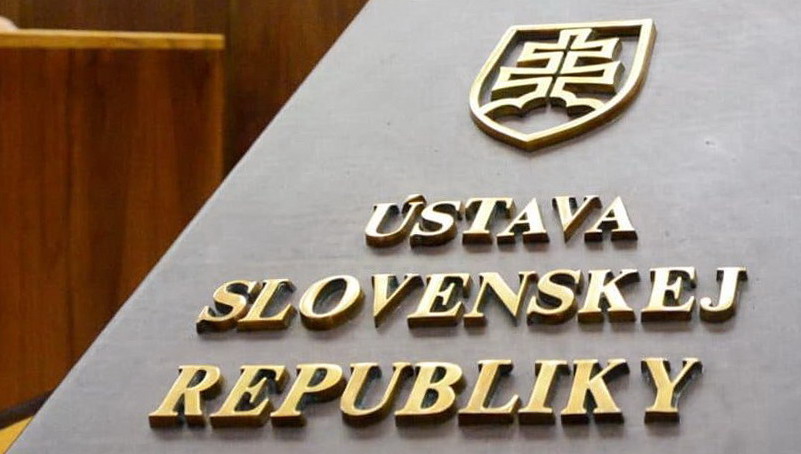
Bratislava – The European Commission (EC) expressed disappointment on Monday regarding the amendment to the Constitution of the Slovak Republic, stating it does not address the Commission’s concerns. These concerns primarily revolve around the relationship between the proposed changes to Article Seven and EU law. The EC emphasized that while individual member states have the authority to regulate family law, such regulations should not violate the fundamental principle of non-discrimination in EU law. This statement was made to TASR by Katarína Touquet Jaremová from the European Commission’s Representation in Slovakia.
“We must reiterate that EU law holds precedence over national law, including constitutional provisions. We regret that the newly adopted legal text does not reflect the concerns raised by the European Commission. Consultations were conducted with the Venice Commission, which has also expressed similar reservations,” stated Katarína Touquet Jaremová.
The EU advocates for equality that embraces diversity, allowing all citizens to express themselves and live free from discrimination
She highlighted that the EU supports equality that includes diversity, ensuring all citizens can be themselves and live without discrimination. “Although family law remains under the jurisdiction of member states, its implementation should not contravene the essential non-discrimination principles of Union law,” she noted.
Jaremová pointed out that the EC acknowledges the Slovak parliament’s adoption of constitutional changes. “We understand the next steps are now in the hands of the Slovak president,” she added.
The Slovak parliament approved the government’s amendment to the Constitution of the Slovak Republic on Friday (September 26). This amendment will officially recognize two genders—male and female—and will guarantee equality in remuneration between men and women for work performed. Additionally, the constitutional law will address child adoption and the educational process. The proposal seeks to affirm Slovakia’s sovereignty on value and cultural-ethical matters. (September 29)










Leave a Reply