


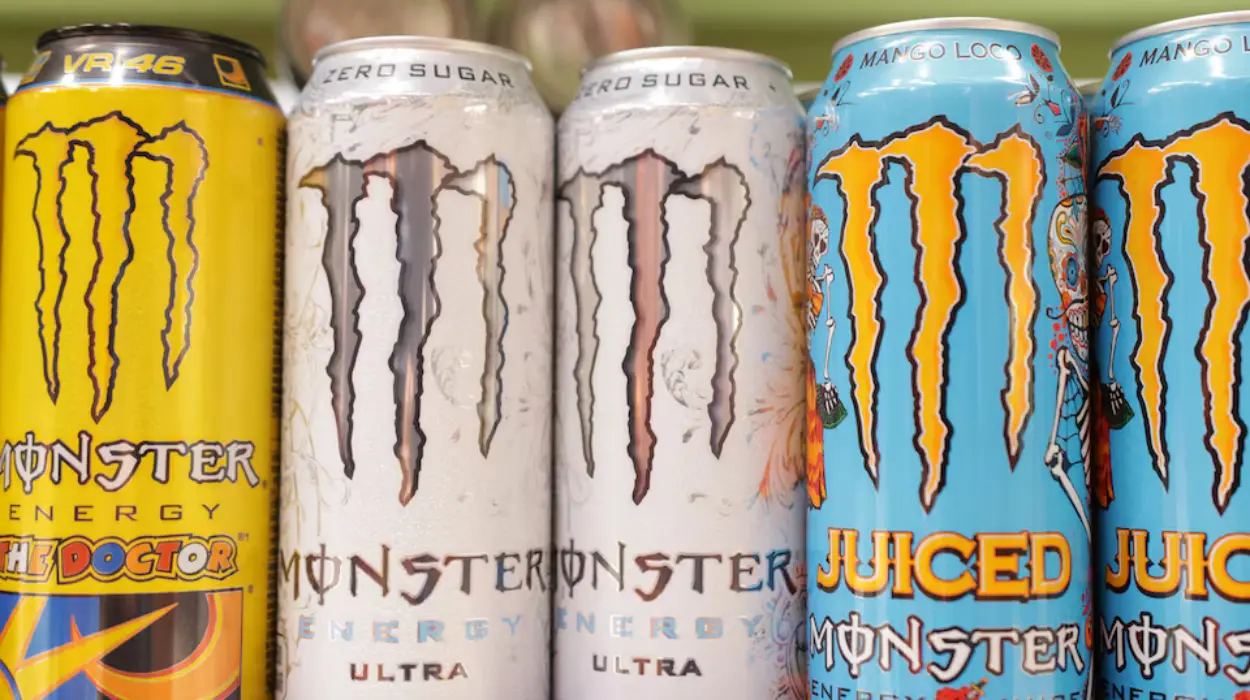
Over the past couple of years, corporations operating in politically fragile areas have faced critical scrutiny. With the present situation in the occupied Palestinian territories, most consumer boycotts invite consumers to refrain from doing business with or supporting Israel in any other way; of these campaigns, the Boycott, Divestment, and Sanctions (BDS) movement invites consumers to boycott Israel entirely. In this case, Monster Energy, one of the world’s leading energy drink brands, has raised some debate regarding the firm itself. Monster Energy is arguably the most popular energy drink brand available. Monster Energy stands out in part from other energy drink brands by its extreme marketing efforts aimed at youth, athletes, and extreme sports enthusiasts, and by its claw-marked cans.
Since its founding in 2002 (originally as part of Hansen Natural), it has consistently expanded its market share, product offerings, and global footprint. Whether Monster Energy backs Israel is an issue with wide and even touchy subjects that relate to international business ethics, consumer movements, and geopolitics. The blog creates a more balanced and detailed overview of the relations, work, and scandals around the brand of Monster Energy in Israel. The strategic alliances, distribution, and investment have also been used to expand the presence of Monster in the international market in a bid to ensure that it has maximum global presence, with countries such as the Middle East and Israel not being an exception. You can hardly think of it as anything other than a subcultural brand or lifestyle association, as well as a beverage brand.
Ownership: Coca-Cola’s stake in Monster Energy
Another decisive point of the boycott discussion is the structure of ownership at Monster Energy. In 2014, The Coca-Cola Company sold a 16.7 percent stake in Monster Beverage Corporation to switch its energy drink assets to Monster in exchange for energy drink-free assets of Monster. This provided Monster as a company with increased exposure to the distribution system of the Coca-Cola Company, the most powerful and extensive system in the world. It resulted in the fact that Coca-Cola became the biggest shareholder of Monster Energy, but Monster is a separate company.
- Distribution Advantage: Monster finds the use of the strong worldwide delivery channels offered by Coca-Cola, and, in this way, its goods become accessible in any kind of market, including Israel.
- Implications: Since Coca-Cola is not merely a supplier but has such shares of ownership, its practices and actions shade the reputation and the treatment of Monster.
Monster Energy’s business presence in Israel
Monster Energy products are available in Israel. Monster has opened a representative office in the country, and an Israeli was employed as its regional marketing manager; it is an example of a commercial commitment towards the Israeli market. Its products are highly distributed in the retail sector of the country and are listed among the giants in the energy and sports drinks sector in Israel. In Israel, as well as in other countries, Monster reaches younger, dynamic, and urban customers, and the Monster marketing has aligned the product with the concepts of adventure, sports, music, and youth culture.
Parent company’s relationship with Israel and settlements
Monster is owned, in large part, by the Coca-Cola Company, which has its bottling plant located in the Atarot industrial settlement in East Jerusalem, territory identified by international law as part of the occupied Palestinian Territories. Activists have also strongly criticized this fact due to the view that Coca-Cola (and by extension, related brands such as Monster Energy) is involved in promoting the Israeli government policy and the growth of settlements. This is one type of business activity that, according to many boycott advocates, would amount to
Comments
7 responses to “Monster Energy’s Stance on Israel: Facts, Allegiances, and Public Reaction”
-
It’s refreshing to see a brand like Monster Energy diving headfirst into the geopolitical fray — because who wouldn’t want their caffeine fix mixed with a side of international controversy? 🍵💥
-
Typical, isn’t it? A drink that promises to give you wings is now just stirring up a whole lot of political baggage instead. 🍷💼
-
Oh, what a delightful quandary for Monster Energy, eh? Nothing says “extreme sports” quite like navigating the political minefield of global business – who knew caffeine could brew such controversy? 😏
-
Seems like Monster Energy is flexing its muscles in geopolitics now, eh? Nothing says “extreme sports” like navigating international boycotts! 😏
-
Looks like Monster Energy is really going for the “thrill-seeker” vibe—who knew conquering markets could involve geopolitical gymnastics? 🍹 Just what we need, a drink that boosts your energy while raising eyebrows in global politics! 😂
-
Seems like Monster Energy is really going for that “adventurous” brand image—nothing says excitement like a can of caffeinated controversy in a politically charged region. 🤷♂️
-
Of course, nothing screams “I care about geopolitical issues” quite like chugging a can of Monster Energy while discussing international relations over a game of darts down the pub. Who knew energy drinks could be so… politically charged? 🍻

Last News
Credit Agricole Nears 30% Stake in Banco BPM Amid European Banking Regulations Focus
Sarhan Basem is Eurotoday’s Senior Correspondent to the European Parliament. With a Bachelor’s degree in English Literature, Sarhan brings a unique blend of linguistic finesse and analytical prowess to his reporting. Specializing in foreign affairs, human rights, civil liberties, and security issues, he delves deep into the intricacies of global politics to provide insightful comment
The Importance of FoRB Policy in Europe Today
Can Europe Heal the Unseen Wounds of War?
David Miliband, president and CEO of the International Rescue Committee and former British foreign secretary, speaks with Sarah Wheaton after his trip to southern Ukraine. He emphasi
IMF Supports US GDP Growth as Fed Maintains Steady Interest Rates
Sarhan Basem is Eurotoday’s Senior Correspondent to the European Parliament. With a Bachelor’s degree in English Literature, Sarhan brings a unique blend of linguistic finesse and analytical prowess to his reporting. Specializing in foreign affairs, human rights, civil liberties, and security issues, he delves deep into the intricacies of global politics to provide insightful comment
Significant Decrease in Average CO2 Emissions from New Cars and Vans in 2025 | Press Releases
Press releasePublished 25 Jun 2026
ImageMichael Fousert on Unsplash
Average carbon dioxide (CO2) emissions from new passenger cars and light commercial vehicles or vans registered in Europe decreased significantly in 2025 compared to 2024, according to provisional data published today by the European Environment Agency (EEA).
The reductions in emissions from new cars and vans
Meloni Claims Rutte Misrepresented Italy’s Role in Iran Conflict
“In his — let’s call it enthusiastic — account, the secretary-general has muddled together things that are actually quite distinct, confusing the types of authorized flights
FCC Strengthens Security Regulations for US Telecommunications Infrastructure
Washington, D.C., United States, June 25 – Eurotoday Newspaper — US communications infrastructure is set to receive stronger regulatory protection after the Federal Communications Commission (FCC) voted to tighten rules governing submarine communication cables that connect the United States to global internet networks. The updated requirements are designed to improve national security, increase

Brussels Aims at Cloud Gatekeepers
The Commission suggests AWS and Azure may be subject to Europe’s strictest digital market regulations as cloud infrastructure becomes vital for AI and businesses
The European Commission has moved to potentially classify Amazon Web Services and Microsoft Azure under the Digital Markets Act, suggesting these cloud platforms might act as gatekeepers in Europe’s digital economy, despite not meeting
EU Intensifies Anti-Migration Efforts in Somalia
Initially suggested by Brunner, these sanctions are not the EU’s first effort to encourage countries to assist with migrant readmission. Ministers enacted similar measures against Gambia in 2021 and against Ethiopia in 2024. The Ethiop
From Dublin to Brussels: European Newsroom Engages with the Upcoming Irish EU Presidency
During a background briefing for the European Newsroom (enr) at Ireland’s Permanent Representation to the European Union in Brussels, journalists received an early overview of the presidency’s upcoming agenda.
Reporters from various European Newsroom member agencies discussed key issues w
Leave a Reply