



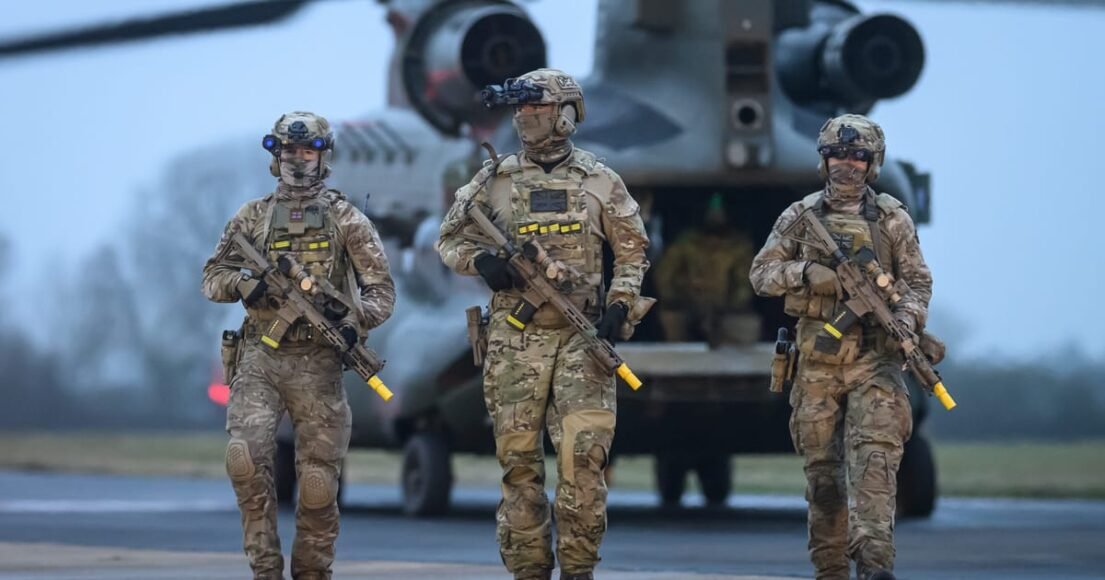
The upcoming NATO summit will commence on Tuesday in The Hague, focusing on a proposed new security expenditure target of 5 percent of GDP by 2032.
NATO Secretary General Mark Rutte is advocating for a new allocation that includes 3.5% of GDP for fundamental defense and 1.5% for defense and security investments, encompassing areas like infrastructure and industry. The current NATO defense spending goal stands at 2% of GDP.
While numerous European nations are augmenting their military budgets, there is division regarding the extent of this proposed increase, especially in light of a significant rise in global armed conflicts.
A report from the Peace Research Institute Oslo (PRIO) states that the previous year marked the highest incidence of armed conflicts involving official forces in over 70 years.
“This is not merely a sudden surge but rather a structural transformation. Today’s world is considerably more violent and fragmented than it was a decade ago,” commented Siri Aas Rustad, PRIO’s research director and lead author of the report.
The report estimates that violence related to battles led to 129,000 fatalities in 2024, with the majority of these deaths connected to the Russian invasion of Ukraine (76,000) and the conflict in Gaza (26,000).
This backdrop, along with increasing military tensions between Iran and Israel and U.S. President Donald Trump‘s calls for greater European defense spending, sets the stage for next week’s NATO summit.
Germany: Budget Increases Justified by Rising Threats
The German finance minister indicated willingness to elevate the nation’s defense spending to 3.5% of GDP in the coming years.
“The world’s landscape has shifted significantly over the past few years, and my top priority is ensuring public safety,” said Lars Klingbeil on Monday. “Increased investment is essential to achieve this,” he added. “If it requires spending 3%, we’ll proceed; if it necessitates 3.5%, then we’ll do that as well.”
Klingbeil noted that Germany will initially allocate 2% of its GDP for defense this year, with expectations for an increase. “I anticipate that the figures will be notably higher,” he stated prior to the NATO meeting.
A member of the center-left Social Democratic Party, Klingbeil also cautioned against limiting the discussion to numerical targets.
France: Avoiding Numerical Focus
French President Emmanuel Macron expressed his frustration last month regarding NATO’s focus on defense spending, while reaffirming France’s aim of reaching 3.5% of GDP “in the coming years.”
“The commitment of an army encompasses more than just financial expenditures; it’s reflected in the names on our war monuments and those who have sacrificed,” he stated at a press conference in Tirana, Albania.
Macron expressed discontent with discussions among allies that overly concentrate on numerical figures, emphasizing that many European nations have lost numerous soldiers during operations. “Thus, I assert that the 3.5% GDP target is a reasonable goal for the future, but it cannot be achieved overnight and necessitates substance and consistency,” he remarked.
France currently dedicates approximately 2 percent of its GDP to military spending.
Italy: Supportive but Proposing a Timeline
Recently, foreign ministers and diplomats from Italy, France, Germany, the UK, Poland, Spain, Ukraine, and the EU convened with NATO Secretary General Mark Rutte. The Italian Foreign Minister, Antonio Tajani, who hosted the meeting, noted Italy allocates 1.5% of its GDP to defense and expressed strong approval of Rutte’s spending proposal.
“We advocate for enhanced investment in security; however, the timeframe is crucial for us,” Tajani stated. “We believe it will take a minimum of ten years to meet the new targets.”
In a joint statement issued after the meeting, foreign ministers from several nations, including Italy, France, Germany, the UK, Poland, and Spain, along with EU High Representative Kaja Kallas, pledged their commitment to mutual defense.
“European nations must assume a greater






Leave a Reply