


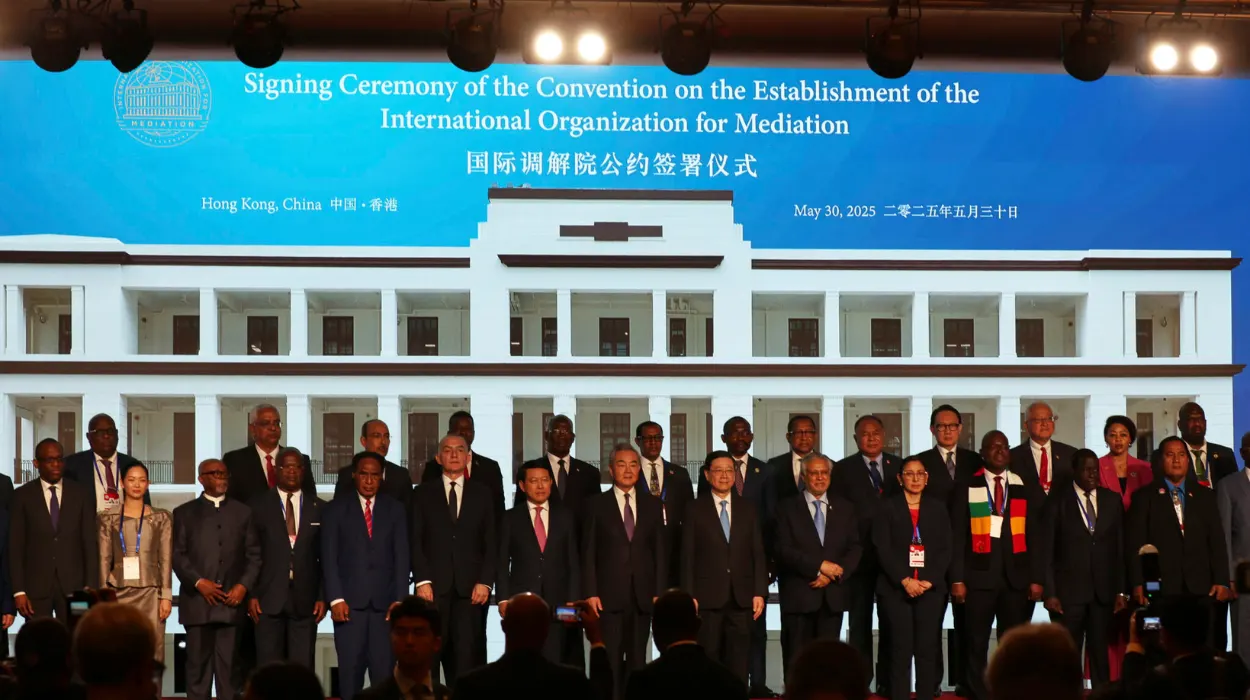
In an international climate marred by deepening fissures and geopolitical fault lines, the idea of resolving disputes through dialogue rather than domination has come to sound almost quaint. Yet on May 30 in Hong Kong, a gathering of 400 dignitaries from 85 countries and nearly 20 international organizations quietly ushered in what could prove to be a transformative experiment in conflict resolution: the birth of the International Organization for Mediation (IOMed).
With 33 nations – among them China, Pakistan, Indonesia, Belarus, Cuba, Serbia, and Cambodia – signing on as founding members, IOMed becomes the first intergovernmental organization explicitly dedicated to resolving international disputes through mediation. It’s an institutional pivot away from the binaries of battlefield victories or courtroom edicts. Instead, it leans into the potential of dialogue, compromise, and mutual respect – concepts not always fashionable in a world dominated by zero-sum thinking and power politics.
The initiative’s provenance in China has raised eyebrows, predictably. There are mutterings about Beijing’s expanding influence in the Global South, or questions about whether IOMed will merely mirror Chinese interests under a multilateral veil. These are not unwarranted concerns – but nor should they obscure the moment’s significance. In a global order increasingly paralysed by gridlock, inertia, and the fraying of long-held norms, any genuine attempt to reimagine dispute resolution deserves more than a casual dismissal.
For decades, the dominant frameworks of international dispute settlement have been litigation or arbitration – each replete with legalism, procedural rigidity, and, often, the implicit hegemony of Western jurisprudence. Mediation, by contrast, hinges not on verdicts imposed from above but on outcomes mutually shaped by the disputing parties themselves, with the help of a neutral intermediary. It’s a process that privileges consensus over coercion. And in a fractured world teetering on the edge of multipolar disorder, that in itself is no small virtue.
Hong Kong, the newly designated headquarters of IOMed, is itself a symbolic anchor. With its mixed legal heritage, bridging common and civil law traditions, and a robust infrastructure of arbitration and commercial resolution, the city offers fertile ground for a new chapter in multilateralism. The choice also reflects China’s growing confidence in presenting Hong Kong not just as a financial hub, but as a legal and diplomatic one.
Some may balk at drawing too bold a contrast between IOMed and longstanding institutions such as the International Court of Justice or the Permanent Court of Arbitration. But the comparison, invited by Chinese officials and even Hong Kong’s leadership, is not without basis. While the ICJ issues binding rulings that require both parties’ consent to jurisdiction, IOMed’s charter embraces a more inclusive and flexible architecture – welcoming not just states, but individuals and commercial entities embroiled in cross-border conflict. This adaptability could well prove a strength in today’s fluid, decentralized world of international interactions.
It also offers a meaningful corrective to the inadequacies of existing legal orders, particularly for developing nations. The hurdles they face – high legal costs, unfamiliar procedural codes, and a paucity of representation in global judicial forums – are well documented. In theory, IOMed’s mediation-first model could democratize access to justice and dilute the asymmetries of power that often skew arbitration outcomes in favour of wealthier nations or corporate entities.
There is, of course, an undeniable strategic dimension to all of this. Beijing’s orchestration of IOMed is not a purely altruistic gesture. It is a calculated move to shape the future of global governance – not necessarily to supplant the UN-centric order, but to supplement it with a distinctly Asian sensibility. The emphasis on “harmony,” “win-win cooperation,” and “consultation” are not just diplomatic tropes; they represent a philosophical departure from the adversarial norms that have governed international relations for much of the post-1945 era.
The recent history lends some credence to this approach. From the landmark reconciliation between Saudi Arabia and Iran brokered in Beijing, to intra-Palestinian dialogue that culminated in a Beijing Declaration, China has shown an appetite – and an aptitude – for mediation that transcends traditional alliances. IOMed institutionalizes this approach, offering
Comments
11 responses to “China’s Soft Power Shift: IOMed and the Future of Dispute Resolution”
-
Looks like China’s not just making cheap gadgets anymore; they’re trying to sell us on diplomacy with a side of “we’re not all about the power plays, promise!” 😂 Just what we need, another layer of bureaucracy to mediate our squabbles while we sip espresso in the corner! ☕️
-
Seems like the new IOMed is all about “let’s talk it out” instead of “let’s duke it out.” Quite the refreshing change from the usual courtroom drama, innit? 😏
-
Seems like we’ve just stumbled upon a new game of “let’s talk it out” courtesy of China, while the rest of us are still stuck in a “who’s got the biggest stick” contest. 🤔 Not sure if it’s diplomacy or just another way to say, “we’re in charge now, but let’s pretend we’re all friends.”
-
So, IOMed, eh? Just what the world needs—another way to sit around a table and chat while the real movers and shakers keep pulling the strings behind the curtains. 🤷♂️ You can’t help but wonder if they’ll have a tea break in the middle of those “serious” discussions. 🍵
-
Seems like we’ve traded in the old courtroom drama for a new reality show starring Beijing and its best pals, all while pretending to play nice. Who knew resolving disputes could become a group hug fest? 🤷♂️
-
So, let me get this straight: China’s hosting a fancy new mediation club called IOMed, and we’re expected to believe it’s all about “harmony” and “cooperation”? Right, because when has a good ol’ Beijing initiative ever been just about the warm fuzzies? 😂
-
Isn’t it just adorable how China thinks a few rounds of friendly mediation will solve the world’s problems? I mean, who needs history when you’ve got a shiny new organization to sprinkle some diplomatic fairy dust on old grievances? 😂
-
Imagine a world where disputes are settled over tea instead of tanks—how quaint! 😏 I guess we’ll see if dialogue prevails or if it’s just another Chinese puzzle waiting to be solved. 🥢
-
So, let me get this straight: China’s busy turning the art of negotiation into a new Olympic sport while the rest of us are still trying to figure out how to share the last biscuit at the board meeting. Brilliant strategy, eh? 🍪🤔
-
So, we’re trusting China with our disputes now? Brilliant idea – let’s see how well “harmony” works when the chips are down! 😏
-
Looks like China’s trying to play the superhero of diplomacy now, eh? Maybe next they’ll start handing out “Peacekeeper of the Year” awards while wearing capes. 😂

Last News
"Cultural Heritage Passport"
The pass, combined with an annual membership to the Heritage Foundation (Fondation d
MEPs Criticize FIFA’s Infantino for Including Russian Athletes in Youth World Cup
Following Putin’s 2022 invasion of Ukraine, FIFA prohibited Russia from participating in all football competitions. However, in 2023, FIFA lifted the ban for youth competitions, though Russian teams have yet to compete in its U-17 World Cups.
Recently, FIFA announced the upcoming U-15 Worl

The Impact of Customer Testimonials on Strengthening Business Reputation
London, July 01, 2026 – Brussels Morning Newspaper — Customer testimonials continue to play a growing role in shaping business reputation as consumers increasingly rely on real customer experiences before making purchasing decisions. Across industries, businesses are investing more effort in collecting authentic reviews and testimonials to strengthen credibility, improve online visibility, and b

Feline Instinct: Can Cats Discern Between Good and Bad People?
The answer lies between biology, psychology, a
Zelenskyy Shortens Irish Visit Amid Intelligence of Major Russian Attack
Zelenskyy was present on the first day of the Irish Presidency of the Council of the European Union, and during a press conference with Taoiseach Micheál Martin, he informed reporters of his immediate departure from Ireland.
“We know that Putin

Earned Media vs. Paid Advertising: Which Enhances Brand Credibility More?
London, July 01, 2026 – Eurotoday Newspaper — earned media vs paid advertising continues to be a key discussion among marketing professionals as businesses evaluate the most effective ways to build long-term brand credibility. While paid advertising offers immediate visibility and audience targeting, earned media is widely viewed as a stronger indicator of public trust because it is generated th
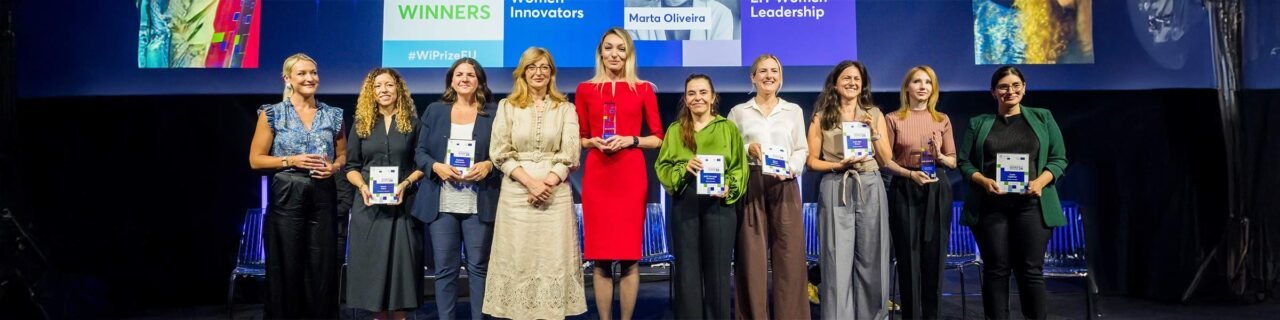
From Visionary Solutions to Future Logistics: Introducing the 2026 EU Women Innovators
Dr. Katerina Spranger almost lost her sight as a child due to an accident that required emergency surgery.
“I was fortunate,” she said, recalling how precision in surgery saved her sight, while another girl who had the same operation was not as lucky and went blind.
This memory resurfaced when Spranger received the €100,000 top prize at the 2026 EU Prize for Women Innovators, honoring her role
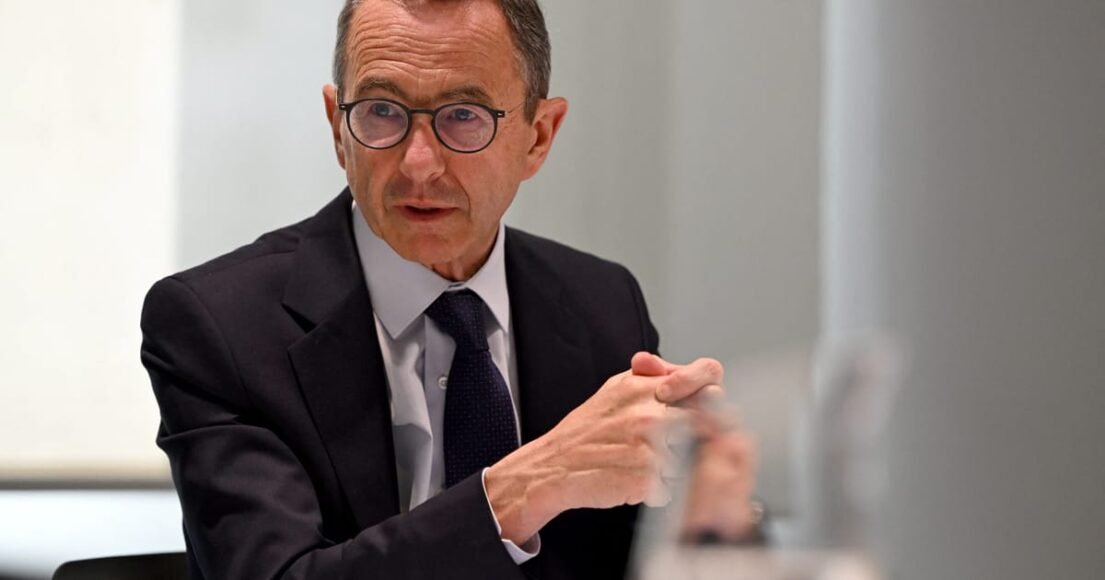
Retailleau, French Presidential Candidate, Claims Election Date Benefits the Left
Retailleau noted the tensions and p
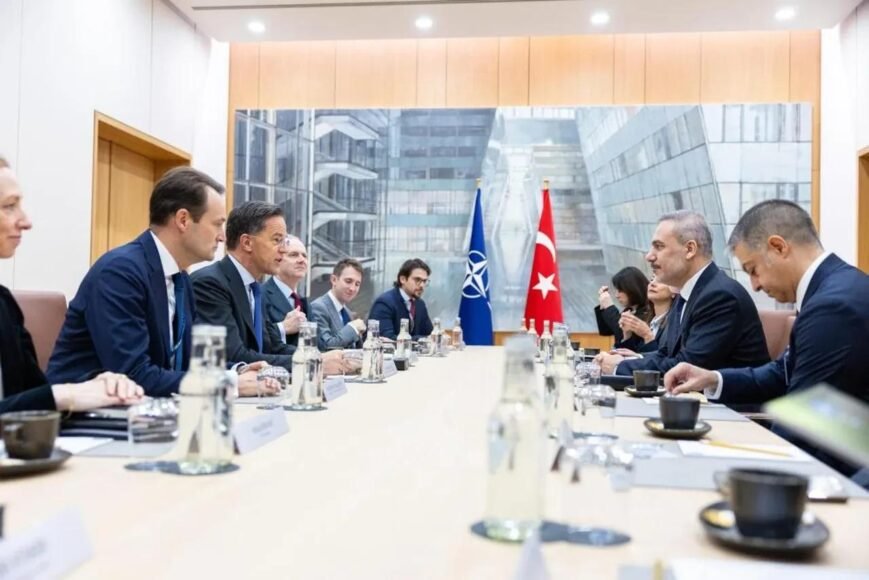
Turkey Affirms US Commitment to NATO Amid Evolving Security Landscape
Sarhan Basem is Eurotoday’s Senior Correspondent to the European Parliament. With a Bachelor’s degree in English Literature, Sarhan brings a unique blend of linguistic finesse and analytical prowess to his reporting. Specializing in foreign affairs, human rights, civil liberties, and security issues, he delves deep into the intricacies of global politics to provide insightful comment

CSG Advances Into the Next Phase of Global Growth: Strengthening
Press ReleaseThis article is based on a press release or official communication from Wire News Service. The European Times republishes it as a public service.
Previously Czech and Slovak, CSG now attracts talent from top defence companies like Rheinmetall, Northrop Grumman, Raytheon, BAE Systems, General Dynamics, and Kongsberg. Foreign acquisitions, rapid growth, and a stock market listing ha
Leave a Reply