



Title: Gaza: Vital Heavy Machinery Destroyed, Halting Recovery of Thousands Buried Under Rubble
The destruction of essential heavy equipment in Gaza following reported Israeli airstrikes on Tuesday has brought search and recovery operations to a complete stop, trapping an estimated 11,000 bodies beneath the debris.
According to UN spokesperson Stéphane Dujarric, the strikes have forced the suspension of all waste and rubble removal activities, severely hampering ongoing efforts to retrieve the dead.
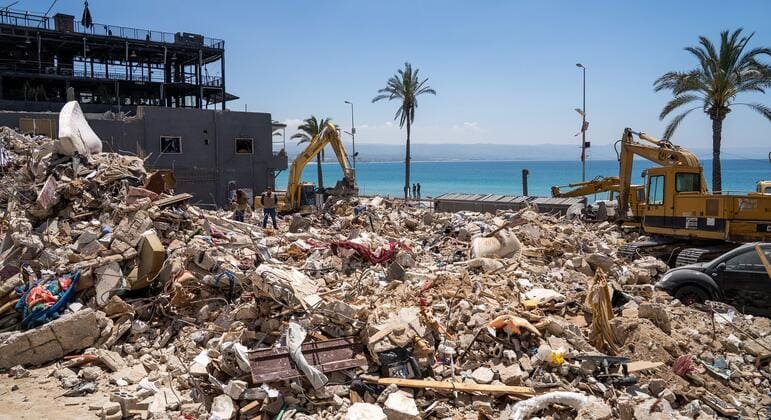
Before the airstrikes, excavators and bulldozers had been painstakingly used to sift through the ruins in search of victims. One of these, operated by Atif Nasr—a former road construction worker—was instrumental in the work. Nasr had been interviewed by a UN News reporter shortly before the attack that destroyed his vehicle, halting his critical work.
A photo released shows the aftermath of the latest strikes, with bulldozers and other heavy machinery now twisted wreckage.
Families Search for Closure
In one of the most harrowing cases, the Dahdouh family was only recently able to retrieve the body of their son, Omar, who had died in an airstrike nearly a year ago. The seven-story building where he lived collapsed in the attack, and efforts to recover his remains were delayed due to lack of access to heavy machinery.
“We searched everywhere for a bulldozer to reach the ground floor where Omar was,” said his brother, Moayad. “But Israeli forces had destroyed or burned the equipment we needed.”
In Khan Younis, southern Gaza, the Dajani family is still living among the ruins of their home, with the bodies of three of their children buried beneath the wreckage. Their father, Ali, recounted the moment tragedy struck: “We fled to the beach during the bombing. When we returned, our house was gone—and our children were still inside.”
“We are forced to live here. But this is not living,” he said, describing the conditions as unbearable, with no clean water or food. “All we want is to recover our children’s bodies. To bury the dead is sacred.”
Just days ago, excavation work had begun near the Dajani home, but those efforts have now also ceased.
Humanitarian Crisis Deepens
The destruction extends far beyond individual tragedies. UN assessments indicate that around 92% of residential buildings in Gaza—roughly 436,000 homes—have been damaged or destroyed since the start of the war.
This destruction has created approximately 50 million tonnes of debris. Under current conditions, experts estimate it could take decades to clear.
Humanitarian organizations warn that the inability to remove debris and recover bodies is compounding the trauma for survivors. It also presents looming public health risks, including the spread of disease, toxic exposure, and long-term environmental degradation.
As recovery efforts remain paralyzed, thousands of families continue to live in limbo—trapped in mourning without closure, amid a growing humanitarian and environmental crisis.









Leave a Reply