


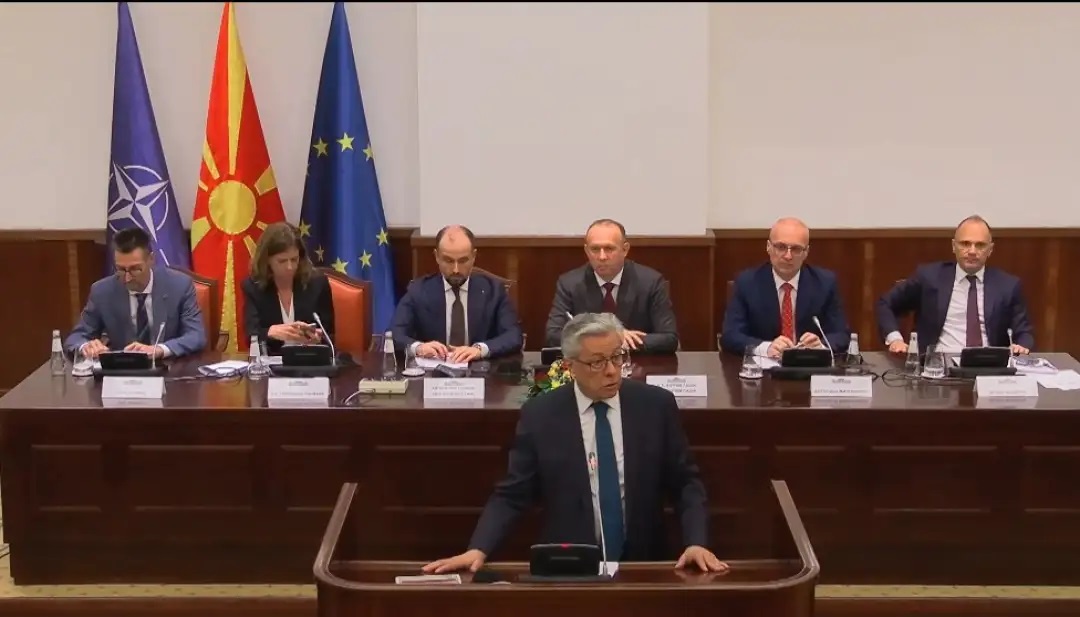
Skopje – North Macedonia has the opportunity to advance its reform agenda once again. Former chief negotiator for Croatia’s EU accession talks, Vladimir Drobnjak, emphasized during a debate titled “Reforms as a Shared Responsibility: Building Consensus for North Macedonia’s EU Accession,” hosted in Skopje’s Assembly, that the EU Agenda 2030 is in motion and that the nation’s prospects for EU membership are realistic and attainable.
Drobnjak noted the shifting international landscape, highlighting a significant rise in uncertainty. He remarked that global institutions and multilateral systems appear to be faltering, leaving questions about the future. Despite this, he affirmed the EU’s commitment to its strategic path, asserting that the current moment provides both strength and protection, which is crucial for North Macedonia. He stressed the importance of recognizing that the country’s national interest is best served through European solutions, with the focal points of influence being Brussels and Washington rather than Skopje.
He explained that the EU enlargement process is unfolding in a particularly challenging context, impacted by the ongoing war in Ukraine and a new American policy direction. Drobnjak identified three key components of the enlargement situation: perspective, gap, and conditionality, all linked to the timeline of 2030.
According to Drobnjak, citizens should be aware that the pathway to EU membership is indeed promising and feasible, as outlined in EU documents. The term “gap” refers to the existing socio-economic disparities between EU and Western Balkan countries, which need to be bridged quickly; he suggested that the Growth Plan and the newly adopted reform agenda are essential tools to help address this issue.
The concept of conditionality pertains to the various requirements North Macedonia must meet to achieve EU membership. He pointed out that this nation is not alone in encountering challenges on its European journey, citing Croatia’s own experiences during its accession negotiations, including cooperation with the Hague Tribunal, maritime border issues with Italy, and border disputes with Slovenia.
Drobnjak indicated that the year 2030 signals the EU’s readiness for enlargement, anticipating significant enhancements by that time. However, he also noted that the Union must undertake internal reforms and develop the multiannual financial framework for 2028 – 2034. For North Macedonia, he highlighted that, in the absence of a formal beginning to accession talks, the Reform Agenda stands as the most vital tool available for progress. (April 22, 2025)






Leave a Reply