



UN Warns South Sudan Is on the Brink as Peace Deal Unravels
Nicholas Haysom, the UN Secretary-General’s Special Representative for South Sudan, has issued a stark warning that the fragile peace in South Sudan is deteriorating rapidly. The long-standing political deadlock between President Salva Kiir and former First Vice President Riek Machar—key signatories to the 2018 Revitalized Peace Agreement—has now escalated into direct armed conflict.
Tensions are rising in Upper Nile state, where reports point to renewed mobilization by the White Army militia and South Sudan People’s Defence Forces (SSPDF), the alleged recruitment of child soldiers, and the deployment of Ugandan troops at the request of the South Sudanese government. The situation is being further inflamed by misinformation, disinformation, and hate speech, which are deepening political and ethnic divides.
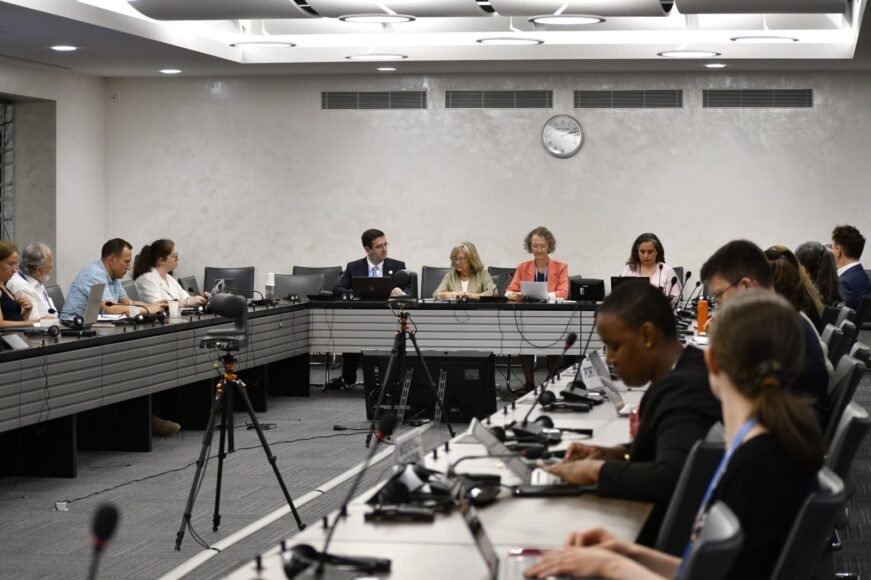
“This situation starkly mirrors the devastating conflicts of 2013 and 2016 that claimed over 400,000 lives,” Haysom told members of the UN Security Council. He emphasized that immediate action is crucial to avert a return to full-scale war by reaffirming commitment to the peace agreement and pushing forward with the country’s democratic transition.
Regional Instability and the Risk of Spillover
Haysom highlighted the dire need for coordinated efforts among South Sudanese leaders, regional actors, and the international community to restore peace. He stressed the importance of dialogue and trust-building to resolve tensions and prevent the repeated cycle of failed transitions.
“The crisis in neighboring Sudan is a sobering reminder of how quickly unrest can engulf a nation. The region simply cannot bear another destabilizing conflict,” he said.
UN Urges Renewed Dialogue
As head of the UN Mission in South Sudan (UNMISS), Haysom underscored the organization’s diplomatic efforts, in collaboration with the African Union, the Intergovernmental Authority on Development (IGAD), religious leaders including Pope Francis, and others to de-escalate tensions and promote dialogue.
He called on the Security Council to back measures aimed at restoring calm—particularly in the conflict-prone Nasir region—respecting the ceasefire, releasing detained officials, and encouraging South Sudanese leaders to prioritize national interests.
UNMISS continues to promote civic engagement, uphold the rule of law, protect civilians, and facilitate humanitarian response. However, Haysom reminded the Council of the mission’s limitations: “UNMISS is a peacekeeping mission – not a military force – and it cannot be everywhere at once.”
Mounting Humanitarian Crisis
The ongoing political and security crisis is exacerbating an already dire humanitarian situation. Edem Wosornu, Director of Operations at the UN Office for the Coordination of Humanitarian Affairs (OCHA), described the unfolding scenario as a “humanitarian nightmare in the making.”
Over the past eight months, living conditions have significantly worsened. Currently, more than 9.3 million people—about 75% of the population—require humanitarian aid, with approximately half being children.
Insecurity in the Upper Nile region has displaced 130,000 people since February, with many fleeing to neighboring Ethiopia. Local hospitals have shut down due to violence and destruction, and nearly 7.7 million people are suffering from acute food insecurity. With the rainy season looming, the situation is likely to deteriorate further. Last year, floods affected 1.4 million people, disrupted agriculture, displaced communities, and led to a surge in localized conflict.
A Call to Break the Cycle of Violence
Despite ongoing relief efforts, both Haysom and Wosornu emphasized that humanitarian aid alone cannot solve the crisis. Sustainable peace requires decisive political action from South Sudanese leaders, the active involvement of regional guarantors, and steadfast international support.
“The risk of another war is a burden South Sudan and this region simply cannot bear,” said Haysom. “Only the Revitalized Peace Agreement offers a viable path forward to end this cycle of violence and instability.”




Leave a Reply