


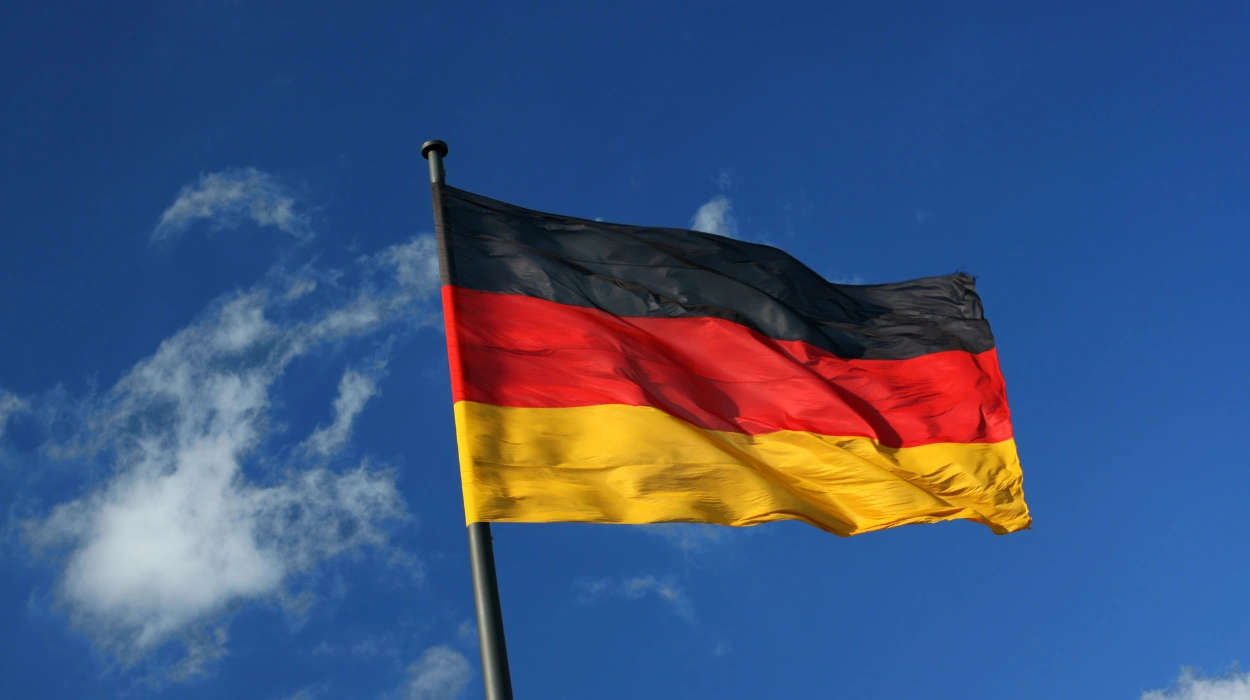
Hannah Arendt, in her seminal work “The Origins of Totalitarianism,” elucidated how economic despair and societal atomization can precipitate the rise of authoritarian movements. The AfD’s surge mirrors this analysis. Their platform, steeped in nationalism and anti-immigrant rhetoric, has found fertile ground among voters disillusioned by economic stagnation and a perceived erosion of cultural identity. This phenomenon is particularly pronounced in West Germany, where the AfD has made significant inroads.
The historical irony is palpable. While East Germany grappled with the authoritarianism of the communist regime, West Germany prided itself on democratic resilience. Yet, it is in the West that the AfD’s message resonates profoundly today. This shift suggests a collective amnesia or perhaps a reinterpretation of history, where the traumas of the past are overshadowed by present anxieties – some of them indeed real, others simply the result of propaganda and fake news also fueled by social media. The AfD’s narrative exploits these fears, drawing parallels to the nationalist fervor that once led Germany down a perilous path.
While it’s true that only about 20% of Germans voted for a neo-Nazi party (as opposed to over 50% of Americans who supported Donald Trump), the message is clear: Authoritarianism is on the rise and traditional parties have so far failed in responding as they remain blind to their own shortcomings.
The recent German federal elections have unveiled a seismic shift in the nation’s political landscape, with the far-right securing approximately 20.8% of the vote, positioning itself as the second-largest party in the Bundestag. Simultaneously, Die Linke achieved a remarkable resurgence, particularly in Berlin, where it garnered 19.9% of the vote, surpassing traditional powerhouses. These developments not only echo the shadows of Germany’s tumultuous past but also underscore the profound economic and social discontent pervading the country.
Die Linke’s Berlin victory can be interpreted as a manifestation of “Ostalgie,” a nostalgia for certain aspects of East German life, combined with a repudiation of neoliberal policies that many feel have exacerbated inequality. Die Linke’s platform, advocating for wealth redistribution and enhanced social services, resonates with Berliners facing soaring rents and precarious employment. The party’s success in Berlin underscores a desire to address systemic inequities, reflecting a complex relationship with the city’s divided history, but also clashes with the party’s links with Moscow and its stance on Ukraine and EU integration.
Central to the electoral successes of both the AfD and Die Linke is the prevailing economic discontent. Germany, long lauded for its robust economy, now faces challenges including high energy costs and fierce global competition, particularly from China. These issues have eroded the financial security of many citizens, leading to widespread anxiety about the future – not unlike 1930’s Germany if I’m allowed some catastrophism.
The traditional centrist parties, notably the Social Democratic Party (SPD) and the Christian Democratic Union (CDU), have been criticized for policies perceived as favoring the affluent, neglecting the working class’s struggles. This detachment has created a vacuum, which the AfD and Die Linke have adeptly filled by positioning themselves as champions of the disenfranchised. The AfD’s emphasis on national sovereignty and Die Linke’s calls for economic reform offer divergent solutions to the same underlying issue: a populace disillusioned with the status quo looking at the fringes for help.
The situation is not so different elsewhere in Europe, with fringe parties such as Vlaams Belang in Belgium, Vox in Spain or National Rally in France have also increased their share of voters. In Austria, the far-right is close to forming the new government and when we say “far-right” we are in fact being sympathetic to parties that openly flirt with Nazism and that have among their members elements that openly defend such an ideology.
The fact is that the blurring lines between center-left and center-right have culminated in a political identity crisis. Both spectrums have converged on neoliberal economic policies, leading to a homogenization that fails to address the nuanced concerns of the electorate. This indistinguishability has alienated voters, prompting them to seek alternatives that promise real change -whatever that might be.
The SPD’s historic low
Comments
4 responses to “Germany experiences political shift as economic frustrations drive extremism”
-
In a stunning twist of fate, it seems the German electorate has decided that nostalgia for an era of authoritarianism is the new black! Who knew economic discontent could spark such a fashionable political movement? 😅 #TrendyTotalitarianism
-
Isn’t it charming how the land of poets and thinkers is now flirting with the very ideologies they once swore to bury? 😏 It’s almost like they think history is just a Netflix series to binge-watch, but spoiler alert: the ending’s rarely a happy one!
-
Isn’t it just delightful how the land of poets and thinkers has now become a breeding ground for extremists? I suppose when the economy’s in the gutter, the best solution is to dig up some good old nationalism—brilliant strategy, lads! 😂
-
Germany’s political scene is shaping up to be a real page-turner, isn’t it? Who knew that economic woes and a sprinkle of nostalgia could lead us right back to the days of “let’s see how low we can go”? 😂🇩🇪

Last News

Zelenskyy: China Advised Putin Against Nuclear Weapon Use in Ukraine
Last month, Saint Petersburg MP Viktor Perov encouraged his colle

28 Confirmed Dead in Southeast China Shoe Factory Fire
JINJIANG, China, July 09, Eurotoday Newspaper – A fire at a shoe factory in southeastern China resulted in at least 28 deaths on Thursday, according to the state-run Xinhua news agency. The blaze engulfed the multi-storey building of footwear manufacturer Huiteng in Fujian province, trapping workers on the rooftop.
The incident began around noon local time. Xinhua reported that 239 people were p

Schengen Border Checks Guide
For many travelers, confusion starts wi

Gesundheitsreform: Merz’ letzter Stresstest vor der Sommerpause

Incoming British Prime Minister Andy Burnham to Intensify Pressure on Israel
LONDON, July 09, Eurotoday Newspaper – Andy Burnham, widely expected to become the next British prime minister later this month, has signaled his intention to exert greater pressure on the Israeli government regarding its ongoing actions in Gaza. The incoming leader’s comments follow recent reports that he seeks a more robust approach than that of his predecessor.
In a recent interview, Burnham

RIKV 26 1118 Treasury Bill Auction Announcement
Press ReleaseThis article is based on a press release or official communication from Wire News Service. The European Times republishes it as a public service.
Series
RIKV 26 1118
RIKV 27 0120
ISIN
IS0000039212
IS0000039501
Maturity Date
11/18/2026
01/20/2027
Auction Date
07/13/2026
07/13/2026
Settlement Date
07/15/2026
07/15/2026
On the Auction Date, between 10:30 am and 11:00 am,

Bardella rétrogradé, les marinistes galvanisés
Mexico to File Criminal Complaints Over Citizen Deaths in U.S. Anti-Migrant Actions
MEXICO CITY, July 09, Brussels Morning Newspaper – The government of Mexico plans to file criminal complaints in the United States concerning Mexican citizens who died while in immigration custody or during anti-immigration operations, President Claudia Sheinbaum announced on Thursday. The Mexican government reports that 14 Mexican nationals have died in the custody of U.S. Immigration and Custo

Groundbreaking Date for the Coeur d’Alene Idaho Temple
Over 480,000 members of the Church reside in Idaho, meeting in around 1,300 congregations. Dedicated temples in
Europe’s Conservatives Revive Bill on Child Abuse Scanning
Ultimately, neither side was satisfied.
German lawmaker Lena Düpont, the center-right group’s home affairs spokesperson, expressed that the group favored a straightforward return of the law without am
Leave a Reply