


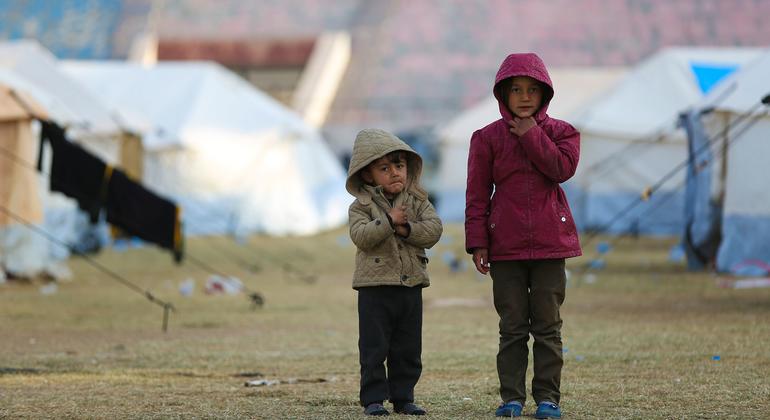
Thousands of Syrians Return Home, But Many Refugees Remain Hesitant
A recent survey of Syrian refugees in the region indicates that 75% have no immediate plans to return to their home country.
Limited Movement from Displacement Camps
According to the UN Office for the Coordination of Humanitarian Affairs (OCHA), movement out of displacement camps in Syria remains slow. Since December, around 80,000 people have left camps in the northwest, while approximately 300 departed from Areesha camp in the northeast earlier this week.
Currently, nearly two million people are still displaced in the northwest, many living in overcrowded shelters and makeshift tents. This includes more than 615,000 people who fled after a major offensive began on 27 November—an attack launched by opposition forces against the Syrian Army and its allies. The conflict ultimately led to the overthrow of the Assad regime 10 days later.
Winter Assistance for Displaced Syrians
The UN and humanitarian partners continue offering aid as conditions and funding allow, particularly in northern Syria, where winter brings severe hardships.
Efforts include repairing roads and sewage systems damaged by recent floods, as well as rehabilitating nine local markets near displacement camps. Since December, more than 260,000 children in Idleb and northern Aleppo have received heaters, winter clothing, and other support. Additionally, 500 children in Qamishli, within Al-Hasakeh governorate, have been provided with winter kits.
Rising Illnesses Amidst Health Crisis
Health workers have deployed mobile medical teams, provided mental health support, and reinforced medical facilities with heating and insulation, reaching around 800,000 people in the northwest.
However, they warn of a sharp increase in influenza-like illnesses and severe acute respiratory infections, further overwhelming an already fragile healthcare system. Since the beginning of the year, over 100 health facilities in the northwest have run out of funding.
Humanitarians also highlight a funding shortfall for operations aimed at assisting 6.7 million Syrians through March. So far, less than 10% of the required $1.2 billion has been secured.
Refugees Begin Returning Home
Despite ongoing challenges, more than 270,000 Syrian refugees have returned home since early December, according to the UN Refugee Agency (UNHCR).
A recent UNHCR survey found that 27% of refugees intend to return within the next year, a significant rise compared to the 1.7% who expressed such intentions before the fall of the Assad regime. However, the majority—around 75%—are choosing to wait and observe how the situation develops.
Currently, 5.5 million Syrian refugees remain in Türkiye, Lebanon, Jordan, Iraq, and Egypt.
Obstacles Preventing Return
Many refugees are reluctant to return due to a lack of housing and property access, security concerns, disruptions to basic services, and economic difficulties, including unemployment.
UNHCR and its partners are assisting returnees and vulnerable populations by providing household essentials, home repairs, emergency cash aid, identity document replacements, and psychological support.
The agency continues to call on the international community for greater support to address the significant humanitarian needs.









Leave a Reply