


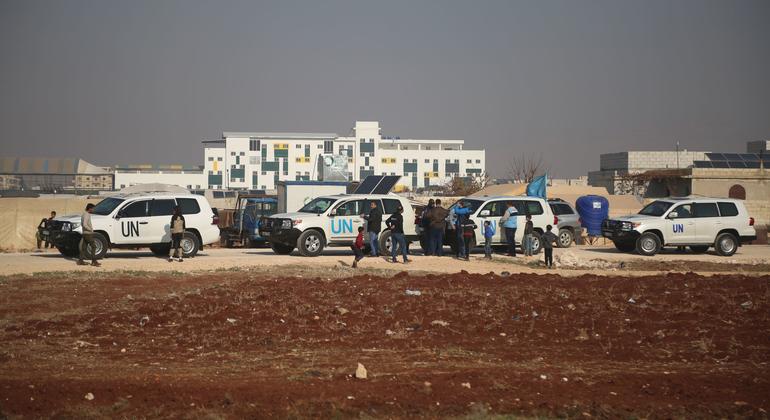
UN Efforts Continue in Syria and Lebanon Amid Ongoing Challenges
The UN reported on Monday that Geir Pedersen, its Special Envoy for Syria, has been engaging with French, German, and Russian authorities, including a recent meeting with Russian Deputy Foreign Minister Sergey Vershinin over the weekend.
Throughout these discussions, Mr. Pedersen has consistently emphasized the importance of adhering to the principles outlined in Security Council Resolution 2254 (2015). This resolution calls for constitutional reform, free and fair elections, and a Syrian-led inclusive political process.
“His message remains consistent,” UN Associate Spokesperson Florencia Soto Niño-Martinez told reporters in New York. She also noted that Mr. Pedersen hopes to visit Syria early next year to further discussions.
—
Insecurity on the Ground
Hostilities and insecurity continue to plague Syria, with reports of violence over the past week from several governorates, including Aleppo, Homs, Hama, Latakia, Tartous, Rural Damascus, Deir-ez-Zor, and Quneitra.
“Due to the tense security situation, humanitarian operations remain suspended in several areas,” Ms. Soto Niño-Martinez stated. She added that hostilities were reported on Friday in Deir-ez-Zor, just one kilometer from the UN offices there, further underlining the dangerous environment on the ground.
—
Food Assistance
Despite the challenges, the UN continues its humanitarian efforts. Over the past month, more than 1.7 million people across Syria received bread assistance. Additionally, 265,109 Syrians were provided with other types of food assistance, such as ready-to-eat rations, hot meals, and food baskets.
However, ongoing violence and instability are impacting other aspects of daily life, including education. While schools have reopened in most governorates, many children are unable to attend classes in rural areas of Hama, Quneitra, Latakia, and Tartous due to the turbulent security situation.
—
Supporting Lebanese Returnees
The UN and its partners are also working in neighboring Lebanon to assist displaced people returning to their homes. According to the International Organization for Migration (IOM), over 800,000 individuals have returned to their places of origin since the cessation of hostilities was announced on November 27.
However, there are still over 160,000 displaced people in Lebanon, and the overall situation remains highly fluid. Many face significant obstacles, including destroyed infrastructure, disrupted essential services, and ongoing security threats.
In some cases, returning families remain internally displaced within or near their communities, as their homes have been destroyed or severely damaged. Compounding the issue, more than 60 villages in southern Lebanon remain inaccessible due to warnings from the Israeli Army advising residents not to return.
—
The UN remains steadfast in its commitment to supporting those affected by the ongoing crises in Syria and Lebanon, despite the formidable challenges on the ground.






Leave a Reply