Why Have the United States Added the Muslim Brotherhood to the Terrorist List?

The United States’ recent classification of certain branches of the Muslim Brotherhood as terrorist organizations indicates a significant strategic change in Washington’s stance towards political Islam. Historically, the U.S. held a cautious and sometimes unclear position on the Brotherhood, founded in 1928 in Egypt by Hassan al-Banna. The group was alternately seen as an Islamist political movement capable of democratic participation or as an ideological source for modern jihadist movements. This ambiguity has long hindered a clear categorization of the organization in American security policy. Currently, this ambiguity seems to be diminishing.

Washington’s approach is evolving incrementally and pragmatically. Instead of labeling the entire Brotherhood as a global terrorist organization, U.S. authorities are targeting specific branches or networks directly involved in violence or supporting armed groups. This incremental approach helps the U.S. avoid the legal and diplomatic challenges of a blanket designation, given the Brotherhood’s diverse presence across numerous countries.

This policy shift is set against a changing geopolitical environment in the Middle East. The October 2023 attack by Hamas on Israel was pivotal for Western perceptions of networks linked to the Brotherhood. Hamas, emerging from the Brotherhood, shares its ideological roots. This reality has revived debates in Washington about the Brotherhood’s influence in shaping the ideological environment from which militant organizations arise.

Analysts in the American security community see the Muslim Brotherhood as a significant intellectual force in modern political Islam over the past century. While not all branches engage in violence, the Brotherhood’s political and religious ideology has influenced movements that later adopted armed struggle. The traditional distinction between political Islam and violent jihadism is increasingly fragile, as connections become more visible.

Regional dynamics have reinforced this assessment. The ongoing conflict between Israel and Iran-supported organizations reveals a complex web of alliances among Islamist movements. The Sunni Muslim Brotherhood and Shiite Iran might belong to different theological realms, but strategic objectives often outweigh doctrinal differences.

For years, Tehran has connected with organizations from the Brotherhood’s ideological sphere, particularly Hamas, while also supporting Hezbollah in Lebanon. This alliance structure has reshaped Washington’s view of the broader Islamist ecosystem. The challenge is more about interconnected ideological and operational networks across multiple conflict zones than isolated organizations.

U.S. policymakers are increasingly focused on the Brotherhood’s political, financial, and associative networks worldwide. Concerns extend beyond armed activities to structures capable of socio-cultural influence.

The United Arab Emirates has influenced this analytical shift, portraying the Brotherhood as a major ideological threat to Arab world stability. Abu Dhabi views it as a transnational movement that adapts its discourse to various political settings, pursuing a broader political vision rooted in political Islam.

The Brotherhood’s strategy, per this interpretation, is to gradually influence political institutions, education, religious bodies, and civil society, building a foundation for its political vision. Although initially contested in Western capitals, this perspective has gained traction in some American political and security circles, particularly in Congress and among international security experts.

Saudi Arabia’s stance illustrates regional complexities. Officially against both the Brotherhood’s ideology and certain radical Wahhabist elements, Riyadh shows a nuanced geopolitical reality. Brotherhood-inspired groups have sometimes received indirect support or formed tactical alliances in regional conflicts like Yemen or Sudan, highlighting strategic calculations over ideological affinities in Middle Eastern politics.

Europe faces challenges linked to Brotherhood-associated networks. France has recognized issues related to the Brotherhood’s ideological sphere within religious, educational, and associative structures. French authorities have acted to address ideological influence within institutions.

Across Europe, the situation varies. In Belgium, the Netherlands, and Germany, debates remain complex due to differing legal frameworks, political traditions, and religious pluralism approaches. Security services in several states have noted the ability of Brotherhood-inspired networks to wield influence in civil society, education, and media.

Not all organizations or individuals in this ideological current engage in illegal activities. Yet, the challenge lies in addressing a movement employing long-term influence strategies and adaptive discourses in diverse cultural contexts.

The Brotherhood’s hybrid nature makes it particularly challenging for democracies to manage. Unlike centralized armed groups, it is a transnational ideological movement operating on religious, social, political, and geopolitical levels.

The American decision to target certain Brotherhood branches reflects a gradual awareness shift. While not resolving the debate, it prompts broader reflection on how democracies should tackle ideological movements using open society freedoms to extend influence.

Vigilance is crucial in this context. Combating ideology shouldn’t stigmatize religion or limit freedoms. However, ignoring networks exploiting those freedoms poses dangers. Democracies must balance preserving liberty and pluralism with identifying and countering movements potentially undermining them from within.

Comments

2 responses to “Why Have the United States Added the Muslim Brotherhood to the Terrorist List?”

  1. Con Mammoth Avatar
    Con Mammoth

    Fancy that, the Americans finally figured out that not all political movements are just tea parties! Maybe next they’ll add “sitting on fences” to their list of national pastimes. 😏

  2. DuckDuck Avatar

    Seems like the U.S. is finally getting around to updating its ‘terrorist’ playlist—better late than never, right? 🎶 Just hope they don’t hit ‘shuffle’ on a few other questionable hits while they’re at it! 😏

  3. Just what we needed, another game of geopolitical whack-a-mole! 🎩 Next, they’ll be adding ‘naughty’ tea drinkers to the list for their ‘radical’ brews! ☕️🤣

Leave a Reply

Your email address will not be published. Required fields are marked *

Last News

Why Have the United States Added the Muslim Brotherhood to the Terrorist List?

Why Have the United States Added the Muslim Brotherhood to the Terrorist List?

The United States’ recent classification of certain branches of the Muslim Brotherhood as terrorist organizations indicates a significant strategic change in Washington’s stance towards political Islam. Historically, the U.S. held a cautious and sometimes unclear position on the Brotherhood, founded in 1928 in Egypt by Hassan al-Banna. The group was alternately seen as an Islamist pol

Read More

Deutschland droht die Ölkrise

Deutschland droht die Ölkrise

Ursprünglich war der Koalitionsausschuss nicht als Krisenmechanismus gedacht, doch die geopolitische Lage macht dieses Versprechen hinfällig. Bei Ölpreisen von über 100 Dollar und unruhigen Finanzmärkten steigt der Druck auf die Bundesregierung. Während Finanzminister Lars Klingbeil das Bewegen der strategischen Ölreserven als „verfrüht“ betrachtet, richtet er seine Aufmerksamkeit auf die Nutznie

Read More

As an Ill Wind Blows Across the Gulf, the Houthis Finally Help the Saudis

As an Ill Wind Blows Across the Gulf, the Houthis Finally Help the Saudis

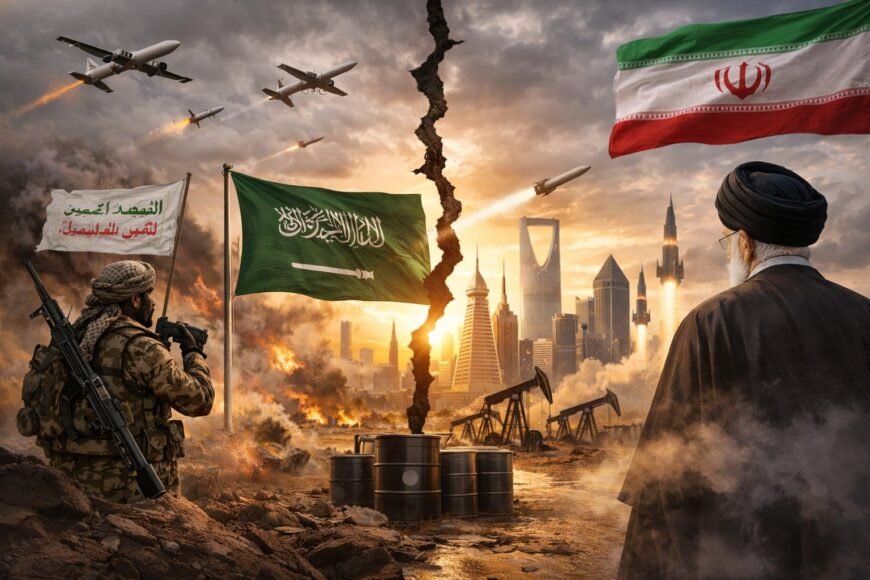
As the Israeli-US conflict with Iran continues in the Middle East, Saudi Arabia appears to be relatively less affected. Public reports indicate fewer Iranian strikes on Saudi Arabia compared to other Gulf nations like the UAE, Qatar, and Kuwait.
The BBC noted that Saudi Arabia and Oman, both hosting US and Western forces, have seen less aggression than other Gulf Arab states. An Atlantic Council

Read More

Spanish Deputy Leader Criticizes Merz for His Deference to Trump

Spanish Deputy Leader Criticizes Merz for His Deference to Trump

Merz faced criticism for remaining silent during a March 3 press conference at the White House, where Trump threatened an embargo on Madrid for not permitting U.S. military planes to use Spanish air bases for an attack on Iran and criticized Spain for not committing 5 percent of GDP to defense spending.
Afterward, the chancellor explained he didn’t defend Spain openly to avoid escalating the

Read More

Petro Advocates for Smarter Drug Strategy at UNODC Vienna

Petro Advocates for Smarter Drug Strategy at UNODC Vienna

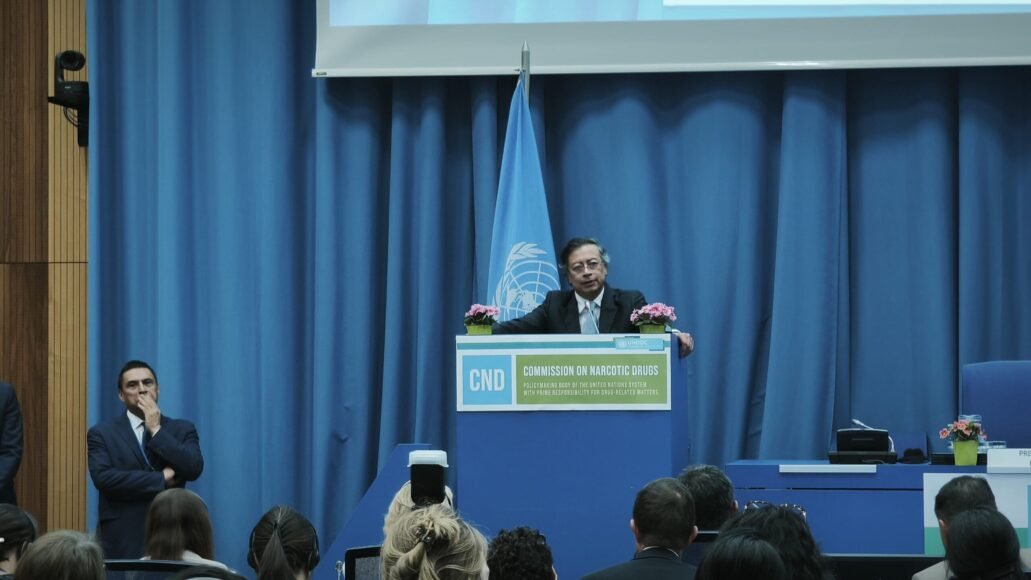
At the UN drug commission in Vienna on 9 March 2026, Colombian President Gustavo Petro delivered a speech that sharply criticised prohibition and highlighted the social causes of coca cultivation in Colombia. However, the main takeaway from his address, and from Europe’s own policy discussion, is not that total legalization is the answer. It is that drug policy must evolve beyond false dichotomi

Read More

Hungary Proposes Legalizing Seizure of Ukrainian Cash Convoy

Hungary Proposes Legalizing Seizure of Ukrainian Cash Convoy

According to Hungarian outlet Telex, lawmakers plan to debate the legislation under an unusual fast-track procedure after the parliament’s national security committee met Monday.
Hungarian authorities say they are examining whether the convoy — stopped while transiting the country last week — posed national security risks. They are also investigating the origin and intended use of the money.
Hunga

Read More

Meg Nocero Honored as IAOTP’s Top Happiness Officer of the Year

Meg Nocero Honored as IAOTP’s Top Happiness Officer of the Year

Meg Nocero to be Honored at IAOTP’s Annual Gala in NYC
NEW YORK, NY, UNITED STATES, March 5, 2026 /EINPresswire.com/ — The International Association of Top Professionals (IAOTP) has named Meg Nocero as the Top Happiness Officer of the Year for 2026, recognizing her exceptional leadership and commitment to her field. Nocero, an award-winning author, happiness expert, and host of the “M

Read More

Macron Urges Escort for Container Ships and Tankers in Strait of Hormuz Immediately

Macron Urges Escort for Container Ships and Tankers in Strait of Hormuz Immediately

Macron informed reporters at a military base in Cyprus that he had discussions about a potential mission with Greek and Cypriot leaders, Kyriakos Mitsotakis and Nikos Christodoulides.
Macron’s visit to Cyprus on Monday followed drone attacks on the island after U.S.-Israeli strikes on Iran that led to regional conflicts.
“When Cyprus is attacked, it is Europe that is attacked,” M

Read More

Vienna Hosts Global Drug Policy Debate at UN CND 69

Vienna Hosts Global Drug Policy Debate at UN CND 69

Vienna has become a diplomatic hub as the 69th session of the United Nations Commission on Narcotic Drugs begins at UNODC headquarters, gathering governments, researchers, and civil-society organizations for a week of discussions on prevention, synthetic drugs, treatment, and future global drug policy directions.
VIENNA — The 69th session of the Commission on Narcotic Drugs has placed Vienna at

Read More

Crise énergétique : le G7 envisage de recourir aux réserves stratégiques de pétrole

Crise énergétique : le G7 envisage de recourir aux réserves stratégiques de pétrole

L’auteur italo-suisse, expert des jeux de pouvoir et des autocrates, est incontournable pour l’élite politique européenne, notamment Emmanuel Macron.

Read More